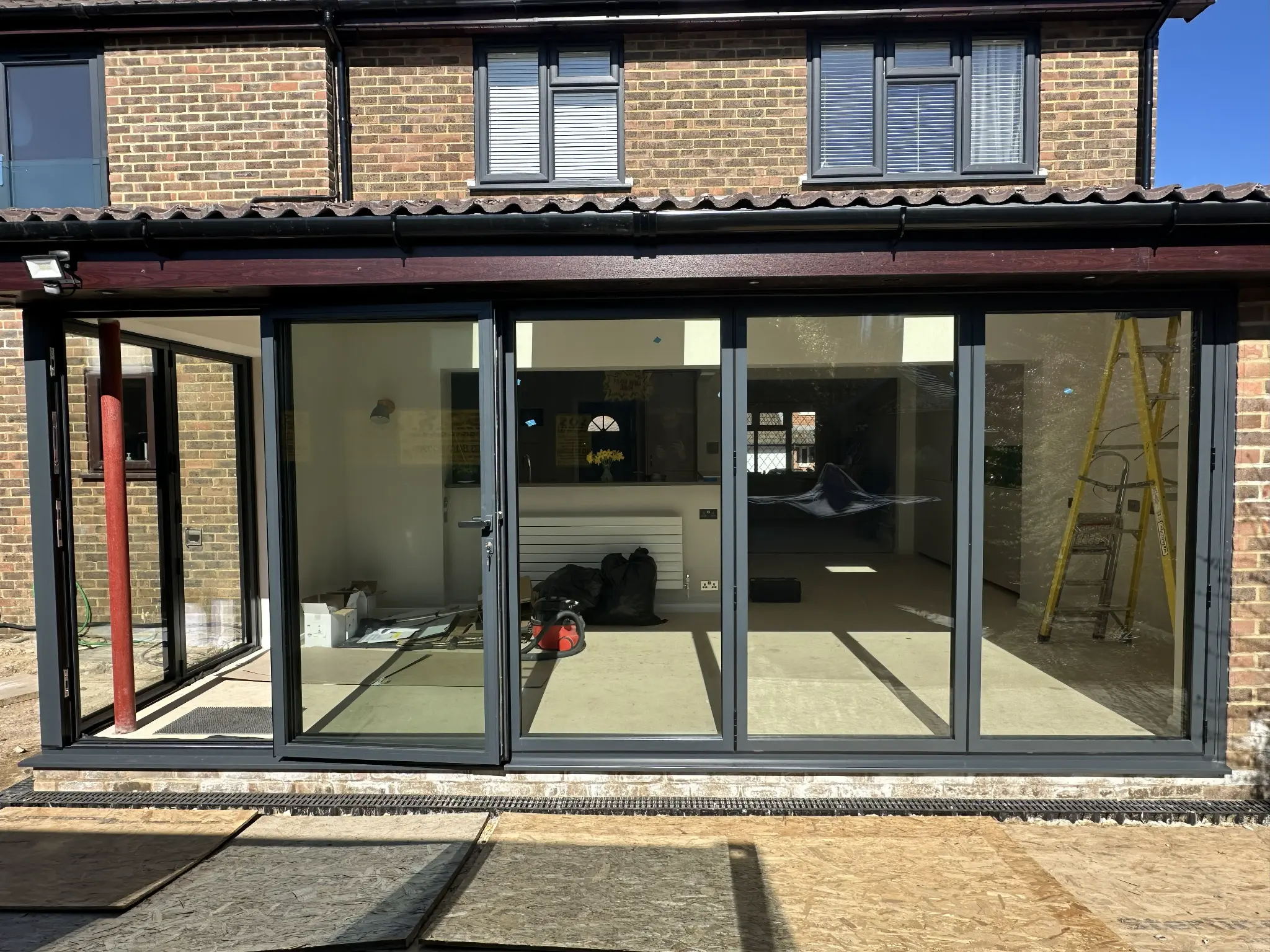

For UK homeowners undertaking renovation projects or building extensions, the choice of large-format glazing is critical. Bifold doors and sliding patio doors (often referred to as lift-and-slide systems) are the two primary options for creating expansive openings that blur the line between indoor and outdoor living spaces. While both offer significant aesthetic and functional benefits, they operate differently and present unique considerations regarding space, thermal performance, and cost.
This comprehensive guide provides an objective comparison, focusing on the practical, technical, and regulatory aspects relevant to homeowners across the United Kingdom.
Operation, Opening Space, and Aesthetics
The fundamental difference between bifold and sliding doors lies in how they open and the percentage of the aperture they expose.
Bifold Door Operation
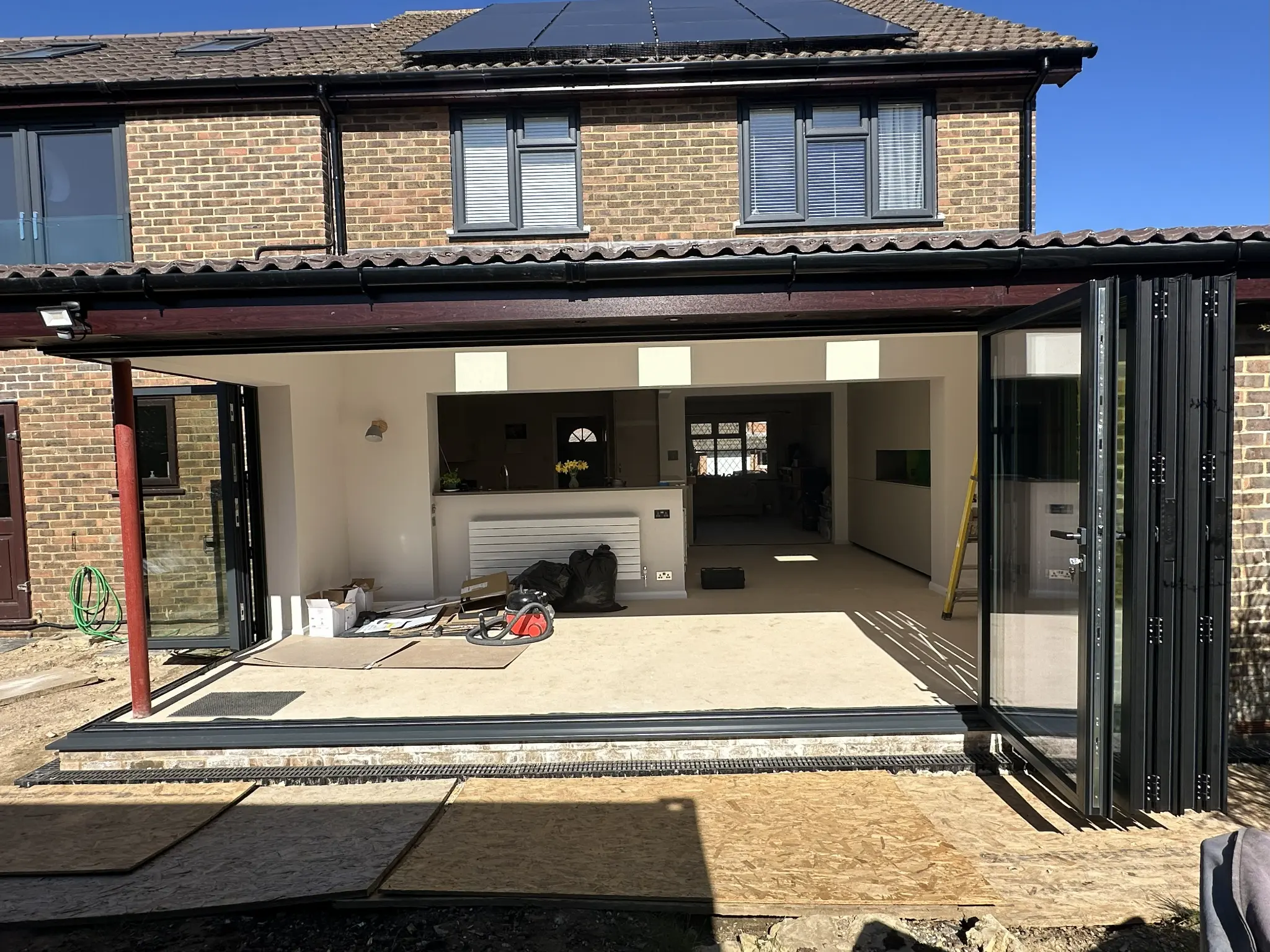
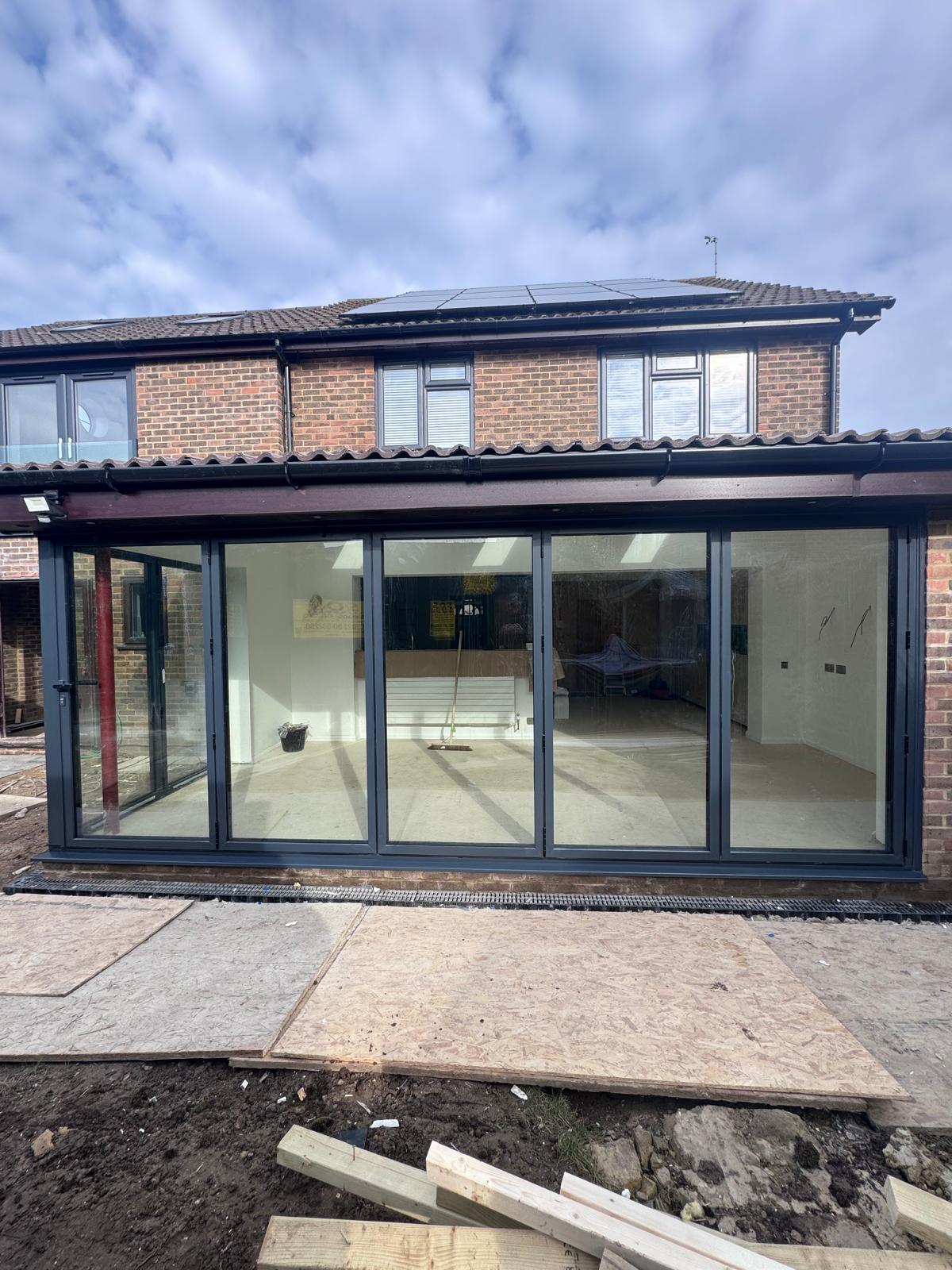
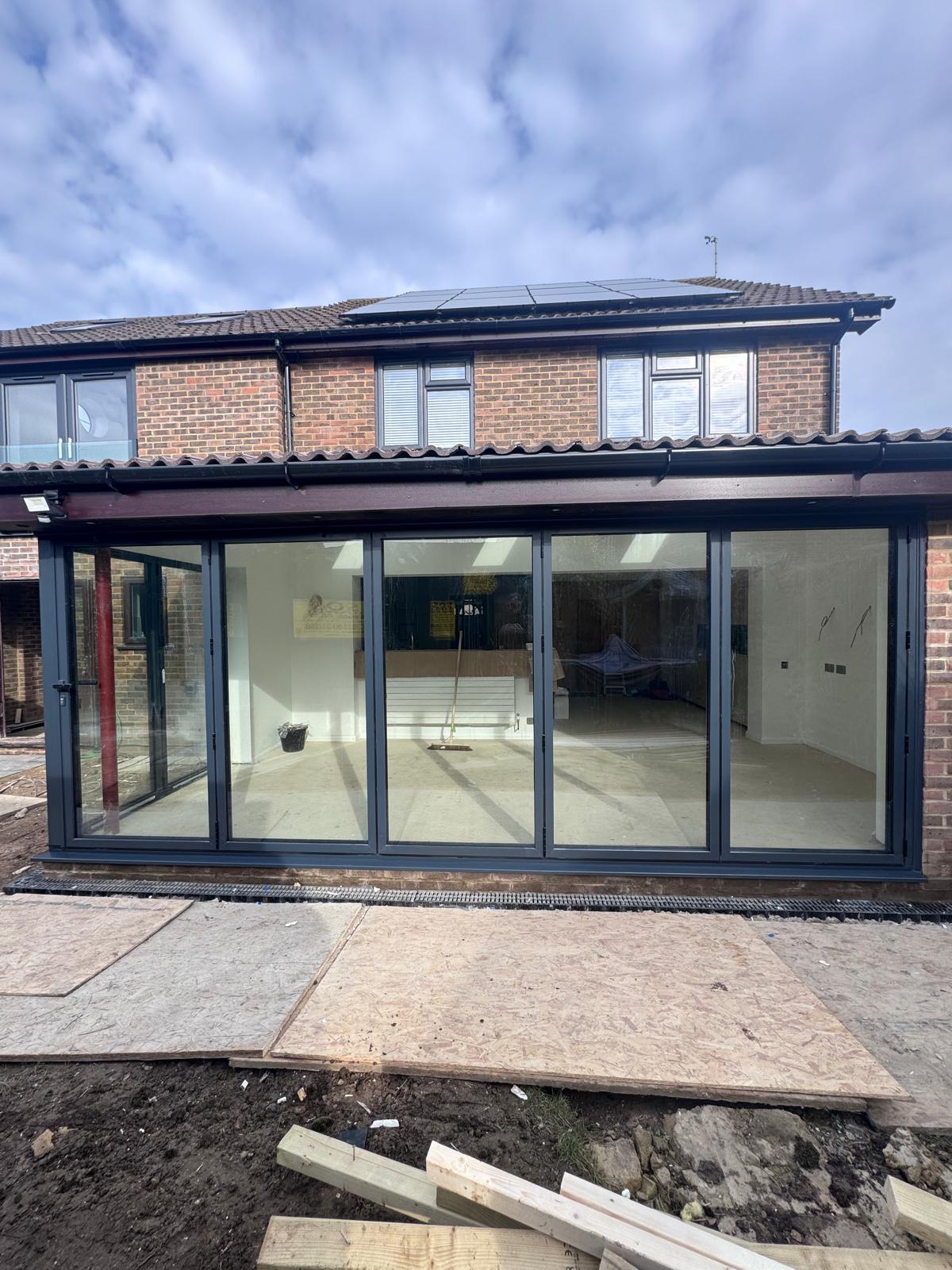
Bifold doors consist of multiple panels (typically 3 to 7) hinged together. When opened, these panels fold up concertina-style and stack neatly, usually against the interior or exterior wall. This mechanism allows for a near-complete opening of the aperture.
- Maximum Opening: Typically achieves 90-95% clear opening.
- Stacking Space: Requires space, either inside or outside, for the stacked panels. This stack can be bulky, depending on the number of panels and frame thickness (usually around 100-150mm deep).
- Traffic Door: Most systems incorporate a primary traffic door, allowing easy access without having to fold back the entire system.
- Aesthetics: Characterised by multiple vertical sightlines (frame profiles) when closed, due to the necessity of hinges and multiple smaller panels.
Sliding Door Operation
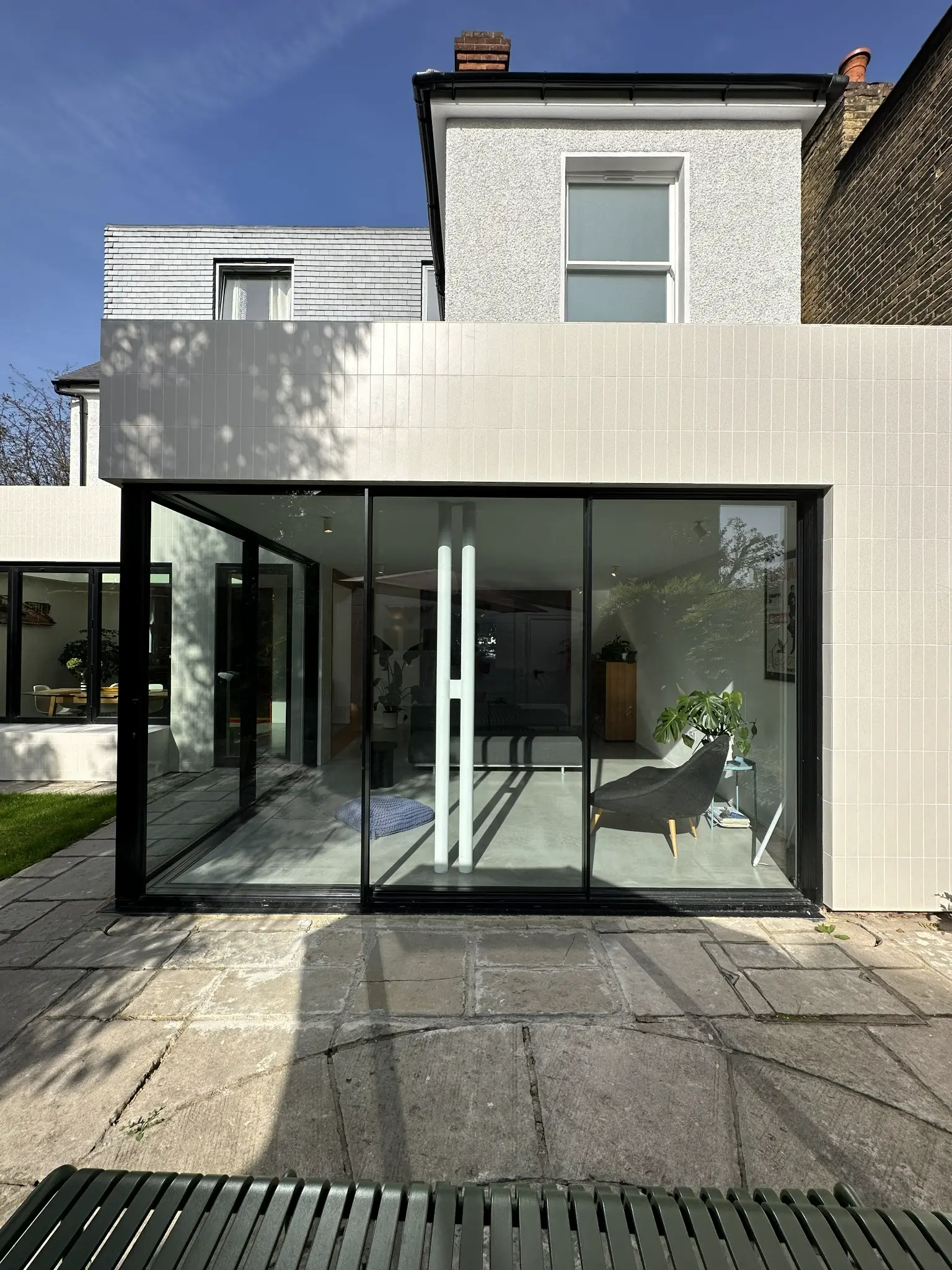
Sliding doors, particularly modern lift-and-slide systems, feature large, often fixed panels and one or more moving panels that glide parallel to the fixed sections. They do not fold away; instead, they overlap.
- Maximum Opening: Typically achieves 50% to 66% clear opening, depending on the configuration (e.g., two panels offer 50%, three panels offer 66%).
- Space Efficiency: Requires no external or internal stacking space, as the panels remain within the track footprint.
- Aesthetics: Known for their minimalist design and expansive glass areas. They offer fewer, thicker vertical sightlines, maximising the uninterrupted view when closed. Modern systems often feature ultra-slim frames (down to 20mm interlock).
Pro Tip
When planning your furniture layout, remember that bifold doors require clear space for the stack, which can dictate where you place sofas or dining tables. Sliding doors are more forgiving, as their operation is contained entirely within the wall plane.
Thermal Performance and UK Building Regulations
Thermal efficiency is paramount in UK construction, governed by Part L of the Building Regulations (Conservation of Fuel and Power). Both door types must meet stringent U-value requirements.
Understanding U-Values
The U-value measures how effectively a component (like a door or window) prevents heat from escaping. The lower the U-value, the better the insulation.
- Current Requirement (England, Part L 2022): Replacement doors must achieve a U-value of 1.4 W/m²K or less. New extensions and new builds typically require 1.2 W/m²K or less.
Achieving these low U-values relies heavily on the quality of the thermal break in the aluminium frame and the specification of the glazing unit (typically high-performance double or triple glazing).
Comparison of Thermal Performance
Generally, high-quality sliding doors often have a slight advantage in achieving extremely low U-values compared to bifolds.
- Sliding Doors: Due to their larger glass panels and fewer interruptions (less frame material), they often excel. Modern slimline sliders, using advanced thermal breaks and sometimes triple glazing, can easily achieve 1.2 W/m²K, with some systems reaching 0.8 W/m²K.
- Bifold Doors: While excellent modern bifolds meet the 1.4 W/m²K requirement comfortably, the multiple hinges, seals, and folding points introduce more potential thermal weak spots than a simple sliding track. Achieving U-values below 1.2 W/m²K is possible but often requires thicker frames and higher-specification glazing.
When commissioning your doors, always request the specific U-value calculation for the system and size you intend to install to ensure compliance with local Building Control.
Security, Weather Tightness, and Durability
Security and weather resistance are crucial, especially given the UK’s variable climate.
Security Considerations
Both systems, when manufactured to modern standards, offer high levels of security. Look for compliance with PAS 24: 2016, the UK standard for enhanced security performance.
- Bifold Doors: Rely on multi-point locking mechanisms on the intermediate panels and the main traffic door, combined with robust hinge designs and anti-lift pins.
- Sliding Doors: Benefit from the sheer weight and size of the panels, making them difficult to force. Lift-and-slide mechanisms physically drop the panel onto the track when locked, creating a highly secure seal. Multi-point locking is standard, often engaging directly into the frame.
Weather Tightness
Weather resistance relates to how well the doors prevent water and air ingress, measured by standards like BS 6375.
- Sliding Doors: Generally offer superior weather resistance. The overlapping panels and continuous track system provide excellent seals against driving rain and wind.
- Bifold Doors: Must manage water run-off and sealing across multiple folding joints and hinges. While modern systems are highly effective, the complexity of the seals means they require careful installation and maintenance to ensure long-term performance, particularly in very exposed locations.
Cost, Maintenance, and Practical Considerations
The initial cost, long-term maintenance, and practical limitations often drive the final decision.
Cost Comparison
Pricing is highly dependent on frame material (aluminium is standard for both), size, glazing specification (double vs. triple), and brand.
- Bifold Doors: Often have a higher initial cost per square metre than standard sliding doors due to the complexity of the hardware (hinges, rollers, multiple locking points).
- Sliding Doors: Standard sliding systems can be more cost-effective. However, high-specification, ultra-slimline, or large-format lift-and-slide doors often become significantly more expensive than bifolds due to the engineering required to handle massive, heavy glass panels.
Maintenance
Both systems require minimal maintenance, primarily involving cleaning the tracks and lubricating moving parts annually.
- Bifold Doors: Require attention to hinges and rollers to ensure smooth operation. Track cleanliness is critical, as debris can impede the folding action.
- Sliding Doors: Maintenance focuses almost exclusively on keeping the bottom track clear and ensuring the rollers and lift mechanism (if applicable) are lubricated.
Technical Specification Comparison Table
This table summarises key technical differences between typical high-quality aluminium bifold and sliding door systems suitable for UK residential use.
| Feature | Bifold Doors | Sliding Doors (Lift-and-Slide) |
|---|---|---|
| Clear Opening Percentage | Up to 95% | 50% to 66% |
| Aesthetic Focus | Indoor/Outdoor flow, full access | Uninterrupted views, minimalist design |
| Sightlines (Frame Thickness) | Multiple, moderate thickness (50-100mm) | Fewer, often ultra-slim (20-50mm interlock) |
| Typical U-Value Range (Double Glazing) | 1.4 – 1.6 W/m²K | 1.2 – 1.4 W/m²K |
| Space Requirement | Requires stacking space adjacent to the opening | Contained within the frame footprint (panels overlap) |
| Max Panel Width (Approx.) | 1.0 – 1.2 metres | 2.5 – 3.0 metres (or more) |
| Installation Complexity | Moderate – High (critical alignment needed for folding) | Moderate – High (heavy lifting required for large panels) |
Making the Final Decision: Which Door is Right for You?
The choice between bifold and sliding doors ultimately depends on your priorities for the space.
Choose Bifolds If...
Your primary goal is achieving the maximum possible clear opening to completely merge two spaces (e.g., kitchen and patio) during summer months. You value full access over minimal sightlines.
Choose Sliders If...
You prioritise maximising the view and daylight, even when the doors are closed. You need a highly space-efficient solution where furniture placement is tight, or you require superior thermal performance.
Consider Panel Size
If you have a very wide opening (over 6 metres), sliding doors may be more practical, requiring fewer panels and offering simpler operation than a very large bifold system.
Consider Exposure
If your property is in an exposed coastal or high-wind area, high-performance sliding doors generally offer a more robust and reliable weather seal.
When planning your project, always consult with your architect or structural engineer early on. They can advise on the structural requirements needed to support the weight and track systems of both door types, ensuring seamless integration with your extension or renovation.
***
About Shard AG
Shard AG specialises in the design, supply, and expert installation of premium architectural glazing solutions across the UK. Whether your project demands the expansive clear opening of bespoke bifold doors or the minimalist elegance of ultra-slim sliding systems, Shard AG provides thermally efficient, PAS 24 certified products tailored to meet the strict requirements of UK Building Regulations Part L (2022). Our team works closely with homeowners and contractors to deliver precision-engineered glazing that enhances both the performance and aesthetic value of your property.