


The garden room has evolved from a simple shed into a sophisticated, year-round extension of the home. Whether you plan to use it as a home office, gym, or relaxation space, the glazing you choose is perhaps the most critical element affecting its comfort, energy efficiency, and aesthetic appeal. Selecting the right windows and doors for a garden room requires careful consideration of thermal performance, security standards, and compliance with UK Building Regulations.
Understanding UK Building Regulations and Thermal Performance
For a garden room to be comfortable and usable throughout the year, it must be adequately insulated. While many smaller garden buildings are exempt from full Building Regulations if they are under 15m² floor area and contain no sleeping accommodation, any structure over 30m² or intended for permanent habitation (or located within 1m of a boundary) will typically require full compliance.
Crucially, if the garden room is connected to the main dwelling (even via a narrow corridor) or if it is designed to be a permanent, habitable space, it must adhere to the stringent thermal efficiency requirements set out in Approved Document L (Conservation of Fuel and Power).
U-Values and Energy Efficiency
The U-value measures how quickly heat transfers through a structure; the lower the U-value, the better the insulation. Modern glazing must meet specific requirements to ensure energy conservation.
- Replacement Glazing (Existing Buildings): Typically requires a maximum U-value of 1.4 W/m²K.
- New Build Glazing (Garden Rooms/Extensions): The target U-value for windows and doors is typically 1.2 W/m²K or better.
Achieving these low U-values usually necessitates high-specification double glazing or, increasingly, triple glazing, especially if the glazed area constitutes a significant proportion of the total wall area.
Pro Tip
When calculating the total thermal performance of your garden room, remember that the U-value provided by the glass manufacturer (the centre pane U-value) is different from the overall Window Energy Rating (WER) or the total U-value of the unit (including the frame and spacer bar). Always ask for the overall unit U-value to ensure compliance.
Double Glazing vs. Triple Glazing
The choice between double and triple glazing hinges on budget, space usage, and the desired level of thermal and acoustic performance.
Double Glazing (Standard High-Performance)
Modern double glazing consists of two panes of glass separated by a sealed cavity, usually filled with an inert gas like Argon. It is the standard minimum requirement for new UK installations.
- Construction: Two panes (typically 4mm thick) separated by a 16mm or 20mm spacer bar.
- Performance: Can easily achieve U-values between 1.2 W/m²K and 1.4 W/m²K, especially when combined with Low-E (low emissivity) coatings.
- Advantages: Cost-effective, lighter weight, excellent performance for most applications.
Triple Glazing (Superior Performance)
Triple glazing uses three panes of glass and two gas-filled cavities, offering significantly enhanced thermal and acoustic insulation.
- Construction: Three panes separated by two cavities (e.g., 4/12/4/12/4 configuration).
- Performance: Can achieve extremely low U-values, often below 0.8 W/m²K.
- Advantages: Exceptional thermal retention (reducing heating costs), superior soundproofing (ideal for home offices near busy roads), and reduced internal condensation.
- Considerations: Higher initial cost, heavier frames required, and thicker overall unit depth.
Selecting the Right Frame Material
The frame material plays a crucial role in the overall U-value, durability, and maintenance requirements of the garden room glazing.
uPVC (Unplasticised Polyvinyl Chloride)
uPVC remains a highly popular choice due to its affordability and excellent thermal properties.
- Pros: Highly affordable, virtually maintenance-free, excellent insulation, and available in various colours and finishes (including woodgrain effect).
- Cons: Aesthetic can sometimes be considered less premium than timber or aluminium; durability is typically around 20-30 years.
Aluminium
Aluminium is the material of choice for large, contemporary glazed areas, such as bi-fold or sliding doors, due to its inherent strength.
- Pros: Extremely strong, allowing for very slim sightlines and larger glass panels. Highly durable and resistant to corrosion. Essential for achieving modern, minimalist aesthetics.
- Cons: Aluminium is naturally conductive, so high-quality frames must incorporate a robust thermal break (usually polyamide) to prevent heat loss and meet Building Regulations. Higher cost than uPVC.
Timber (Hardwood or Engineered)
Timber offers a natural, traditional look that blends well with garden settings.
- Pros: Excellent natural insulator, aesthetically pleasing, sustainable source options.
- Cons: Requires regular maintenance (painting or staining) to prevent weathering and rot. Higher initial cost and potential for expansion/contraction if not properly engineered.
Garden Room Door and Opening Options
The type of door chosen significantly impacts accessibility, ventilation, and the connection between the garden room and the outdoor space.
Bi-Fold Doors
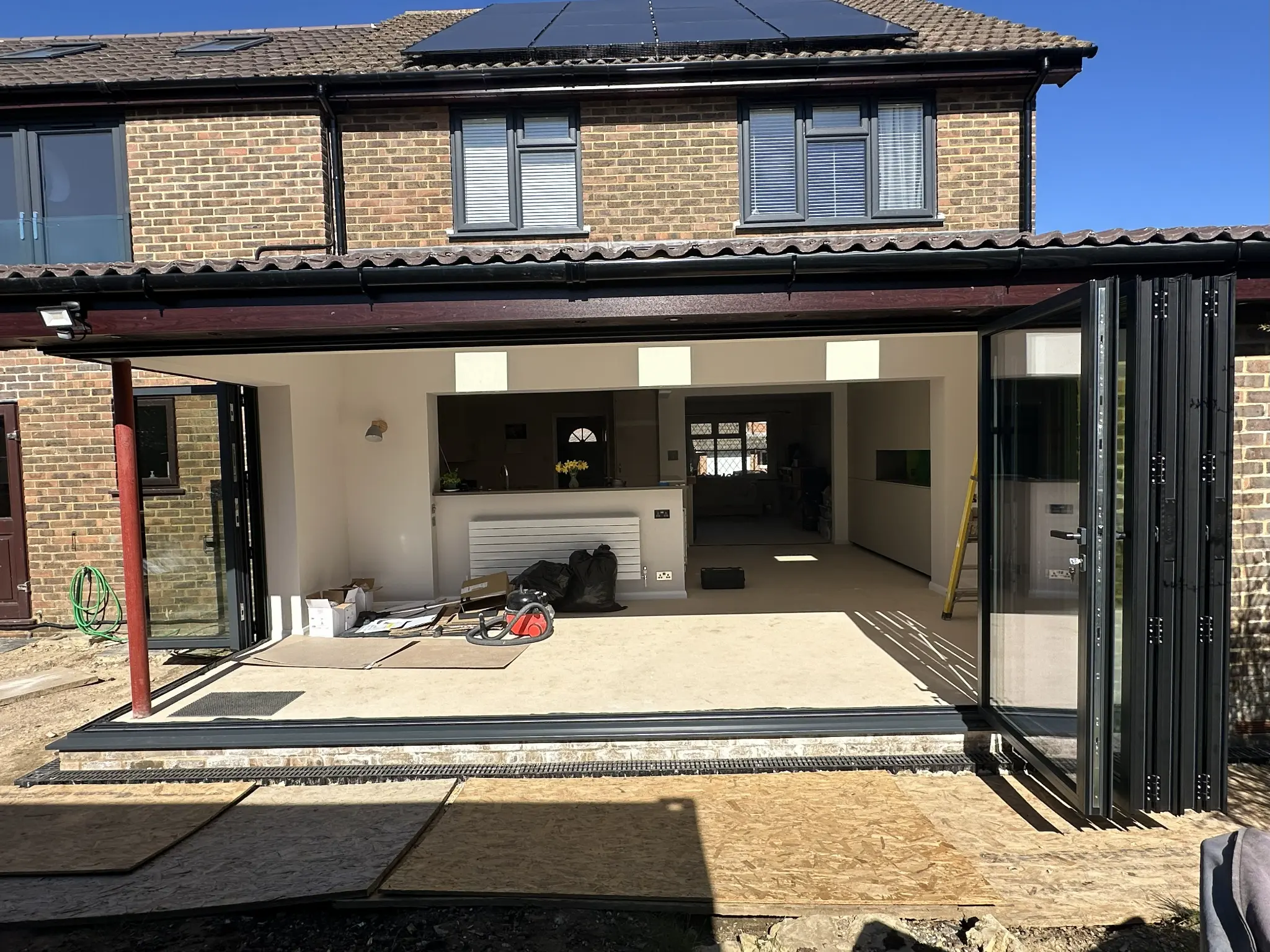
Bi-folds are highly sought after for garden rooms as they can open up an entire wall, creating a seamless transition to the garden.
- Functionality: Panels fold concertina-style and stack neatly to one or both sides.
- Considerations: Require sufficient space for the stacked panels. Ensure they have a low-threshold option for easy access, but check that the threshold still provides a weather-tight seal.
Sliding Patio Doors (Lift and Slide)
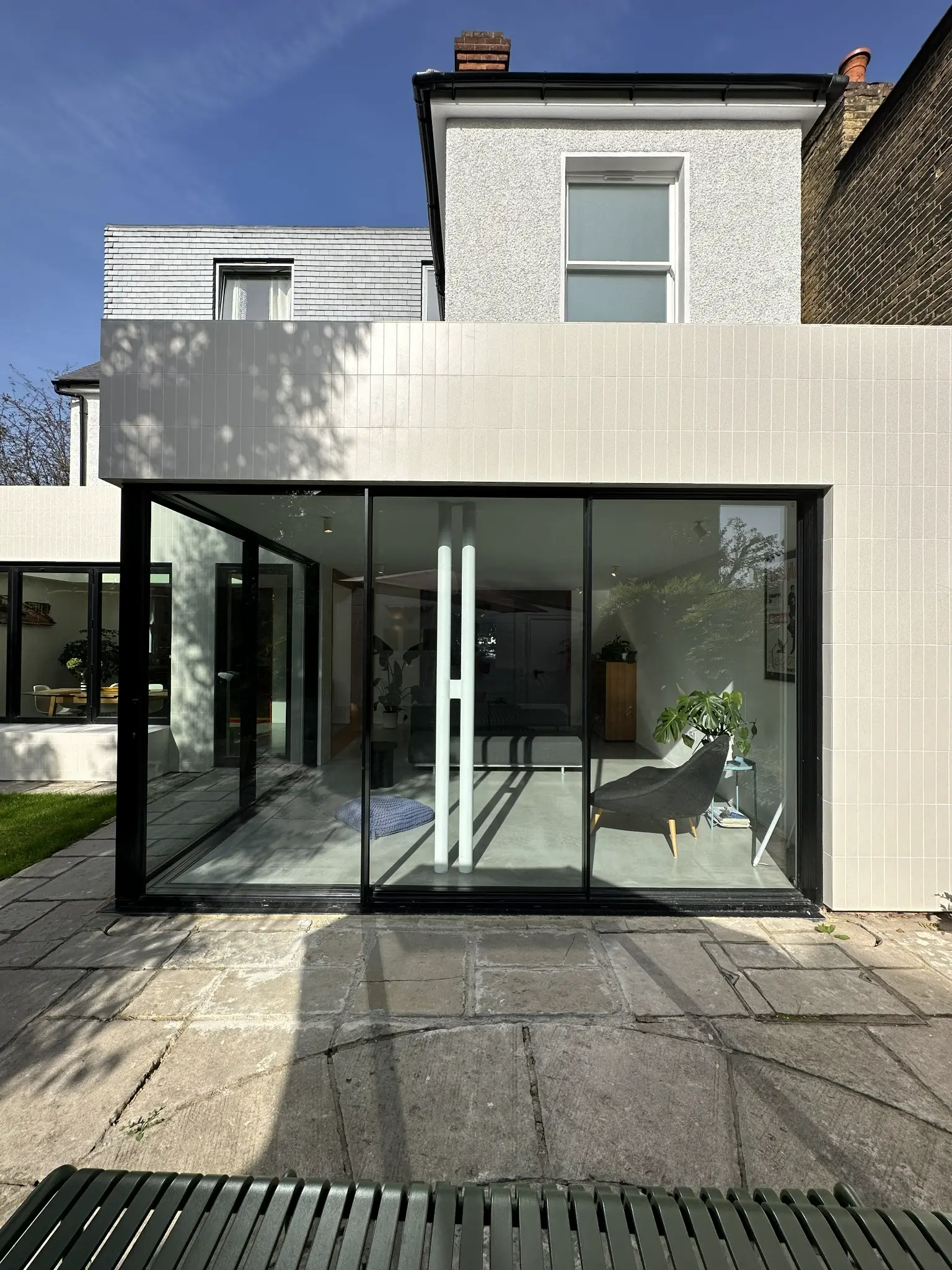
Modern sliding doors offer vast, uninterrupted views, making them ideal for maximising natural light.
- Functionality: Panels glide parallel to each other, meaning they do not intrude on internal or external space.
- Considerations: Typically allow for larger individual glass panes than bi-folds. Lift and slide mechanisms offer smoother operation and superior weather sealing.
French Doors
A classic, simple solution, French doors are suitable for smaller openings or where budget is a primary concern.
- Functionality: Two hinged doors that open outwards or inwards.
- Considerations: Provide excellent ventilation but offer a smaller clear opening than bi-folds or sliders.
Enhanced Security
Look for glazing systems certified to PAS 24 and incorporating multi-point locking mechanisms, particularly important as garden rooms are often isolated from the main house.
Acoustic Comfort
If your garden room is a workspace, specify laminated glass or use asymmetric glass thicknesses (e.g., 6mm outer, 4mm inner) to significantly improve sound dampening.
Solar Control
South-facing garden rooms can overheat. Consider solar control glass, which reflects a percentage of solar energy, preventing excessive heat build-up without sacrificing too much light.
Low Maintenance
Choosing aluminium or high-quality uPVC frames minimises the ongoing maintenance required, allowing you more time to enjoy the space rather than maintaining it.
Security Features and Maintenance
Because garden rooms are often detached and contain valuable equipment (laptops, gym gear), security is paramount. Glazing systems must offer robust protection against forced entry.
Security Standards
In the UK, look for products that meet PAS 24: 2016 Enhanced Security Performance standards. This certification confirms that the windows and doors have been rigorously tested against common attack methods.
- Locking Systems: Multi-point locking systems across all opening doors and windows are essential.
- Glazing Security: Specify laminated glass for the outer pane. Unlike standard toughened glass (which shatters into small pieces), laminated glass holds together even when broken, deterring intruders.
- Hinges: Ensure hinges on opening windows are secured internally and feature 'dog bolts' or similar anti-jemmy devices.
Maintenance Considerations
| Frame Material | Typical Maintenance | Thermal Break Required? | Best for Large Spans? |
|---|---|---|---|
| uPVC | Wipe clean only; check seals annually. | No (inherently insulating) | No (limited structural strength) |
| Aluminium | Wipe clean; lubricate tracks/locks biannually. | Yes (essential for Part L compliance) | Yes (high strength, slim sightlines) |
| Timber | Annual inspection; re-paint/re-stain every 5-7 years. | No (inherently insulating) | Moderate (depends on engineering) |
Regardless of the material, regular cleaning of the glass and lubrication of moving parts (tracks, hinges, locks) will ensure longevity and smooth operation.
Final Considerations for Your Glazing Project
Designing the perfect garden room involves balancing aesthetics with performance. While large expanses of glass look stunning, they must be specified correctly to prevent the room from becoming an oven in summer or a freezer in winter.
Always consult with your builder and glazing supplier early in the design process. They can advise on the optimal glass specification (including solar gain coefficients and light transmission) based on the orientation of your garden room (e.g., south-facing rooms need more solar control). Furthermore, proper installation is key; even the highest specification glazing will perform poorly if the seals and thermal breaks are compromised during fitting.
By prioritising low U-values, robust security features (PAS 24), and durable frame materials with effective thermal breaks, you can ensure your garden room remains a comfortable, energy-efficient, and secure space for years to come.