
Choosing the Right Sliding Doors: A UK Homeowner's Guide
Expert guide for UK homeowners on selecting sliding doors. Learn about material choices, U-values, security standards, and compliance with UK Building Regulations Part L (2022).

Shard Architectural Glazing
19 January 2026
Expert guide for UK homeowners on selecting sliding doors. Learn about material choices, U-values, security standards, and compliance with UK Building Regulations Part L (2022).
📋In This Article
Choosing the Right Sliding Doors: A UK Homeowner's Guide
Sliding doors, whether patio doors, lift-and-slide systems, or expansive minimal frame designs, are a popular choice for UK homeowners looking to maximise natural light and seamlessly connect indoor living spaces with gardens or patios. However, selecting the right system involves navigating various factors, from thermal performance and security to material choice and operational mechanism. This comprehensive guide provides the technical knowledge and practical considerations necessary to make an informed decision.
Understanding the Types of Sliding Door Systems
While often grouped simply as 'patio doors', modern sliding systems offer diverse functionality and aesthetic profiles. Understanding the differences is crucial for selecting a door that suits your home's architecture and usage requirements.
Standard Inline Sliding Doors
These are the most common type, where one sash slides horizontally behind a fixed sash or another sliding sash. They are straightforward, reliable, and typically offer good value. They require minimal internal or external space for operation.
Lift-and-Slide Doors
Lift-and-slide doors represent a significant upgrade in engineering and performance. When the handle is turned, the sash is slightly lifted off its seals, allowing it to glide smoothly. When closed, the weight of the door rests firmly on the seals, creating a superior compression seal. This mechanism offers excellent thermal insulation and weather resistance, making them ideal for exposed locations or large openings.
Minimal Frame (Slimline) Sliding Doors
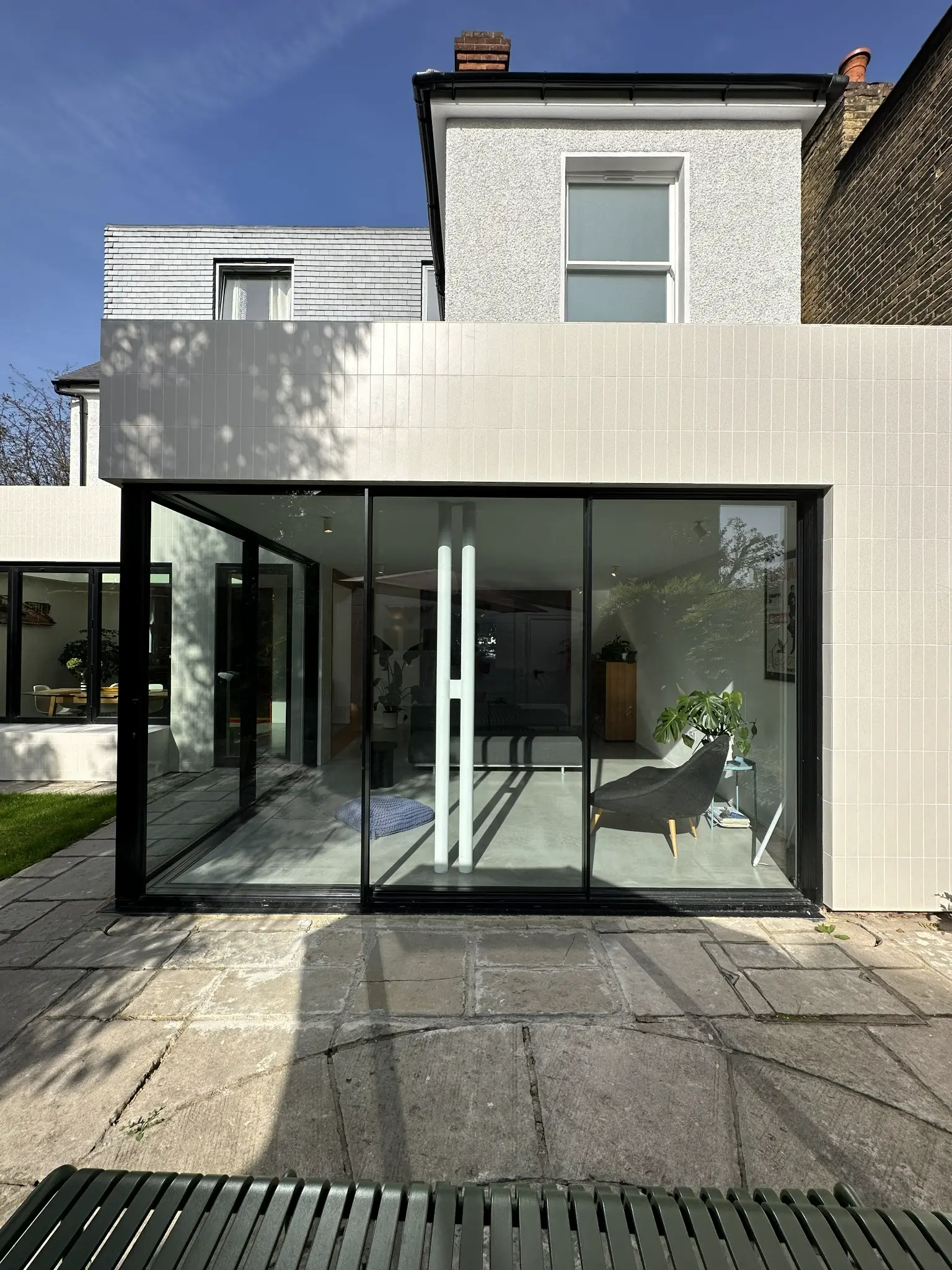
These systems are designed to maximise the glass area and minimise visible frame profiles (sometimes as slim as 20mm). They are highly sought after for contemporary architectural projects where aesthetics and light transmission are paramount. Due to their complex engineering, they often require specialised installation and are generally higher in cost.
Material Choices: Aluminium vs. uPVC vs. Timber
The frame material dictates the door's thermal performance, durability, maintenance needs, and aesthetic appeal.
| Feature | Aluminium | uPVC (Unplasticised Polyvinyl Chloride) | Engineered Timber |
|---|---|---|---|
| Aesthetics & Profile | Slim, modern, highly customisable colours (RAL codes). Ideal for large expanses. | Bulkier profile necessary for stability. Limited colour range, often white or woodgrain effect. | Traditional, warm aesthetic. Can be stained or painted. Requires thicker frames. |
| Durability & Lifespan | Excellent. Highly resistant to corrosion, warping, and fading. Long lifespan (40+ years). | Good. Can degrade or discolour over time, especially in strong sunlight. | Excellent, provided it is well-maintained and treated. Prone to swelling/warping if poorly sealed. |
| Thermal Performance | Very good, when combined with a robust polyamide thermal break. Essential for meeting UK Building Regs. | Excellent inherent insulator due to multi-chambered profiles. Easily meets standard U-value requirements. | Very good natural insulator. Performance depends heavily on the quality of the engineered wood and seals. |
| Maintenance | Very low. Occasional cleaning. | Low. Occasional cleaning. | Moderate to high. Requires periodic re-painting or re-staining every 5-10 years. |
Pro Tip
When selecting aluminium, always confirm the depth and quality of the polyamide thermal break. This non-metallic barrier is what prevents cold transfer through the inherently conductive aluminium frame. A deeper, multi-chambered thermal break is essential for achieving the required low U-values for modern UK homes.
Thermal Performance and UK Building Regulations
Thermal performance, measured by the U-value (W/m²K), is perhaps the most critical technical consideration. A lower U-value indicates better insulation and less heat loss, directly impacting your home's energy efficiency and heating bills.
UK Building Regulations Part L (2022 England)
All new and replacement glazing installations in England must comply with the current standards set out in Part L (Conservation of Fuel and Power). Failure to comply means the installation may not be signed off by Building Control, which can cause issues when selling the property.
- Replacement Doors: The maximum allowable U-value for replacement doors (including sliding doors) is typically 1.4 W/m²K.
- New Build/Extensions: Doors installed in new extensions or new build properties must generally meet a more stringent standard, often requiring a U-value of 1.2 W/m²K or better.
To achieve these low U-values, modern sliding doors almost universally require high-performance glazing:
Glazing Specifications
- Double Glazing: Standard double glazing (e.g., 4/16/4mm configuration) with low-emissivity (Low-E) glass and argon gas filling is the minimum required to meet 1.4 W/m²K.
- Triple Glazing: For systems aiming for 1.2 W/m²K or better, especially in large openings or exposed locations, triple glazing may be necessary. This significantly increases the weight and requires a highly robust frame system (like lift-and-slide or high-specification aluminium).
- Spacer Bars: Choose 'warm edge' spacer bars (made of composite material or silicone foam) instead of traditional aluminium spacers, as these significantly reduce thermal bridging at the edge of the glass unit.
Security and Weather Resistance Standards
Large expanses of glass can be perceived as a security weakness. Reputable UK door systems must meet stringent security standards to protect your home.
Security Standards (PAS 24)
The primary security standard for doors and windows in the UK is PAS 24: 2022 (Enhanced Security Performance Requirements for Doorsets and Windowsets). Doors certified to PAS 24 have undergone rigorous testing against common burglary techniques, including manual attack, manipulation, and forced entry. Always ask for proof of PAS 24 certification, particularly for ground floor installations.
Key Security Features
- Multi-Point Locking: Essential for large doors, engaging locks at multiple points along the frame.
- Anti-Lift Mechanism: Prevents the sliding sash from being lifted off its track when the door is closed and locked.
- Laminated Glass: While not always mandatory, laminated glass (two panes bonded by a plastic interlayer) offers superior resistance to shattering compared to standard toughened glass.
- Cylinder Locks: Ensure the cylinder lock is certified to TS007 3-star or Sold Secure Diamond standards to resist snapping, drilling, and picking.
Weather Resistance
Sliding doors are tested for air permeability, water tightness, and wind load resistance. If your property is in an exposed area (e.g., coastal or high elevation), pay close attention to the door's water tightness rating (measured in Pascals, Pa). Lift-and-slide systems generally offer superior weather sealing compared to standard inline sliders due to the compression mechanism.
Practical and Design Considerations
Threshold Design
The threshold is where the door meets the floor. Modern design favours low-profile or flush thresholds to eliminate trip hazards and create a seamless transition between inside and out. While aesthetically pleasing, flush thresholds require careful drainage planning to ensure water does not ingress into the property, especially during heavy rainfall. Consult with your installer about integrated drainage channels if opting for a flush design.
Configuration and Operation
Sliding doors can be configured in various ways:
- Two Pane: One fixed, one sliding.
- Three Pane: Central sliding pane, or two outer fixed panes with a central slider.
- Pocket Doors: For the ultimate open feel, pocket doors slide entirely into a cavity wall, completely disappearing when open. This is complex and expensive but delivers maximum aperture.
Weight and Operation
Large glass panels, especially triple glazed units, are extremely heavy. High-quality rollers and tracks are essential for smooth, effortless operation. Cheap systems often struggle to handle the weight of modern, high-performance glass, leading to stiffness and premature failure.
Maximised Natural Light
Sliding doors offer significantly larger glass areas than traditional French doors, flooding interiors with daylight and reducing reliance on artificial lighting.
Space Efficiency
Unlike bi-fold or hinged doors, sliding doors do not require internal or external swing space, making them perfect for smaller patios or balconies.
Uninterrupted Views
Minimal frame systems provide panoramic, uninterrupted views of the garden or landscape, enhancing the connection between the home and the outdoors.
Superior Thermal Performance
Modern lift-and-slide and thermally broken aluminium systems easily achieve the low U-values required by UK Building Regulations, improving energy efficiency.
Installation and Compliance
Even the highest specification door will fail if installed poorly. Installation quality is paramount for achieving the stated U-values, weather tightness, and security performance.
For replacement doors, the work is typically covered under the Competent Person Scheme (CPS). Installers registered with schemes like FENSA or CERTASS can self-certify that the work complies with Building Regulations. If your installer is not registered, you must notify your Local Authority Building Control before the work begins to arrange inspection and sign-off. This is particularly important for complex installations like new extensions or minimal frame systems.
When planning your project, ensure the following:
- The installer provides a clear U-value calculation for the specific door system being installed.
- The structural opening is correctly prepared, especially regarding lintels and load-bearing requirements for heavy glass units.
- Adequate sealing and insulation are applied around the perimeter of the frame to prevent thermal bridging and air leakage.
Choosing the right sliding door system requires careful balancing of aesthetic desires with technical requirements for security and thermal efficiency. By focusing on certified performance data (U-values, PAS 24) and selecting a high-quality material and mechanism (such as lift-and-slide or thermally broken aluminium), UK homeowners can ensure their investment delivers comfort, light, and long-term value.
Expert Glazing Solutions from Shard AG
At Shard AG, we specialise in supplying and installing premium architectural glazing solutions across the UK. We offer a curated range of high-performance sliding door systems, including advanced minimal frame and lift-and-slide designs, all engineered to exceed current UK Building Regulations Part L requirements. Our focus is on delivering exceptional thermal performance (U-values as low as 0.9 W/m²K) combined with robust PAS 24 security features. Contact Shard AG today to discuss your project requirements and explore how our expert team can help you achieve your vision for a brighter, more energy-efficient home.
Explore Our Products
Discover how Shard Architectural Glazing can transform your home with our premium glazing solutions:
Ready to Transform Your Home?
Get in touch with our expert team for a free consultation and personalised quote. We'll help you choose the perfect glazing solution for your property.