


Designing for Natural Ventilation: UK Homeowner's Guide
Learn how natural ventilation works in UK homes, covering stack effect, cross-ventilation, Building Regulations (Part F), and practical design considerations.

Shard Architectural Glazing
24 December 2025
Learn how natural ventilation works in UK homes, covering stack effect, cross-ventilation, Building Regulations (Part F), and practical design considerations.
📋In This Article
Designing for Natural Ventilation: A UK Homeowner's Guide
Natural ventilation is a fundamental aspect of healthy and comfortable living spaces. In the context of modern, highly insulated UK homes, designing effective natural airflow is crucial not only for occupant well-being but also for meeting stringent Building Regulations regarding energy efficiency and air quality. This guide explores the principles, benefits, and practical considerations for incorporating robust natural ventilation into your home design or renovation project.
The Core Principles of Natural Ventilation
Natural ventilation relies entirely on natural forces—wind pressure and thermal buoyancy (the stack effect)—to move air through a building. Unlike mechanical ventilation systems (like MVHR), it requires careful architectural planning to ensure consistent performance across different weather conditions.
Understanding Airflow Drivers
- Wind-Driven Ventilation (Cross-Ventilation): This occurs when wind creates positive pressure on the windward side of a building and negative pressure on the leeward side. By strategically placing openings (windows, trickle vents, doors) on opposite or adjacent walls, air is drawn across the space. Effective cross-ventilation requires a clear path for air movement, meaning internal layouts must be considered.
- Buoyancy-Driven Ventilation (Stack Effect): This relies on the principle that warm air is less dense than cool air. As warm air inside the building rises, it escapes through high-level openings (e.g., rooflights, high windows), drawing cooler, fresh air in through low-level openings. The greater the vertical distance between the inlet and outlet, the stronger the stack effect.
Pro Tip
When designing for cross-ventilation, ensure the total area of the inlet openings is roughly equal to or slightly smaller than the outlet openings. This helps maintain internal air pressure and prevents excessive draughts while ensuring continuous flow. For deep plan homes, consider internal transfer grilles or louvres above doors to facilitate air movement between rooms.
The Importance of Air Change Rate
Ventilation is measured by the air change rate (ACH), which is the number of times the entire volume of air in a room is replaced per hour. While mechanical systems offer precise control, natural ventilation relies on design choices to meet minimum requirements. Adequate ventilation is essential to dilute pollutants, remove excess moisture (preventing condensation and mould), and manage internal temperatures.
UK Building Regulations and Part F Compliance
In the UK, ventilation requirements are primarily governed by Approved Document F (Part F) of the Building Regulations. Compliance is mandatory for new builds and significant renovation projects.
Part F Requirements for Dwellings
Part F differentiates between 'background' ventilation (continuous low-level air exchange) and 'purge' ventilation (rapid air exchange to remove high concentrations of pollutants or moisture, e.g., after cooking or showering).
1. Background Ventilation:
- This is typically provided by trickle vents integrated into window frames or through dedicated wall vents.
- The required equivalent area (EA) of the background ventilation depends on the size and type of the room and the overall airtightness strategy of the building.
- For new dwellings, the minimum requirement for habitable rooms is often based on the floor area (e.g., 5,000 mm² EA for a room up to 10m²).
2. Purge Ventilation:
- This is achieved by opening windows or doors.
- The minimum requirement is usually an openable area equivalent to at least 1/20th (5%) of the floor area of the room, or a specific minimum opening size (e.g., 400mm high by 400mm wide).
- This ensures that homeowners can rapidly clear stale air or high humidity when necessary.
3. Extract Ventilation (Kitchens and Bathrooms):
While natural ventilation covers background and purge needs, kitchens and bathrooms require mechanical extract fans to cope with high moisture and odour generation, ensuring that moist air is removed directly to the outside before it can spread and cause condensation issues elsewhere.
Design Strategies for Effective Airflow
Successful natural ventilation requires integrating architectural elements with the local climate and building orientation.
Window Specification and Placement
The type of window opening significantly impacts airflow:
- Casement Windows: Offer excellent capture efficiency when angled to direct prevailing winds into the building.
- Top-Hung or Bottom-Hung Windows (Awning/Hopper): Better suited for stack effect, allowing warm air to escape at the top or drawing air in low without creating direct draughts.
- Sash Windows: Can facilitate both inlet (lower sash open) and outlet (upper sash open) simultaneously, enhancing the stack effect.
For cross-ventilation, windows should be positioned high up on the wall to maximise the mixing of fresh air with the warmer air near the ceiling, increasing comfort and efficiency.
Glazing Solutions and Ventilation
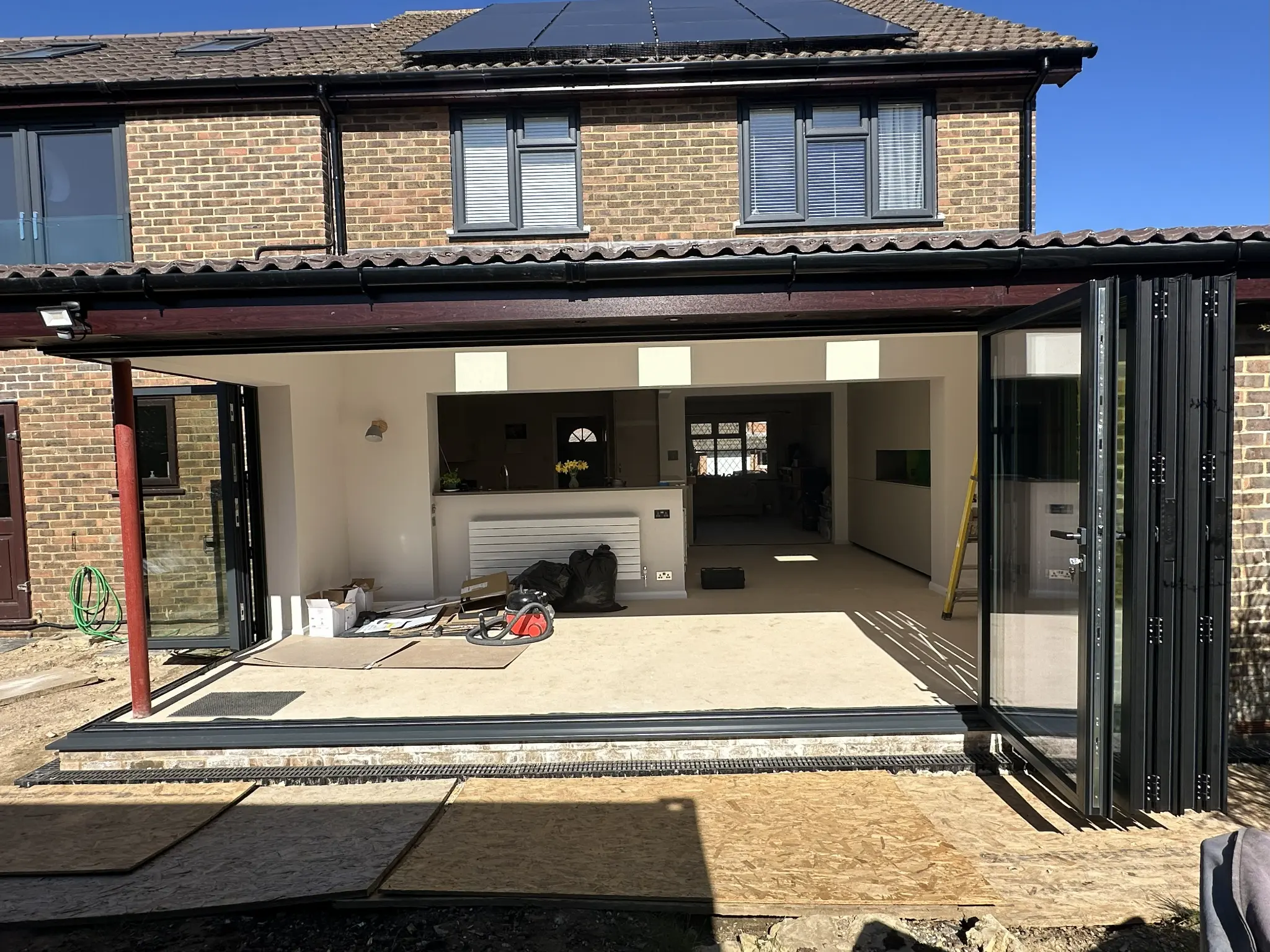
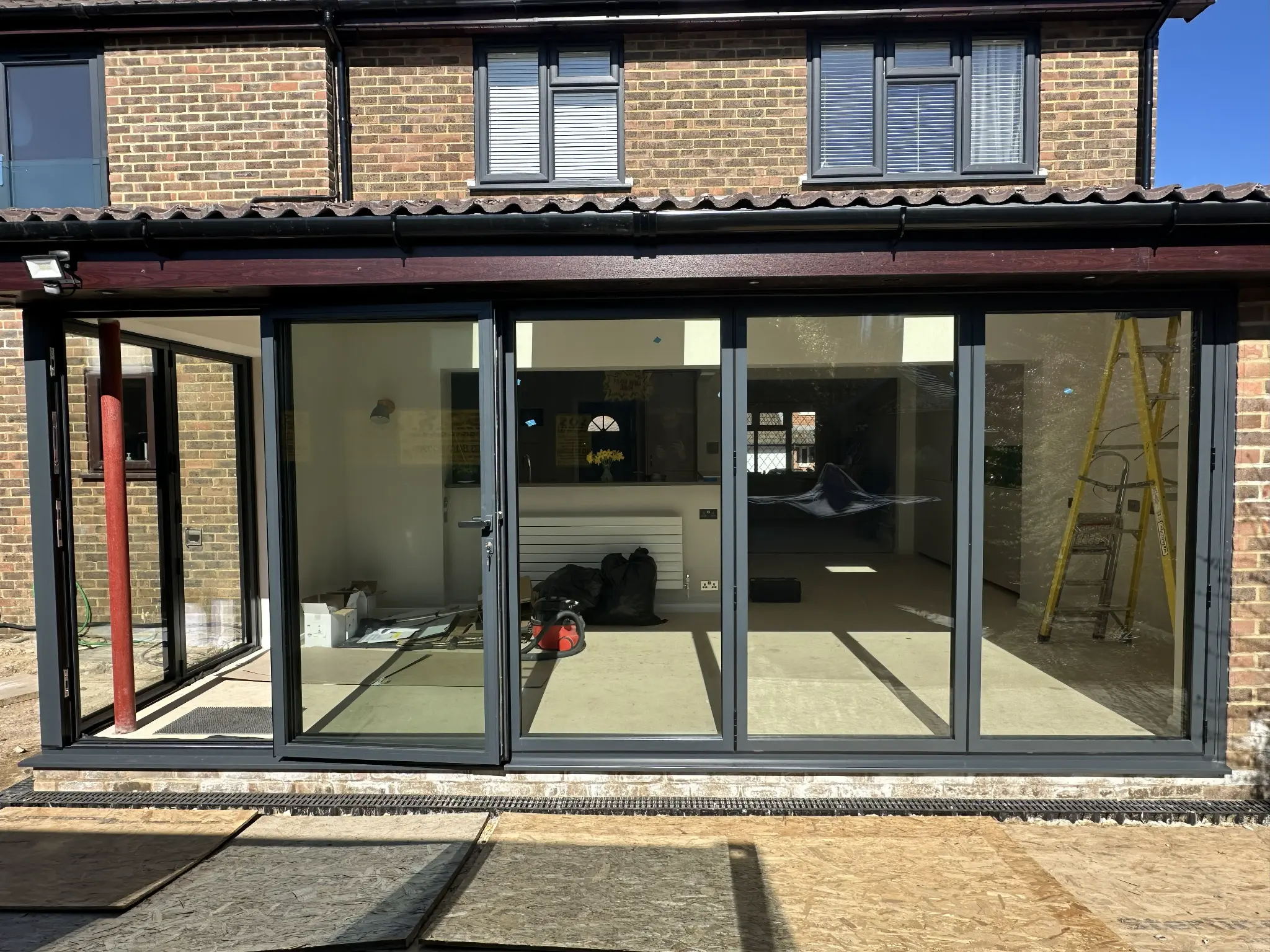
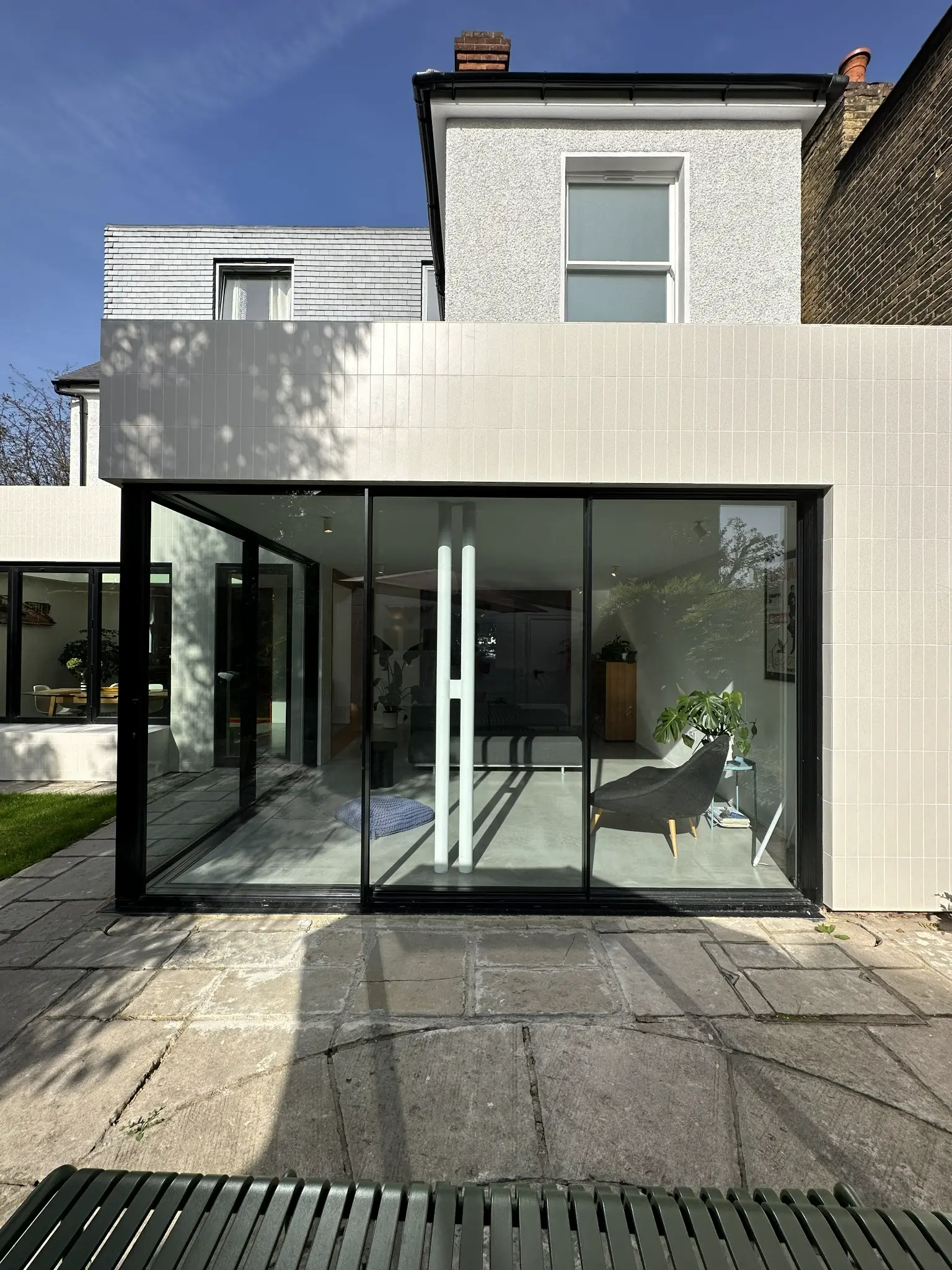
Modern architectural glazing plays a dual role: providing light and managing ventilation. Large sliding doors, bifold doors, and expansive windows offer massive purge ventilation capacity. However, the integration of trickle vents is critical for meeting continuous background ventilation requirements, especially in highly airtight constructions.
When selecting glazing, ensure the frame profile can accommodate high-performance trickle vents (often slot vents) that meet the required Equivalent Area (EA) specified by your building control officer, typically ranging from 2,500 mm² to 5,000 mm² EA per vent.
The Role of Thermal Mass
In hot weather, natural ventilation works best when paired with high thermal mass (e.g., concrete floors, heavy internal walls). During the day, the thermal mass absorbs heat. At night, the cooler external air drawn in via natural ventilation cools the mass, preparing it to absorb heat again the next day—a process known as 'night-time cooling' or 'night purging'.
Advantages and Limitations of Natural Ventilation
While often the most sustainable and simplest approach, natural ventilation is not without its challenges, particularly in dense urban environments.
Energy Efficiency
Natural ventilation requires zero energy input, significantly reducing electricity demand compared to mechanical cooling or fan systems.
Improved Air Quality
It continuously flushes internal air, reducing concentrations of volatile organic compounds (VOCs) and CO₂ build-up, leading to better health and cognitive function.
Acoustic Comfort
When using passive elements like trickle vents, continuous ventilation can be achieved without the noise associated with mechanical fans, though open windows may introduce external noise.
Low Maintenance
Systems relying on openable windows and trickle vents have fewer moving parts than mechanical systems, resulting in lower long-term maintenance costs.
Limitations and Challenges
1. Reliability: Performance is heavily dependent on external conditions (wind speed, temperature difference). On still, warm days, natural ventilation can be insufficient, potentially leading to overheating.
2. Noise and Security: Open windows provide excellent purge ventilation but compromise security and introduce external noise pollution, a major concern in urban areas.
3. Air Quality Concerns: In areas with high traffic or industrial pollution, drawing in unfiltered external air can introduce particulates (PM2.5) and nitrogen dioxide (NO₂). Mechanical systems often include filtration, which natural ventilation lacks.
4. Draughts: Poorly designed cross-ventilation can lead to uncomfortable draughts, particularly in winter if vents are not properly regulated or sealed.
Comparing Natural vs. Mechanical Ventilation
For highly airtight UK homes (often achieving less than 3 m³/(h.m²) @ 50 Pa), relying solely on infiltration and basic natural ventilation can be risky. The table below compares the basic characteristics of natural ventilation with the common mechanical solution, Mechanical Ventilation with Heat Recovery (MVHR).
| Feature | Natural Ventilation (NV) | Mechanical Ventilation (MVHR) |
|---|---|---|
| Control & Reliability | Low; dependent on weather (wind/temperature) | High; constant, controlled flow rate |
| Energy Use | Zero (passive) | Low (fans require electricity) |
| Air Quality (External) | Unfiltered; introduces external pollutants | Filtered; removes particulates and pollen |
| Heat Recovery | None; heat loss occurs through open vents | High (recovers 70-90% of heat from outgoing air) |
| Acoustics | Quiet when vents are used; noisy when windows are open | Low fan noise; can be noisy if poorly installed |
| Cost (Installation) | Low (integrated into windows/structure) | High (requires ducting, unit, and professional installation) |
Practical Considerations for Homeowners
1. Zoning and Internal Layout
Design your home with internal zones that facilitate airflow. Open-plan living areas benefit greatly from cross-ventilation. For cellular layouts (many small rooms), ensure that transfer paths (such as grilles or undercuts beneath doors) are included to allow air to move from the fresh air inlet to the extract zones (kitchens/bathrooms).
2. Maintenance of Vents
Trickle vents and wall vents must be kept clean and unobstructed. Dust and debris can significantly reduce the effective area (EA) of the vent, compromising the required background ventilation rate. Regular checks, particularly after building work or decorating, are essential.
3. Airtightness Paradox
Modern UK construction prioritises airtightness to conserve energy (Part L). However, high airtightness means that natural infiltration is minimal, making the provision of dedicated, controllable ventilation (via trickle vents or mechanical systems) absolutely necessary. Do not rely on gaps and leaks for ventilation; if your home is well-sealed, you must provide intentional ventilation paths.
By carefully integrating principles of cross-ventilation and the stack effect, and ensuring strict compliance with UK Building Regulations Part F, homeowners can create healthy, comfortable, and energy-efficient environments that harness the power of natural airflow.
Expert Glazing Solutions from Shard AG
Achieving optimal natural ventilation often relies on high-quality architectural glazing components. At Shard AG, we specialise in supplying and installing bespoke window and door systems that seamlessly integrate compliant background and purge ventilation solutions. From high-performance trickle vents that meet stringent Part F requirements to large-format sliding doors that offer exceptional purge capacity, our products are designed to enhance both the thermal performance and the air quality of your UK home.
Explore Our Products
Discover how Shard Architectural Glazing can transform your home with our premium glazing solutions:
Ready to Transform Your Home?
Get in touch with our expert team for a free consultation and personalised quote. We'll help you choose the perfect glazing solution for your property.