

Designing Open Plan Living Spaces with Architectural Glazing
Explore the technical and design considerations for integrating architectural glazing into open plan living spaces in the UK, focusing on Building Regulations and thermal performance.

Shard Architectural Glazing
25 January 2026
Explore the technical and design considerations for integrating architectural glazing into open plan living spaces in the UK, focusing on Building Regulations and thermal performance.
📋In This Article
Designing Open Plan Living Spaces with Architectural Glazing
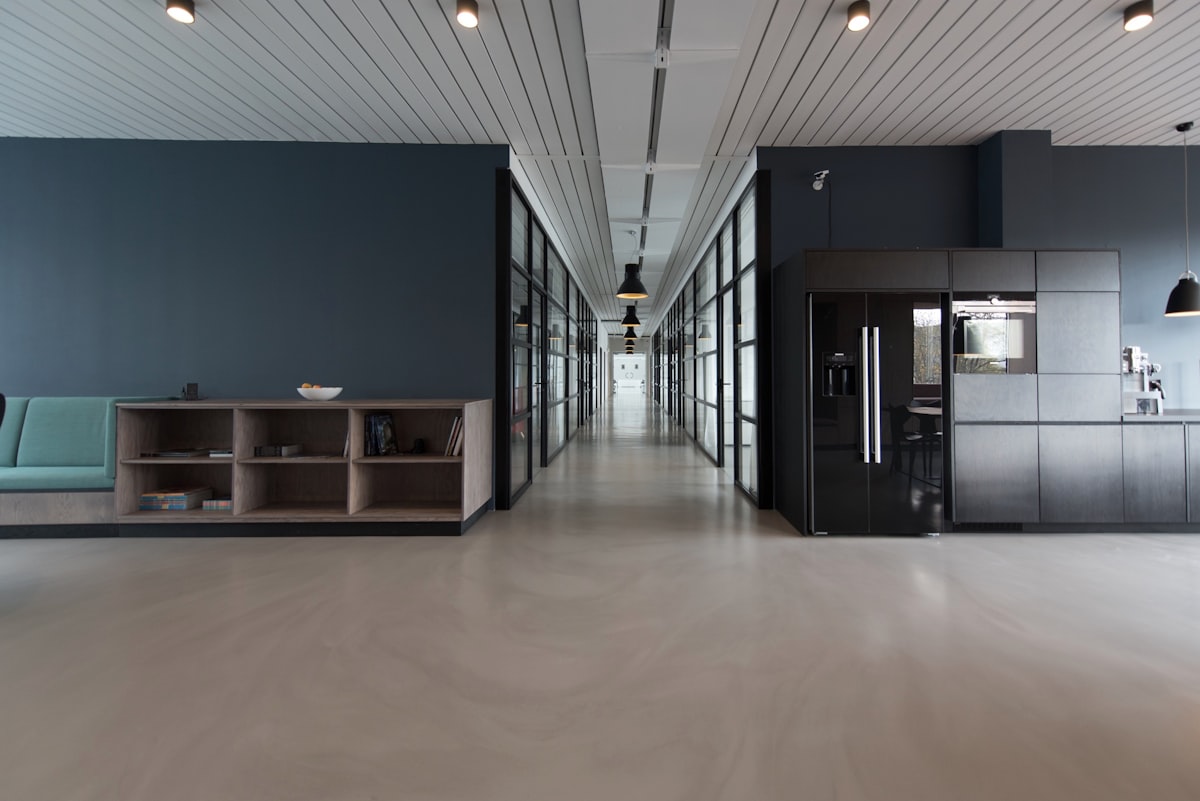
Open plan living has become a cornerstone of modern UK home design, offering flexibility, increased natural light, and a better connection between interior and exterior spaces. When planning an open plan conversion or extension, architectural glazing—such as large sliding doors, bifold doors, or expansive fixed panes—plays a crucial role in defining the aesthetic and functional success of the project. However, achieving this seamless look requires careful consideration of structural requirements, thermal performance, and adherence to UK Building Regulations.
Structural Considerations and Load Bearing
The transition to open plan living often involves removing internal load-bearing walls. This is perhaps the most critical step in the process, requiring professional input from a structural engineer.
Understanding Steelwork and Lintels
When a wall is removed, its load must be redistributed, typically using a steel beam (often referred to as a rolled steel joist or RSJ) or a heavy-duty timber lintel. The size and specification of this beam are determined by the structural engineer based on the loads above (e.g., roof, upper floors, or adjacent walls).
- Temporary Works: Proper temporary propping is essential during the installation of the new beam to ensure the structure remains stable.
- Foundations: In some cases, especially with large openings or extensions, the increased point load transferred by the new steelwork may require strengthening or upgrading the existing foundations.
- Fire Protection: Steel beams supporting upper floors or roofs must be encased in fire-resistant material (e.g., fire-rated plasterboard or intumescent paint) to meet Part B (Fire Safety) of the Building Regulations.
Integrating Glazing Frames
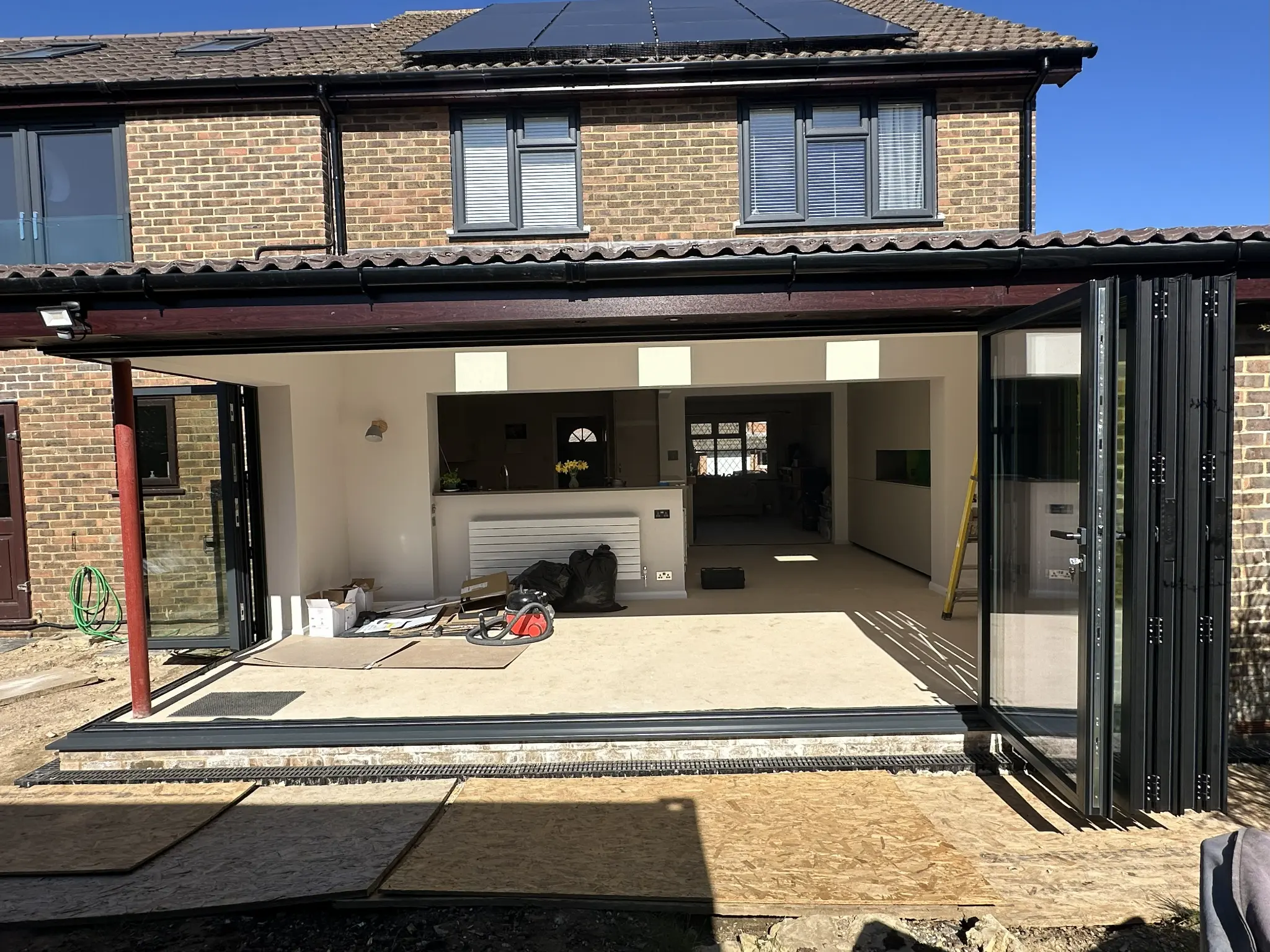
When installing large glazing systems, the structural opening must be perfectly square and adequately supported. High-performance glazing systems, especially sliding doors, rely on precise installation tolerances. The structural opening must accommodate the necessary cavity trays, damp-proof courses (DPCs), and insulation layers without compromising the integrity of the frame.
Thermal Performance and Building Regulations (Part L)
Open plan designs often feature large expanses of glass, which historically presented challenges regarding heat loss. Modern architectural glazing, however, is designed to meet stringent thermal requirements set out in Part L (Conservation of Fuel and Power) of the UK Building Regulations (2022 edition for England).
U-Values Explained
The U-value measures the rate of heat transfer through a material. A lower U-value indicates better insulation and reduced heat loss. For glazing in new extensions or replacement projects, compliance is mandatory.
| Component | Maximum U-Value (W/m²K) - New Build/Extension | Maximum U-Value (W/m²K) - Replacement |
|---|---|---|
| Walls | 0.18 | N/A (Generally 0.28 for existing walls) |
| Roofs | 0.15 | N/A |
| Windows, Doors & Glazing (New Build) | 1.2 | 1.4 |
| Windows, Doors & Glazing (Extension) | 1.2 | N/A |
To achieve the required U-values (typically 1.2 W/m²K for new extensions), modern glazing systems rely on:
- Double or Triple Glazing: Low-emissivity (Low-E) glass coatings and argon or krypton gas-filled cavities significantly reduce heat transfer.
- Thermal Breaks: High-performance aluminium frames incorporate polyamide or similar materials to separate the inner and outer metal sections, preventing thermal bridging.
Pro Tip
When designing a large glazed area in an extension, ensure the overall heat loss calculation (SAP or DER assessment) for the entire dwelling still complies with Part L. If your glazing ratio exceeds 25% of the new floor area, you may need to compensate by increasing insulation elsewhere (e.g., thicker wall insulation or higher specification roof insulation).
Connecting the Interior and Exterior: Design Details
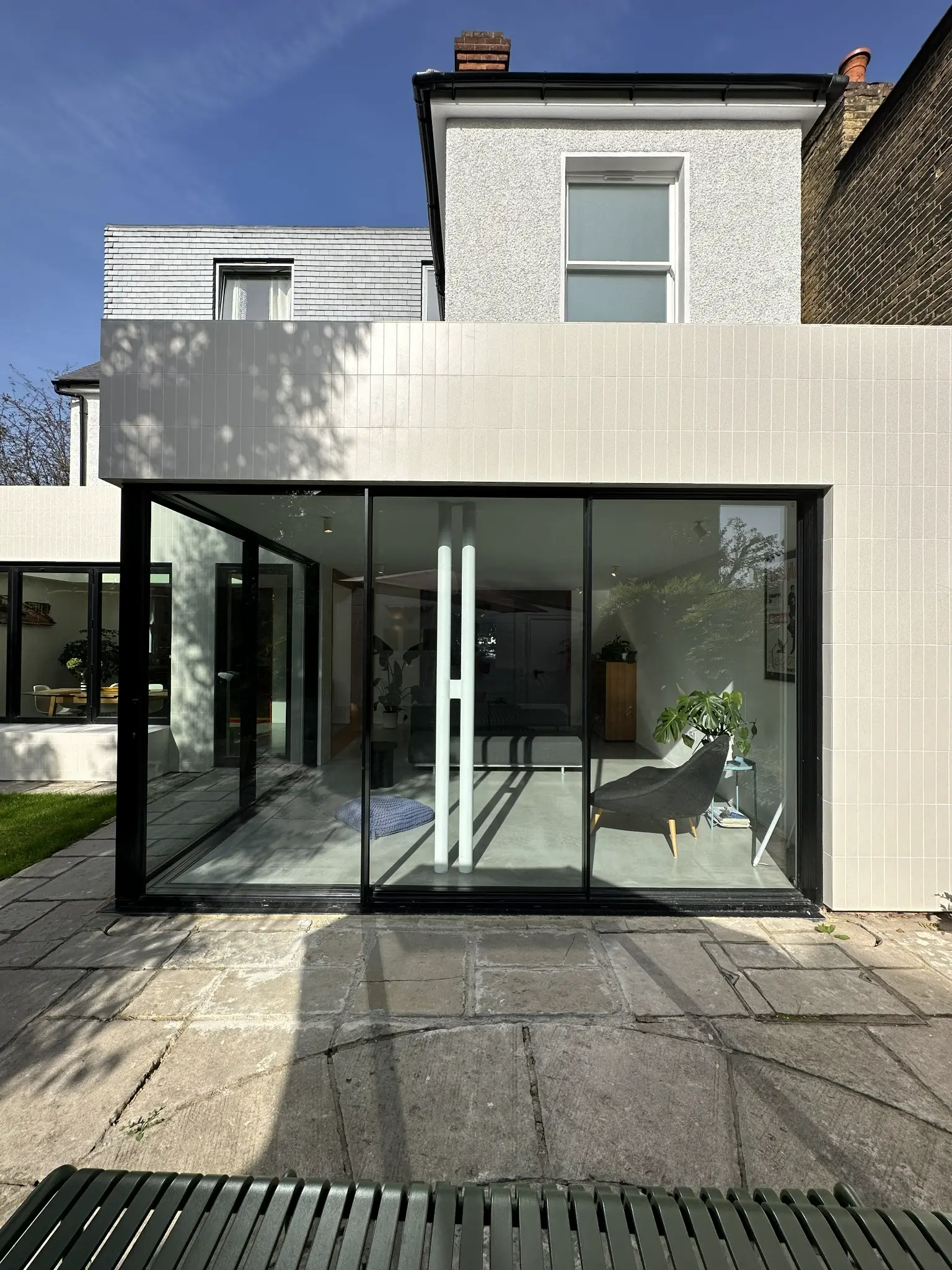
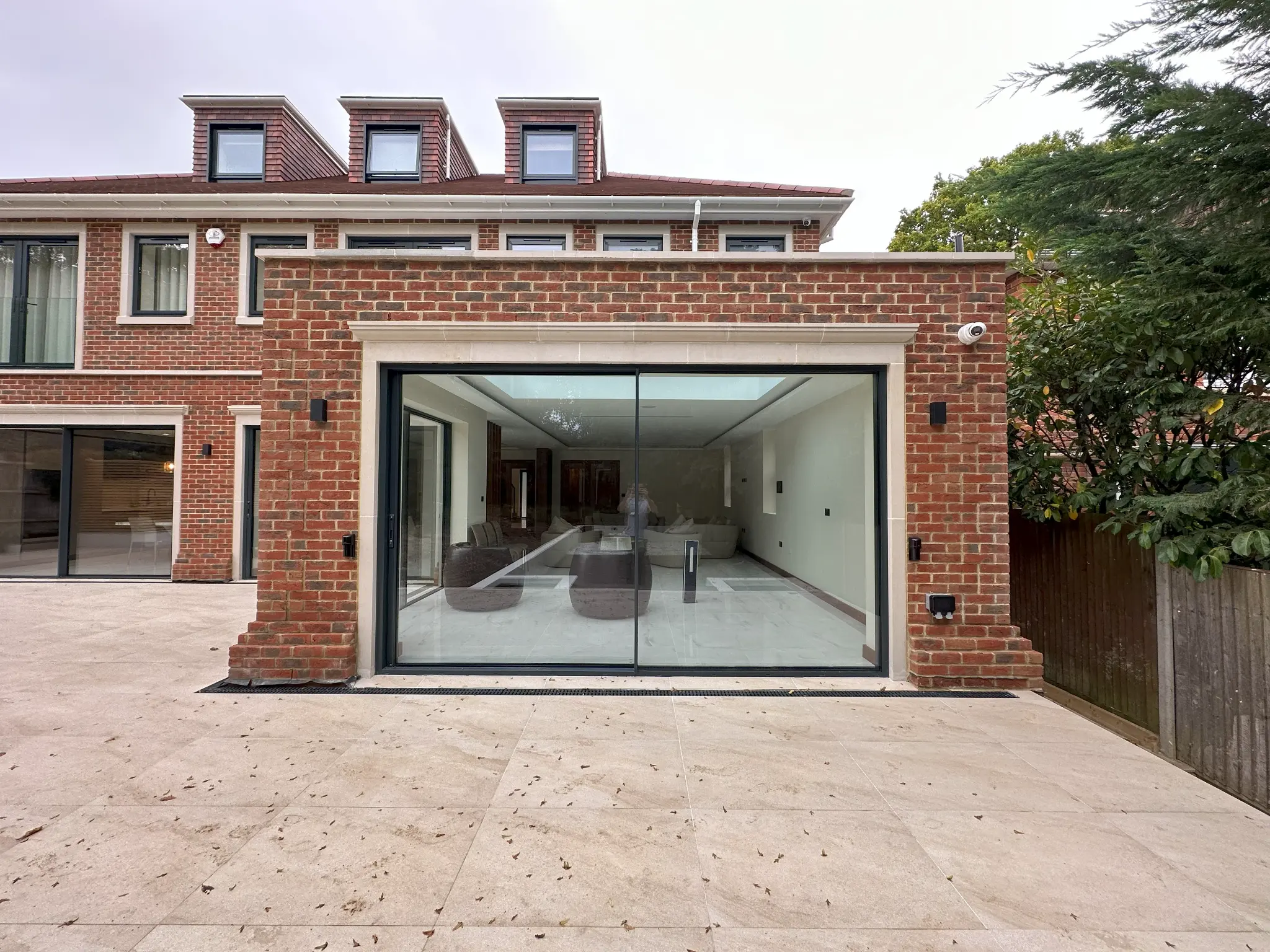
The primary appeal of open plan glazing is the seamless connection it creates between the kitchen/living area and the garden or patio. Achieving this requires meticulous attention to threshold design and drainage.
Flush Thresholds and Drainage
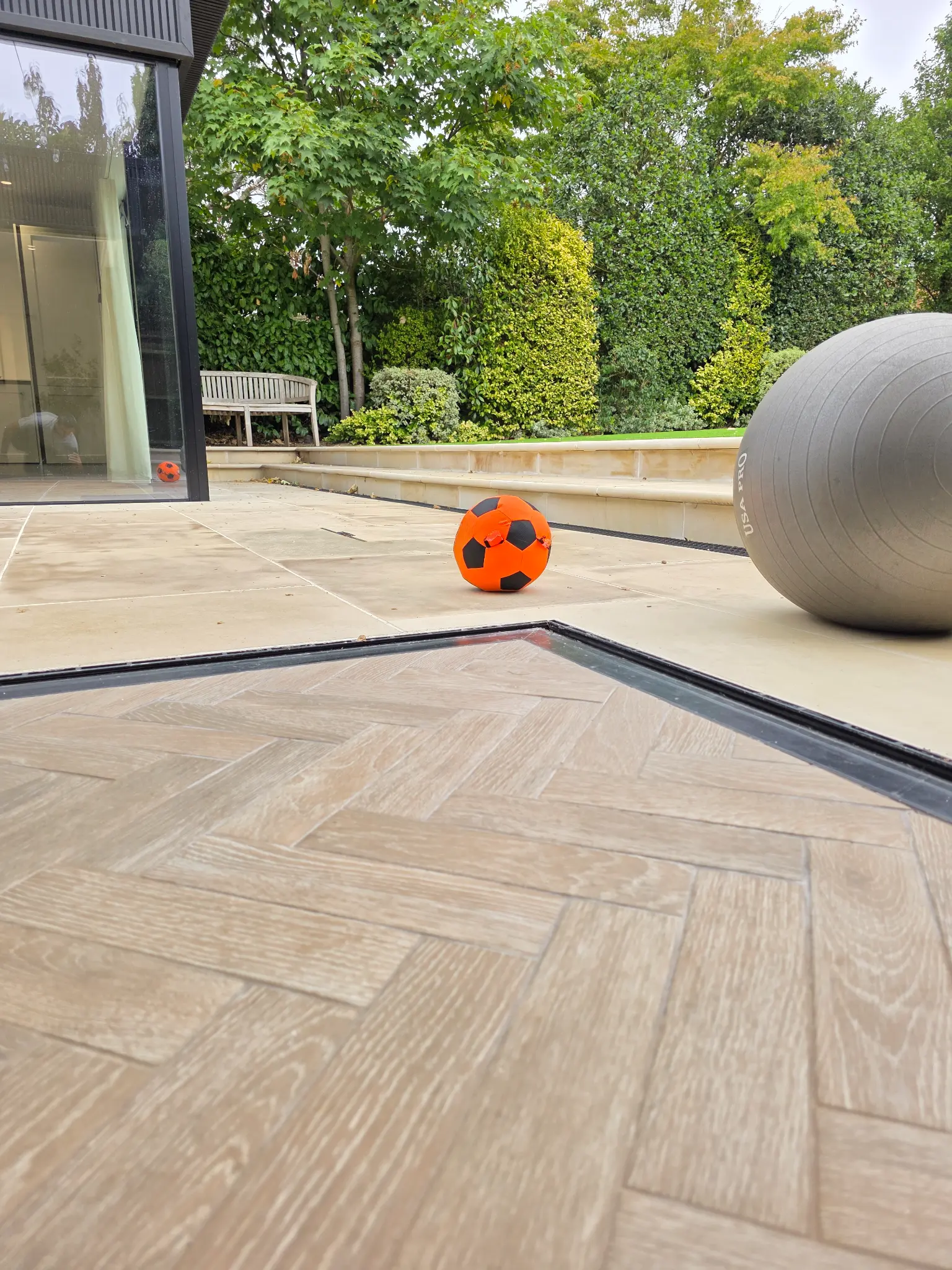
A true flush threshold—where the internal floor level is equal to the external patio level—eliminates trip hazards and enhances the flow. However, this design presents challenges for water management.
- Water Ingress Risk: Building Regulations require a minimum step down (typically 150mm) from the internal floor level to the ground level to prevent water ingress. Achieving a flush threshold requires specific detailing.
- Aco Drains: To maintain a flush look while complying with regulations, a linear drainage channel (often an Aco drain or similar system) must be installed immediately outside the door track. This channel collects surface water and directs it away, allowing the internal floor to meet the external patio level at the weather bar.
- Door Tracks: Specify recessed or integrated tracks for sliding or bifold doors. Ensure the track material is robust and designed for longevity, especially in high-traffic areas.
Solar Gain Management
Large south or west-facing glazing panels can lead to excessive solar gain in the summer months, causing overheating. This must be balanced against the desire for natural light.
- G-Value: Look at the G-value (Solar Heat Gain Coefficient) of the glass. A lower G-value means less solar heat is transmitted.
- Shading Solutions: External shading (e.g., overhangs, pergolas, or brise soleils) is highly effective. Internal blinds or curtains can also help manage glare and heat.
Fire Safety and Means of Escape (Part B)
When creating open plan layouts, particularly those that involve removing the traditional protected hallway, fire safety considerations become paramount.
Protected Routes
In a traditional two-storey house, the hallway and staircase form a protected route, allowing safe escape to an external door. Removing walls to create an open plan ground floor can compromise this route.
- Detection Systems: Enhanced smoke and heat detection systems are usually required. This typically means installing mains-powered, interlinked smoke alarms on every storey and in the main living space.
- Sprinklers: In some complex or very large open plan layouts, Building Control may require the installation of a domestic sprinkler system, although this is less common for standard two-storey extensions.
Egress Windows and Doors
Glazing systems must also provide adequate means of escape, especially if the open plan area leads to an upper floor.
- Egress Requirements: Any door or window designated as a means of escape must meet minimum clear opening dimensions (typically 450mm clear width and 450mm clear height, with the bottom of the opening no higher than 1100mm above the floor).
- Locking Mechanisms: Ensure that the locking mechanism on the main external door (often a large sliding or bifold system) can be easily operated from the inside without a key during an emergency.
Advantages and Drawbacks of Open Plan Glazing
While open plan living with large glazing offers stunning results, homeowners must be aware of the practical implications.
Increased Natural Light
Large glazed panels maximise daylight penetration, reducing the need for artificial lighting and improving the sense of space and well-being.
Enhanced Flow and Space
Removing internal barriers and using flush thresholds creates a truly integrated space, making the home feel larger and more sociable.
Aesthetic Appeal
Minimalist frames and expansive glass provide a contemporary, high-end finish that significantly enhances the property's value and desirability.
Visual Connection
The ability to connect the internal living space directly with the garden or patio is invaluable for entertaining and family life.
Potential Drawbacks to Consider
- Acoustics: Open plan spaces can suffer from poor acoustics. Sound bounces easily off hard surfaces, making noise travel further. Consider incorporating soft furnishings, rugs, and acoustic panels.
- Odours and Zoning: Kitchen odours can permeate the entire living area. High-quality extraction systems are essential. Defining 'zones' (e.g., cooking, dining, relaxing) using lighting, flooring changes, or partial dividers can help manage the space.
- Cost and Maintenance: High-specification architectural glazing is a significant investment. Furthermore, large glass areas require more frequent cleaning to maintain their visual impact.
Working with Professionals
Due to the complexities involving structural alterations and compliance with Building Regulations (Parts L, B, and A), engaging qualified professionals is non-negotiable for open plan glazing projects:
- Structural Engineer: Essential for calculating beam sizes and producing mandated structural drawings.
- Architect/Designer: Crucial for spatial planning, aesthetic integration, and ensuring the design meets planning requirements.
- Building Control: Notification and approval from your local Building Control body or an Approved Inspector is legally required before starting work on structural alterations or extensions. They will inspect the steelwork and final installation to ensure compliance.
By focusing on robust structural preparation and selecting glazing systems that meet the latest UK thermal standards, homeowners can successfully realise the vision of a bright, connected, and compliant open plan living space.
About Shard AG
If you are planning an open plan renovation or extension project, selecting the right architectural glazing is paramount. Shard AG specialises in providing high-performance, thermally broken aluminium and timber glazing systems designed specifically for the demanding requirements of modern UK homes. Our expertise covers everything from initial design consultation and U-value calculations to precise installation, ensuring your project achieves both aesthetic excellence and full compliance with current UK Building Regulations.
Explore Our Products
Discover how Shard Architectural Glazing can transform your home with our premium glazing solutions:
Ready to Transform Your Home?
Get in touch with our expert team for a free consultation and personalised quote. We'll help you choose the perfect glazing solution for your property.