Designing the Perfect Glass Kitchen Extension in the UK
Explore the technical, regulatory, and design considerations for constructing a stunning glass kitchen extension in the UK, focusing on thermal performance and light.

Shard Architectural Glazing
25 December 2025
Explore the technical, regulatory, and design considerations for constructing a stunning glass kitchen extension in the UK, focusing on thermal performance and light.
📋In This Article
Designing the Perfect Glass Kitchen Extension in the UK
Kitchen extensions are one of the most popular home improvements in the UK, significantly enhancing living space and property value. Integrating extensive architectural glazing into these extensions transforms them from functional areas into light-filled, dynamic spaces. However, designing a successful glass kitchen extension requires careful consideration of thermal performance, structural integrity, and adherence to stringent UK Building Regulations.
Structural Design and Glazing Options
The choice of structure fundamentally dictates the amount and type of glass that can be incorporated. Modern glass extensions typically fall into two categories: frameless structural glass or framed systems (such as aluminium or timber).
Frameless Structural Glazing
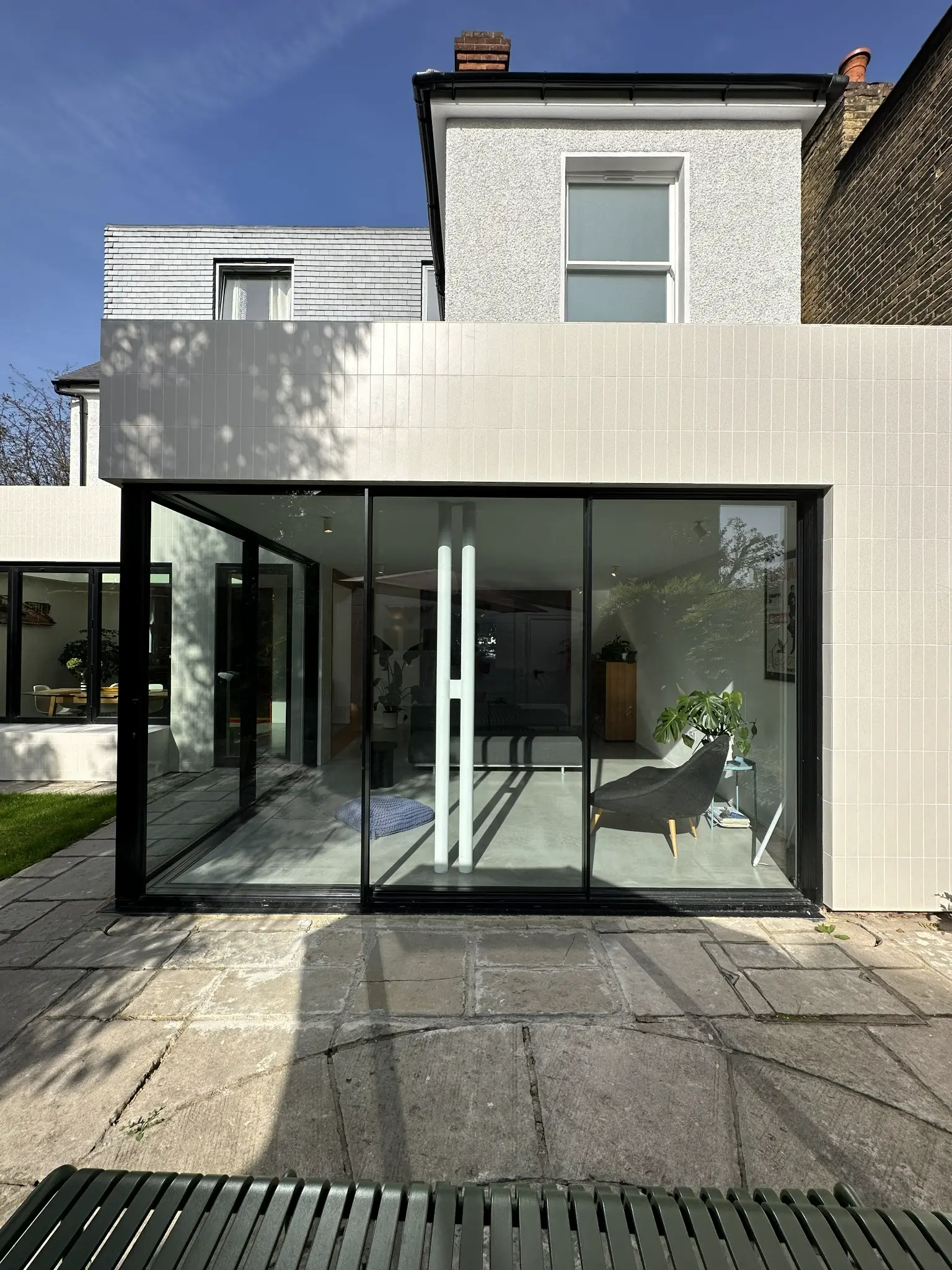
Structural glass offers the ultimate minimalist aesthetic, using silicone joints and hidden fixings to create uninterrupted views. This approach often requires thicker, laminated glass panels and specialized engineering to handle wind loads and structural support.
- Pros: Maximum light ingress, seamless aesthetics, high architectural impact.
- Cons: Higher cost, complex installation, potential for increased solar gain if not specified correctly.
Framed Systems (Aluminium and Hybrid)
Aluminium is the dominant material for modern framed extensions due to its durability, low maintenance, and ability to support large spans of glass with slim sightlines. Hybrid systems combine aluminium externally with timber internally, offering excellent thermal performance and a warmer internal aesthetic.
Key glazing elements often incorporated include:
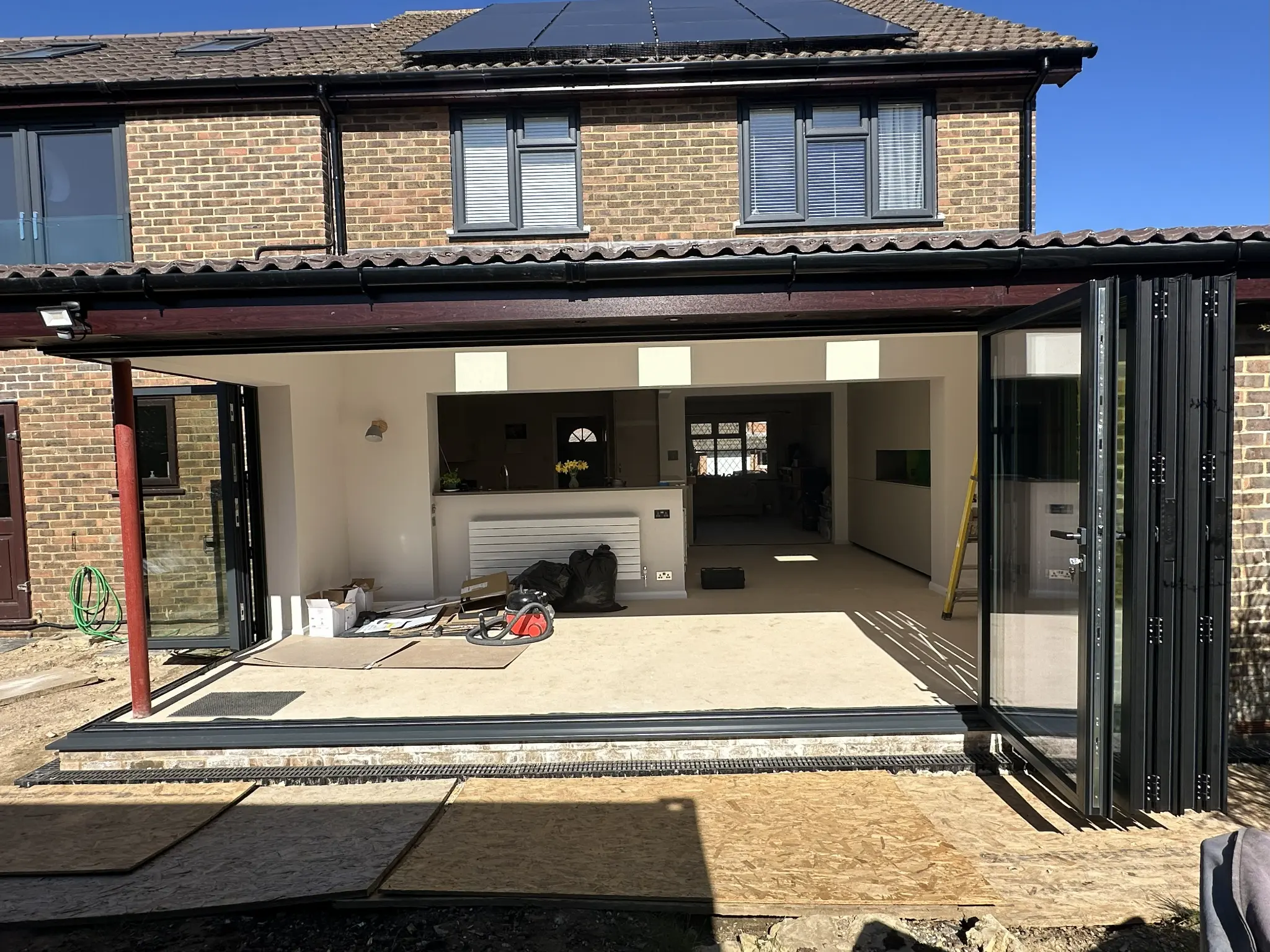
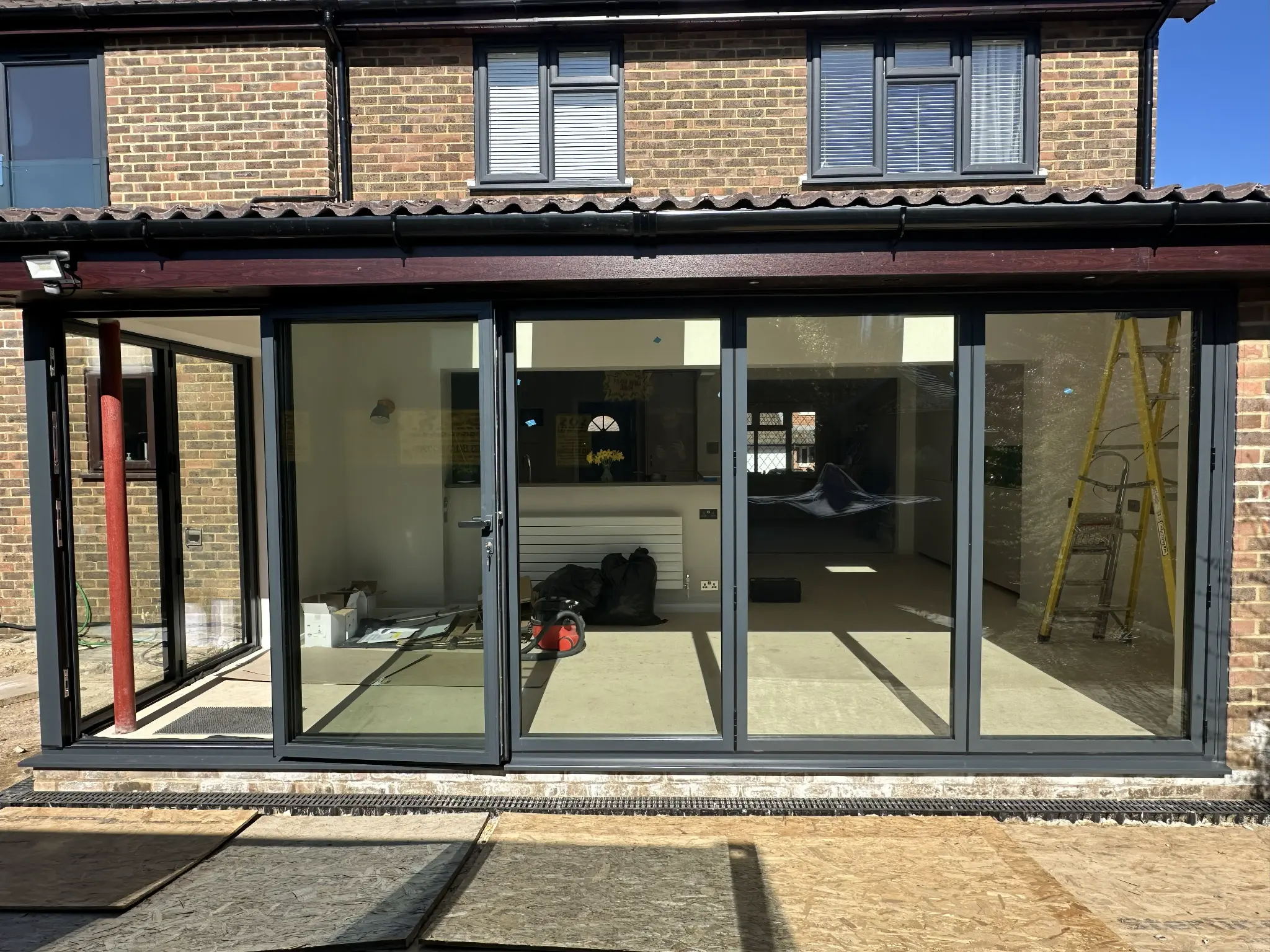
- Bi-fold Doors: Ideal for opening up an entire wall to the garden, typically requiring a structural steel beam (RSJ) above the opening.
- Sliding Doors (Lift & Slide): Offer larger individual glass panels and superior thermal performance compared to bi-folds, as the seals are generally tighter.
- Rooflights and Lanterns: Essential for bringing daylight deep into the kitchen space, especially in single-storey extensions where the existing house structure might block light.
Thermal Performance and Building Regulations
In the UK, thermal performance is paramount. A glass extension must comply with Part L (Conservation of Fuel and Power) of the Building Regulations. Because glass is inherently less insulating than a solid wall, achieving compliance requires high-specification materials and careful design.
U-Values and Compliance
The U-value measures how effectively a component (wall, window, roof) prevents heat from escaping. The lower the U-value, the better the insulation. For new extensions, the average U-value of the thermal elements must meet specific targets.
- Windows and Doors: Typically require a U-value of 1.4 W/m²K or better.
- Roofs: Generally require a U-value of 0.16 W/m²K or better (for solid roofs).
- Glazed Roofs/Lanterns: Often require a U-value of 1.6 W/m²K or better.
To meet these standards, Double Glazing (DG) is the minimum requirement, often utilising low-emissivity (low-e) coatings and argon gas filling. For maximum thermal efficiency in large glass structures, Triple Glazing (TG) may be necessary, particularly in north-facing or exposed locations.
Pro Tip
When specifying large expanses of glass, ensure the frames are thermally broken. A thermal break is a non-conductive material (usually polyamide) inserted into the aluminium profile to separate the inner and outer metal sections, preventing heat transfer and significantly reducing condensation risk.
Controlling Solar Gain (G-Value)
While U-values address heat loss, the G-value (Solar Factor) addresses heat gain. A high G-value means the glass allows a lot of solar energy (heat) into the building, which can lead to overheating in summer, especially in south or west-facing extensions.
Specialised solar control coatings can be applied to the glass. These coatings allow high light transmission but reflect infrared heat. A typical solar control glass specification might aim for a G-value between 0.30 and 0.40, balancing light transmission with heat rejection.
Practical Design Considerations
Beyond the technical specifications, the functionality and longevity of the extension depend on several practical design choices.
Ventilation Strategy
Proper ventilation is crucial in a kitchen extension, especially one prone to solar gain. Relying solely on opening doors is insufficient. Incorporate high-level opening windows (often motorised) or integrated trickle vents to allow for continuous air circulation and moisture control, particularly when cooking.
Flooring and Heating
Due to the large thermal mass required to regulate temperature in a glass extension, underfloor heating (UFH) is highly recommended. UFH provides even heat distribution across the floor area, counteracting the cold spots often associated with large glazed surfaces. Tiled or polished concrete floors are excellent partners for UFH due to their high thermal conductivity.
Privacy and Shading Solutions
Large glass walls inherently reduce privacy and require management of intense sunlight at certain times of the day. Integrated shading solutions should be planned early in the design process:
- External Shading: Brise soleil (fixed horizontal or vertical fins) or external automated blinds are the most effective way to block solar heat before it enters the building.
- Internal Blinds: Less effective at heat rejection but excellent for privacy and glare control.
- Electrochromic Glass: Although expensive, this technology allows the glass opacity to be adjusted electronically, offering dynamic control over light and privacy.
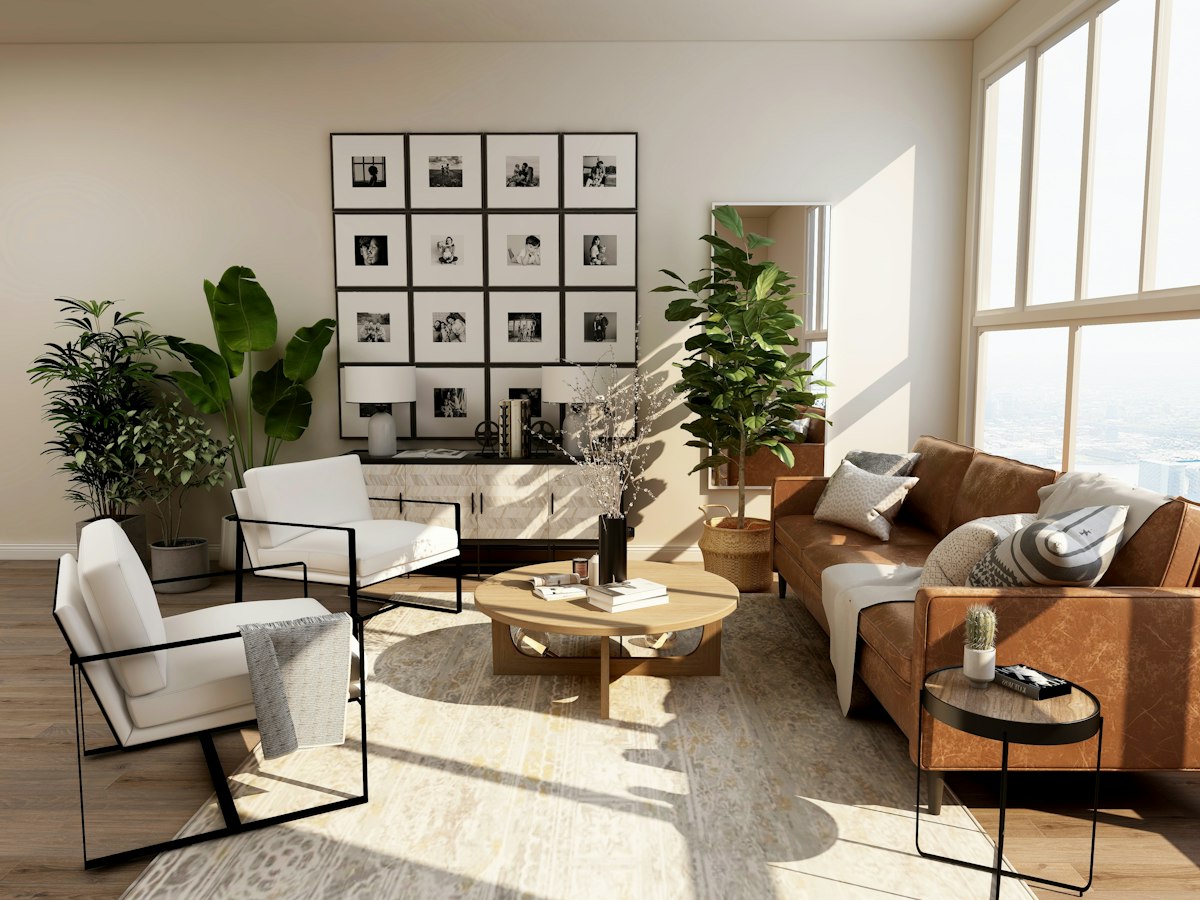
Comparison of Glazing Specifications
Choosing the right glass specification involves balancing cost, thermal performance (U-value), and solar control (G-value).
| Specification Type | Typical Configuration | Approx. U-Value (W/m²K) | Key Benefit |
|---|---|---|---|
| Standard Double Glazing | 4mm glass / 16mm Argon / 4mm Low-E | 1.4 – 1.6 | Cost-effective compliance with minimum standards. |
| High-Performance Double Glazing | 6mm glass / 18mm Krypton / 6mm Low-E | 1.1 – 1.2 | Improved insulation, suitable for large openings. |
| Triple Glazing | 4mm / 12mm Argon / 4mm / 12mm Argon / 4mm Low-E | 0.7 – 0.9 | Maximum thermal insulation, excellent acoustic dampening. |
| Solar Control Glass (DG) | 4mm Solar Control Low-E / 16mm Argon / 4mm | 1.4 | Reduces solar heat gain (low G-value), essential for south-facing structures. |
Planning Permission and Party Wall Act
While many smaller, single-storey extensions can fall under Permitted Development (PD) rights, large glass kitchen extensions often exceed the PD limits, particularly regarding height, projection depth, and proximity to boundaries. It is essential to consult your Local Authority planning department early.
Key Regulatory Requirements
- Planning Permission: Required if the extension exceeds PD limits (e.g., projecting more than 3m/4m from the rear wall, or if the roof height exceeds 3m near the boundary).
- Building Control Approval: Always required. This ensures compliance with structural integrity (Part A), fire safety (Part B), thermal performance (Part L), and ventilation (Part F).
- Party Wall Act 1996: If your extension involves excavating foundations within 3m of a neighbour's structure, or if it involves building on the boundary line, you must serve a Party Wall Notice. Failure to comply can lead to significant legal delays.
Ensuring the structural design accounts for the weight of the glass, the required lintels, and the foundation depth is critical for obtaining Building Control sign-off.
Maximised Natural Light
Glass extensions flood the interior space with natural daylight, reducing the need for artificial lighting and creating a healthier, more uplifting environment.
Enhanced Connection to Garden
Large sliding or bi-fold doors blur the boundary between indoor and outdoor spaces, making the garden feel like an integrated part of the kitchen and dining area.
Increased Property Value
A well-designed, high-specification kitchen extension is one of the most effective ways to increase the market value and appeal of a UK property.
Architectural Statement
Structural glazing provides a contemporary, high-end aesthetic that can completely transform the appearance and functionality of an older property.
Maintenance and Longevity
While modern glazing systems are designed for longevity, maintenance is a factor, particularly with large glass roofs or walls.
- Cleaning Access: Design the extension with access in mind. For high or inaccessible glass roofs, consider self-cleaning coatings or integrated automated cleaning systems.
- Seals and Gaskets: Regularly inspect silicone seals and rubber gaskets around opening elements. These maintain weatherproofing and thermal integrity.
- Frame Maintenance: Aluminium frames require minimal maintenance but should be cleaned periodically to prevent salt or pollution build-up, which can degrade the powder coating finish over decades.
By investing in quality materials—such as marine-grade aluminium for coastal areas or toughened, laminated safety glass for all overhead installations (as required by Building Regulations)—you ensure the extension remains beautiful and functional for decades.
Explore Our Products
Discover how Shard Architectural Glazing can transform your home with our premium glazing solutions:
Ready to Transform Your Home?
Get in touch with our expert team for a free consultation and personalised quote. We'll help you choose the perfect glazing solution for your property.