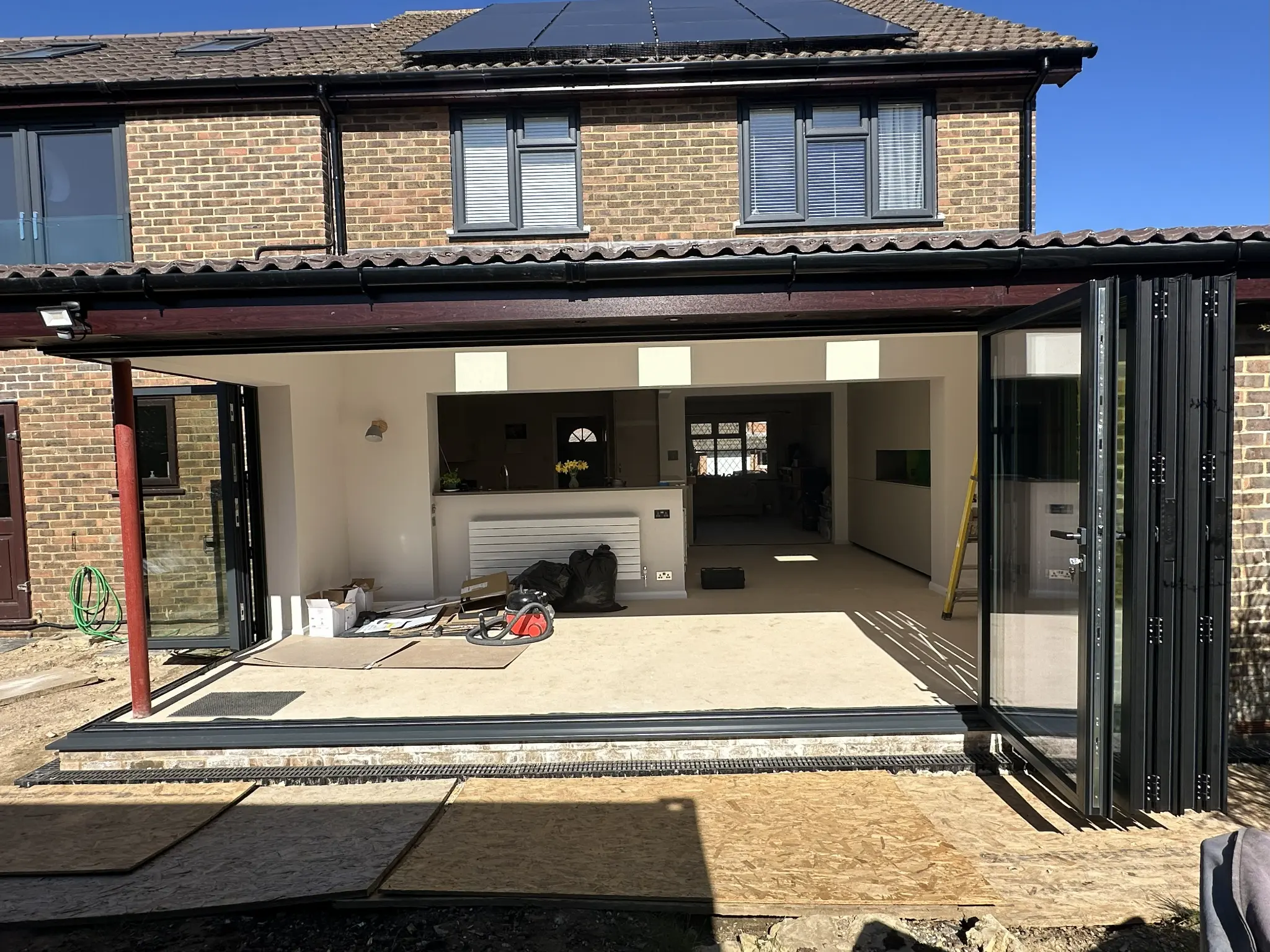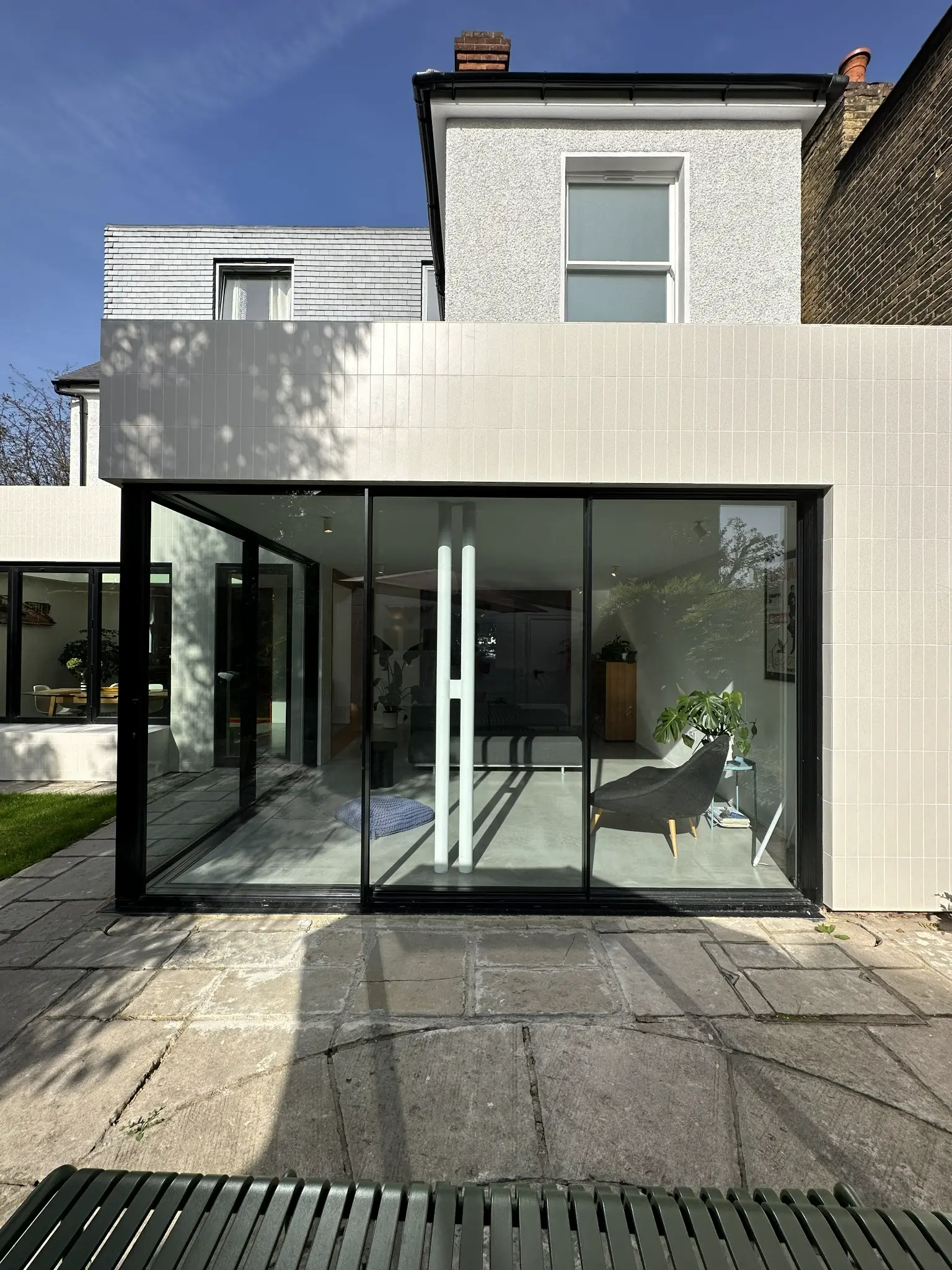


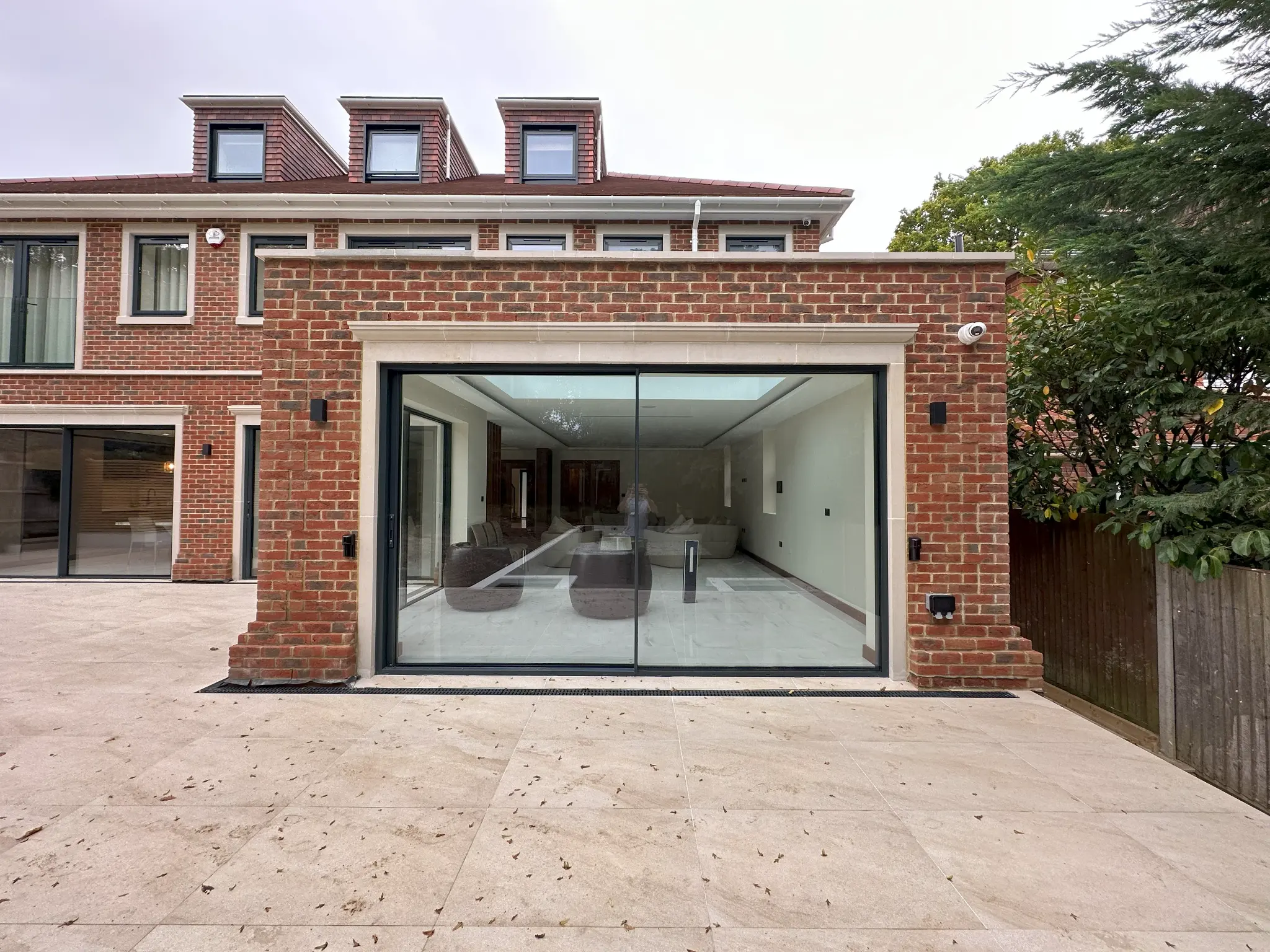

Minimal frame glazing represents a significant shift in contemporary architectural design, prioritising unobstructed views and seamless integration between indoor and outdoor spaces. For UK homeowners undertaking extensions, renovations, or new builds, understanding the technical specifications, performance capabilities, and regulatory compliance of these systems is crucial.
This comprehensive guide delves into minimal frame technology, examining how these sophisticated systems achieve their signature aesthetic while meeting the stringent thermal and structural demands of modern British construction.
What is Minimal Frame Glazing?
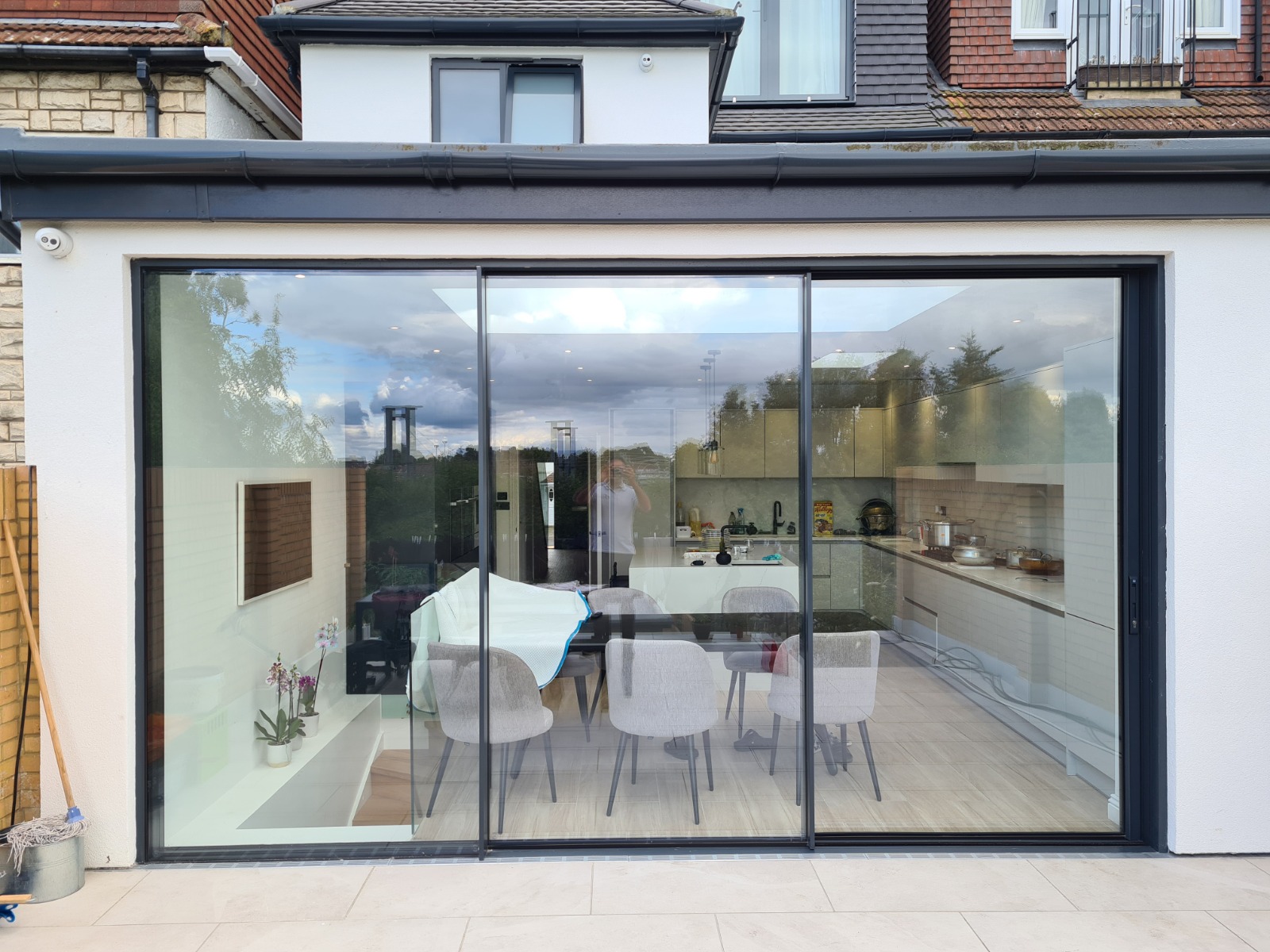
Minimal frame glazing, often synonymous with ultra-slim sliding doors or structural glazing, refers to systems where the visible aluminium profile (the frame) is drastically reduced, sometimes to as little as 20mm or 25mm sightlines. The structural integrity and weight-bearing capacity are primarily managed by the glass unit itself and clever integration into the building's fabric.
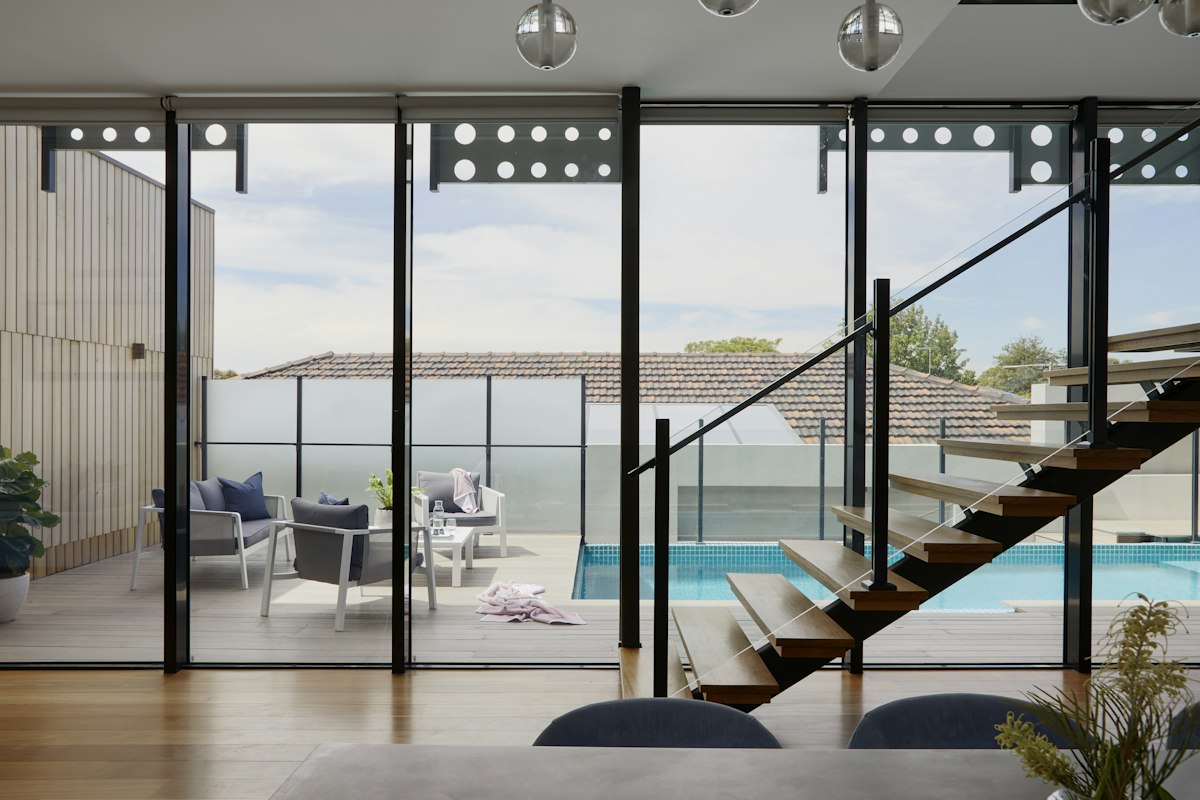
Unlike traditional patio doors, where the frame sits visibly on the surface, minimal frame systems typically recess the outer frame into the floor, walls, and ceiling structure. This technique hides the majority of the frame, leaving only the slender vertical interlocks visible where the glass panels meet.
Key Characteristics of Minimal Frame Systems
- Ultra-Slim Sightlines: Vertical interlocks are typically 20mm to 30mm wide, maximising the glass area.
- Recessed Outer Frames: The perimeter frame is concealed within the floor, walls, and ceiling structure, creating a flush appearance.
- Large Panels: These systems are designed to handle very large, heavy glass panels, often exceeding 3m in height and width.
- High Performance: Despite the minimal appearance, modern systems incorporate advanced thermal breaks and high-specification double or triple glazing to meet energy efficiency requirements.
Thermal Performance and UK Building Regulations (Part L)
For any new or replacement glazing installed in England, compliance with the current Building Regulations Part L (Conservation of Fuel and Power) is mandatory. Homeowners must ensure that the thermal performance of minimal frame systems meets or exceeds the required standards.
Thermal performance is measured using the U-value (measured in W/m²K), which indicates how quickly heat escapes through a material. A lower U-value signifies better insulation.
Compliance Requirements (England, 2022 Standards)
Minimal frame systems must be assessed based on their overall performance (the U-value of the entire window or door unit, including the frame and glass).
- New Dwellings/Extensions: The U-value for windows and doors should typically be no worse than 1.2 W/m²K.
- Replacement Windows/Doors (Existing Dwellings): The U-value should typically be no worse than 1.4 W/m²K.
Achieving these low U-values with large expanses of glass requires careful specification:
- Thermal Breaks: High-quality minimal frames use sophisticated polyamide thermal breaks within the aluminium profile to separate the inner and outer layers, preventing heat transfer.
- Glazing Specification: Standard double glazing often uses a 28mm unit. To achieve U-values near 1.2 W/m²K, minimal frame systems often require high-specification double glazing (e.g., low-emissivity coatings, Argon gas filling) or, increasingly, triple glazing.
Pro Tip
When comparing suppliers, always request the calculated Uw value (U-value of the whole window/door) for the specific size and configuration you intend to install, not just the Ug value (U-value of the glass only). Building Control requires the Uw value for compliance checks.
Design and Installation Considerations
While the aesthetic benefits of minimal frames are clear, the complexity of installation and integration into the structure demands meticulous planning, especially regarding drainage, thresholds, and structural loads.
1. Structural Integration and Weight
Minimal frame doors are significantly heavier than standard sliding doors. A single large panel can weigh several hundred kilograms. This requires:
- Reinforced Lintels: The structure above the opening must be robust enough to handle the load, especially if the doors are installed under a large structural opening (e.g., bi-folding door replacement).
- Foundation Support: The floor structure and foundations below the track must be perfectly level and capable of supporting the concentrated weight of the glass panels.
2. Drainage and Flush Thresholds
Achieving a truly flush threshold—where the internal floor level is seamlessly level with the external patio or decking—is a primary goal of minimal design, but it introduces critical drainage challenges.
- The 150mm Rule: UK Building Regulations generally require a 150mm step down from the internal floor level to the external ground level to prevent water ingress. While minimal systems aim to negate this visual barrier, they must incorporate highly effective linear drainage channels (often slot drains) immediately outside the track.
- Hidden Tracks: The outer frame track is recessed into the floor slab. Proper waterproofing membranes and weep holes are essential to manage rainwater and condensation without compromising the internal floor finish.
3. Security and Operation
Modern minimal systems incorporate advanced locking mechanisms hidden within the frame profiles. Look for systems tested to PAS 24 standards, which certify enhanced security performance against opportunistic burglars.
Due to the weight of the panels, high-quality rollers and tracks are vital for smooth operation. For very large panels, motorised operation may be necessary or highly desirable for ease of use.
4. Condensation Risk
Any large surface of glass, even high-performance glazing, is susceptible to condensation, particularly in highly insulated, airtight modern homes. While the thermal break minimises condensation on the frame, the glass surface itself can still mist up if internal humidity is high and the external temperature is very low. Proper ventilation strategies are essential to mitigate this.
Comparing Minimal Frame Options
Minimal frame systems typically come in two main operational types: sliding (lift-and-slide or standard slider) and pivot/swing doors. Sliding systems are the most common application for expansive views.
| Feature | Minimal Frame Sliding Door | Traditional Aluminium Sliding Door |
|---|---|---|
| Sightline (Interlock) | 18mm – 30mm | 50mm – 80mm |
| Outer Frame | Recessed (Hidden) | Surface Mounted (Visible) |
| Panel Size Potential | Very Large (Up to 12m² per panel) | Medium (Limited by frame strength) |
| Threshold | Flush (Requires specialised drainage) | Raised (Standard step) |
| U-Value Potential | 1.2 W/m²K (Requires high specification) | 1.4 W/m²K (Easier to achieve) |
| Cost | High (Due to engineering and installation complexity) | Moderate |
The Architectural Benefits of Minimal Glazing
While the investment in minimal frame technology is higher than standard glazing, the architectural and lifestyle benefits are substantial, particularly for high-end projects.
Maximised Natural Light
By dramatically reducing the visible frame area, these systems allow a greater volume of natural daylight to penetrate deep into the home, reducing reliance on artificial lighting.
Seamless Indoor-Outdoor Flow
The flush threshold and expansive glass panels blur the line between the internal living space and the garden or patio, enhancing the feeling of space and connectivity.
Unobstructed Views
The defining feature is the uninterrupted panoramic view. This is especially valuable in properties with attractive gardens or scenic surroundings, turning the glazing into a dynamic architectural feature.
Increased Property Value
Minimal frame systems are highly sought after in modern architecture and can significantly enhance the perceived value and desirability of a property, appealing to buyers looking for contemporary design.
Choosing a Supplier and Installer
Due to the bespoke nature and complexity of minimal frame systems, the quality of installation is paramount. Unlike standard window fitting, minimal frame installation requires precise structural preparation, meticulous waterproofing, and specialist handling equipment for the heavy glass panels.
It is highly recommended to work with suppliers who:
- Can provide evidence of compliance with current UK Building Regulations (Part L).
- Have a proven track record of installing the specific system, particularly regarding flush thresholds and drainage solutions.
- Offer comprehensive warranties covering both the product and the installation quality.
- Can provide detailed technical drawings early in the design process for coordination with your architect, structural engineer, and main contractor.
Shard AG specialises in high-performance, architecturally driven glazing solutions for the UK market. We offer a range of minimal frame sliding doors and structural glazing systems engineered to combine exceptional aesthetics with industry-leading thermal performance. Our expert team works closely with homeowners and design professionals to ensure seamless integration and full compliance with all relevant UK building standards, delivering projects that maximise light, space, and thermal efficiency.