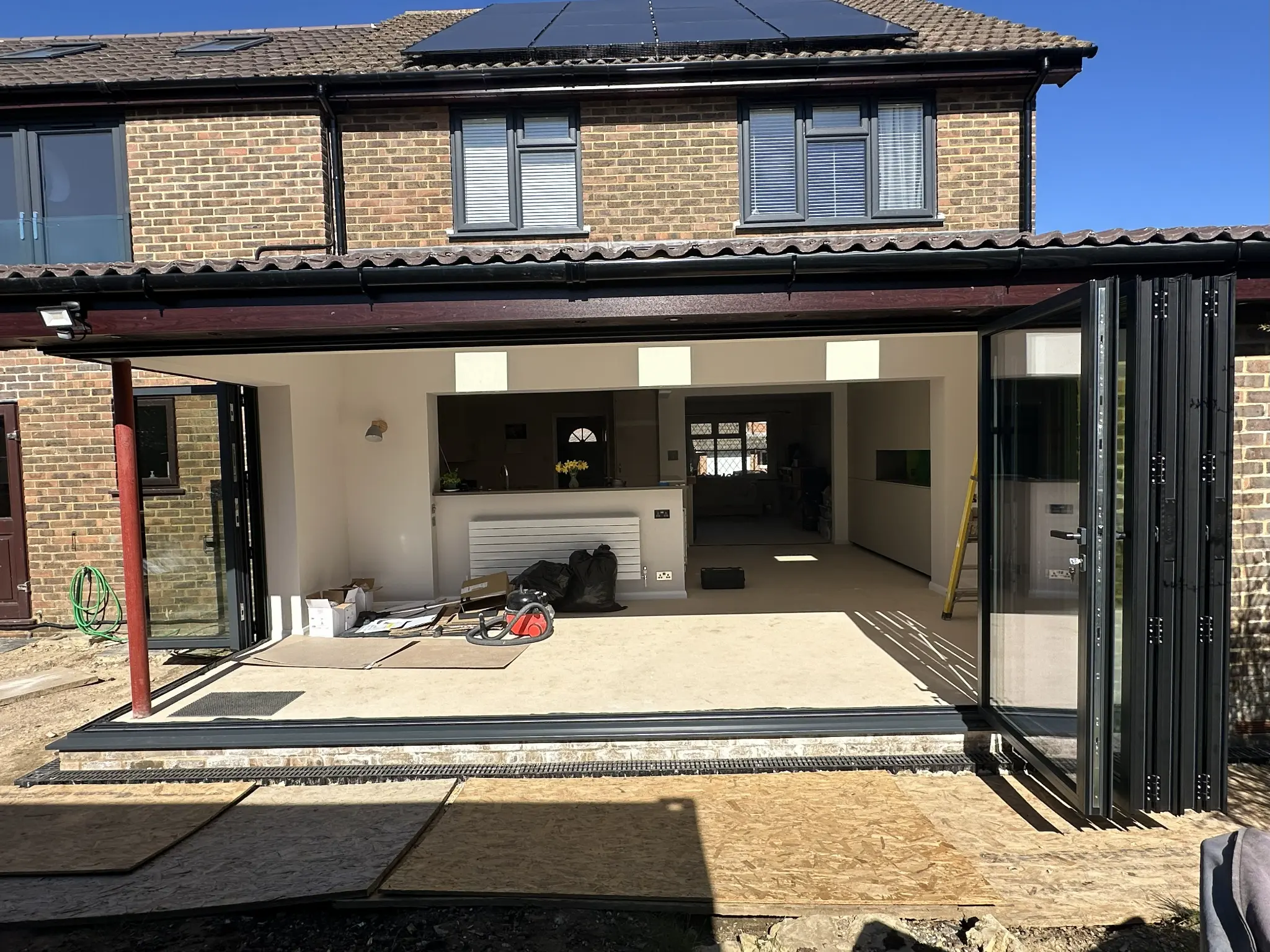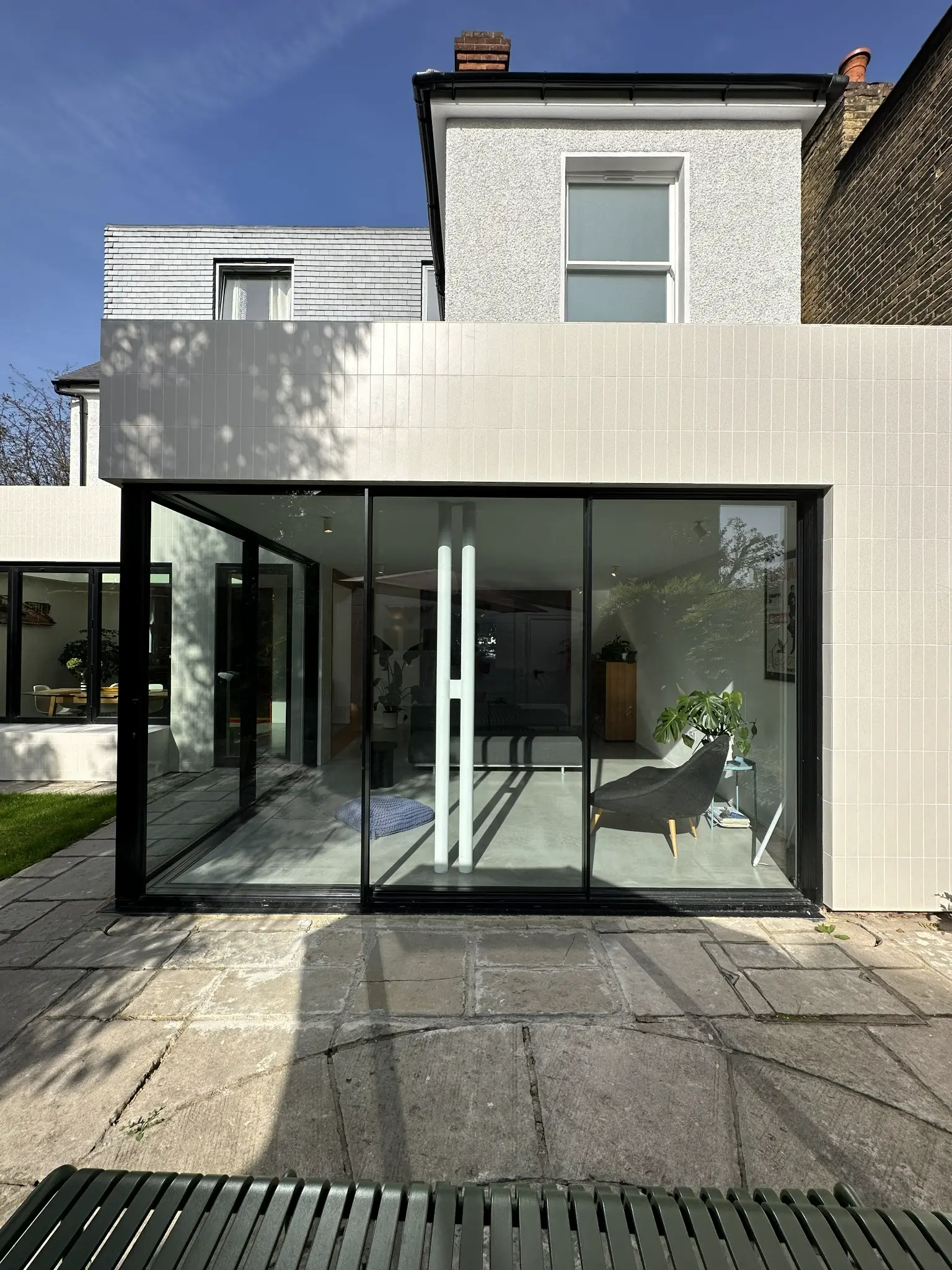


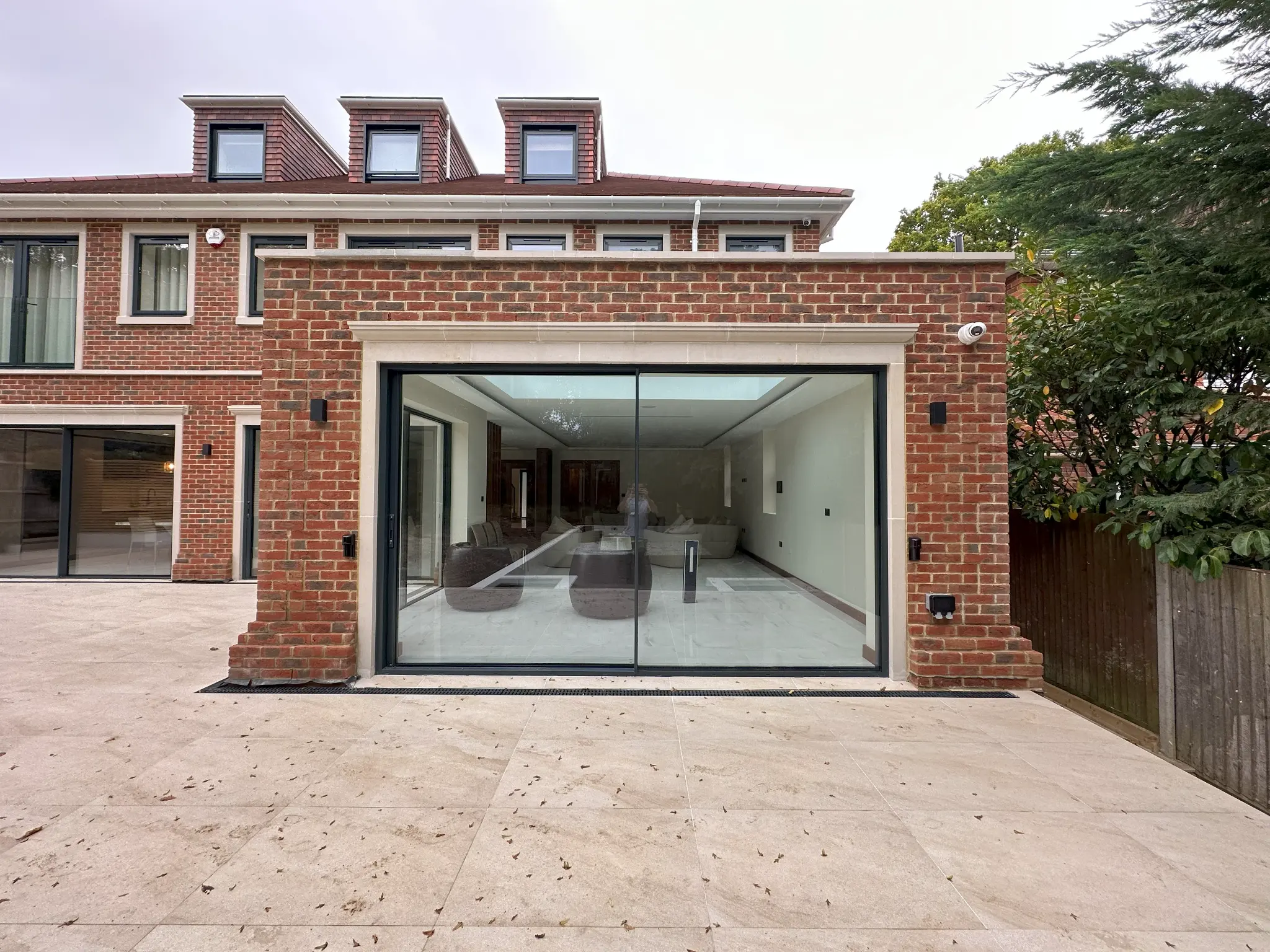

Minimal frame glazing, particularly in the form of large sliding door systems, has become a defining feature in modern UK architecture. These systems are prized for their ability to maximise natural light, blur the line between indoor and outdoor spaces, and provide uninterrupted views. However, selecting and installing these high-performance systems requires a thorough understanding of technical specifications, structural requirements, and compliance with stringent UK Building Regulations.
Understanding Minimal Frame Technology
Minimal frame glazing refers to architectural systems where the visible aluminium profile surrounding the glass unit is significantly reduced, often to less than 25mm, or even completely recessed into the surrounding wall and floor structure. The primary objective is to create a sleek, frameless aesthetic where the structural integrity is largely maintained by the robust glass units and the concealed outer frame.
Unlike traditional patio doors, which rely on chunky visible frames for strength and insulation, minimal systems use advanced engineering to hide the mechanics. The glass itself becomes a key structural element, requiring high-specification toughened or laminated units.
Key Components of a Minimal Frame System
- Concealed Outer Frame: This frame is typically installed flush with the structural opening and hidden within the wall build-up, floor screed, and ceiling structure.
- Slim Sightlines: The visible vertical interlock where two glass panels meet is the defining feature, often measuring between 15mm and 25mm.
- High-Performance Glazing: Due to the reduced frame material, thermal performance relies heavily on the glass specification, usually involving low-emissivity (Low-E) coatings and argon gas fillings.
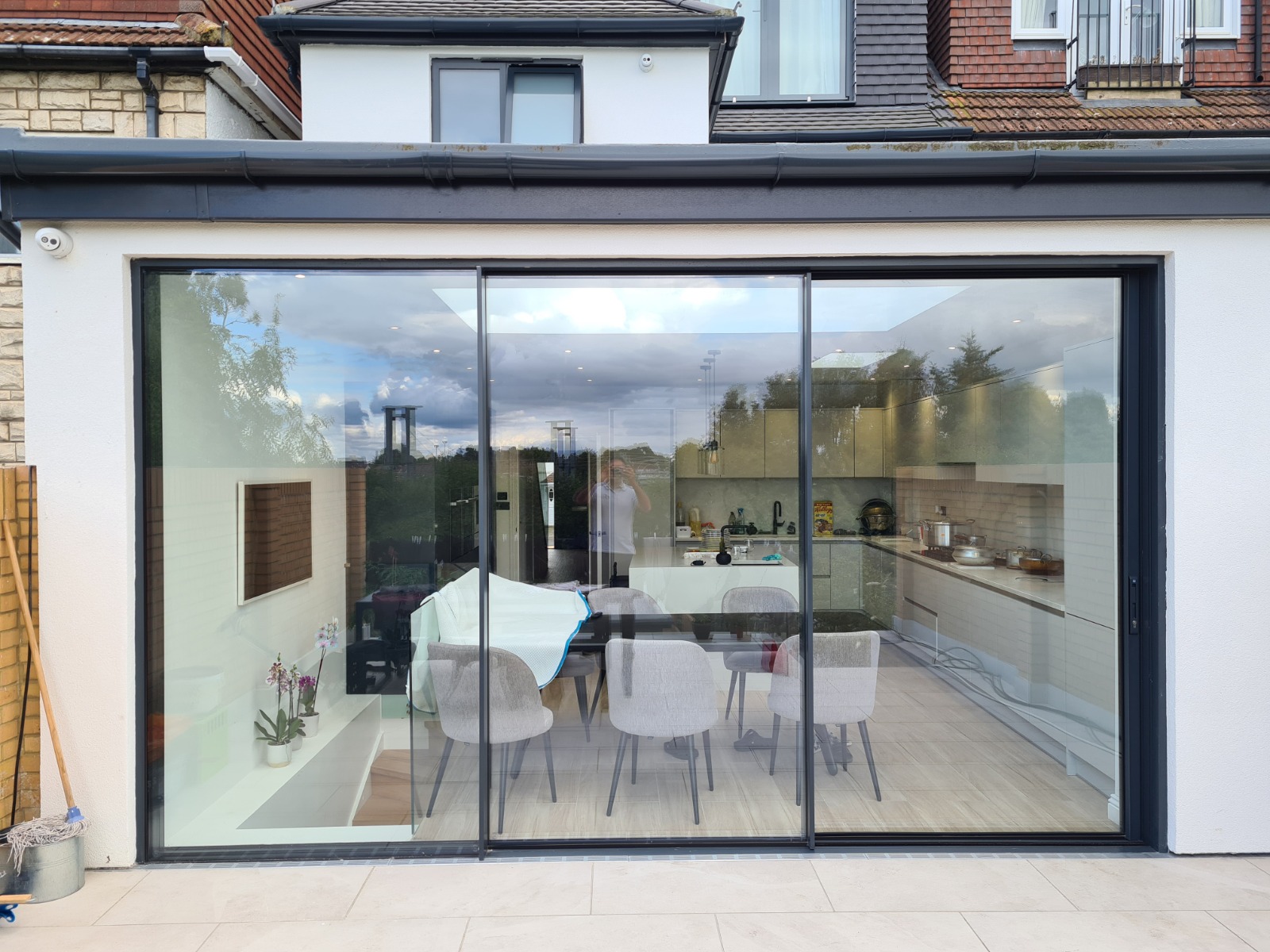
- Recessed Tracks: Tracks are often sunk into the floor finish, creating a seamless threshold and eliminating trip hazards, crucial for accessibility compliance (Part M).
Thermal Performance and UK Building Regulations
In the UK, the thermal performance of glazing is non-negotiable and governed by Part L (Conservation of Fuel and Power) of the Building Regulations. For homeowners undertaking extensions or replacement projects, meeting these standards is mandatory.
U-Values Explained
The U-value measures how effectively a building element (like a window or door) prevents heat from escaping. The lower the U-value, the better the thermal performance.
Under the current 2022 amendments to Part L (England), the required U-values for glazing are rigorous:
- New Dwellings/Extensions: The limiting U-value for windows and doors is typically 1.2 W/m²K.
- Replacement Glazing: The limiting U-value for replacement windows and doors is typically 1.4 W/m²K.
Achieving these low U-values with minimal frames presents a technical challenge because aluminium is inherently conductive. Manufacturers overcome this by:
- Thermal Breaks: Integrating polyamide or reinforced plastic barriers within the aluminium profiles to separate the inner and outer faces, significantly reducing heat transfer.
- High-Specification Glazing: Using double or triple glazing with warm edge spacers, multiple low-E coatings, and inert gas (Argon or Krypton) fills.
Pro Tip
When comparing minimal frame systems, always request the specific System U-value (or Uw), not just the centre-pane U-value (Ug). The System U-value accounts for the frame, glass, and thermal breaks, providing an accurate measure of overall thermal efficiency required for Building Control compliance.
Structural Considerations and Installation
The installation of large, heavy minimal frame systems demands precise structural preparation and coordination between the glazier, builder, and structural engineer.
Weight and Support
A single double-glazed panel measuring 3m x 3m can weigh over 400kg. This weight requires robust support, particularly when the tracks are recessed into the floor slab. The lintel or steel beam above the opening must be correctly sized not only to support the building structure but also to minimise deflection that could compromise the smooth operation of the sliding panels.
Drainage and Weatherproofing
Achieving a seamless, recessed threshold means the track is flush with the internal floor level. This necessitates meticulous attention to external drainage to prevent water ingress. The external track area must incorporate effective drainage channels (often linear drains or hidden gullies) and a sufficient external fall away from the building, adhering to standards set out in Part C (Site Preparation and Resistance to Moisture).
Failure to manage water correctly in a recessed system can lead to serious damp issues and potential failure of the sliding mechanism.
Wind Loading and Deflection
Large expanses of glass are subject to significant wind loading. The glass specification must be calculated based on the building's height, location (e.g., coastal or exposed sites), and local wind pressure zones. Minimal frames must be engineered to withstand these forces without excessive deflection, which could cause the panels to bind or the seals to fail.
Security and Accessibility
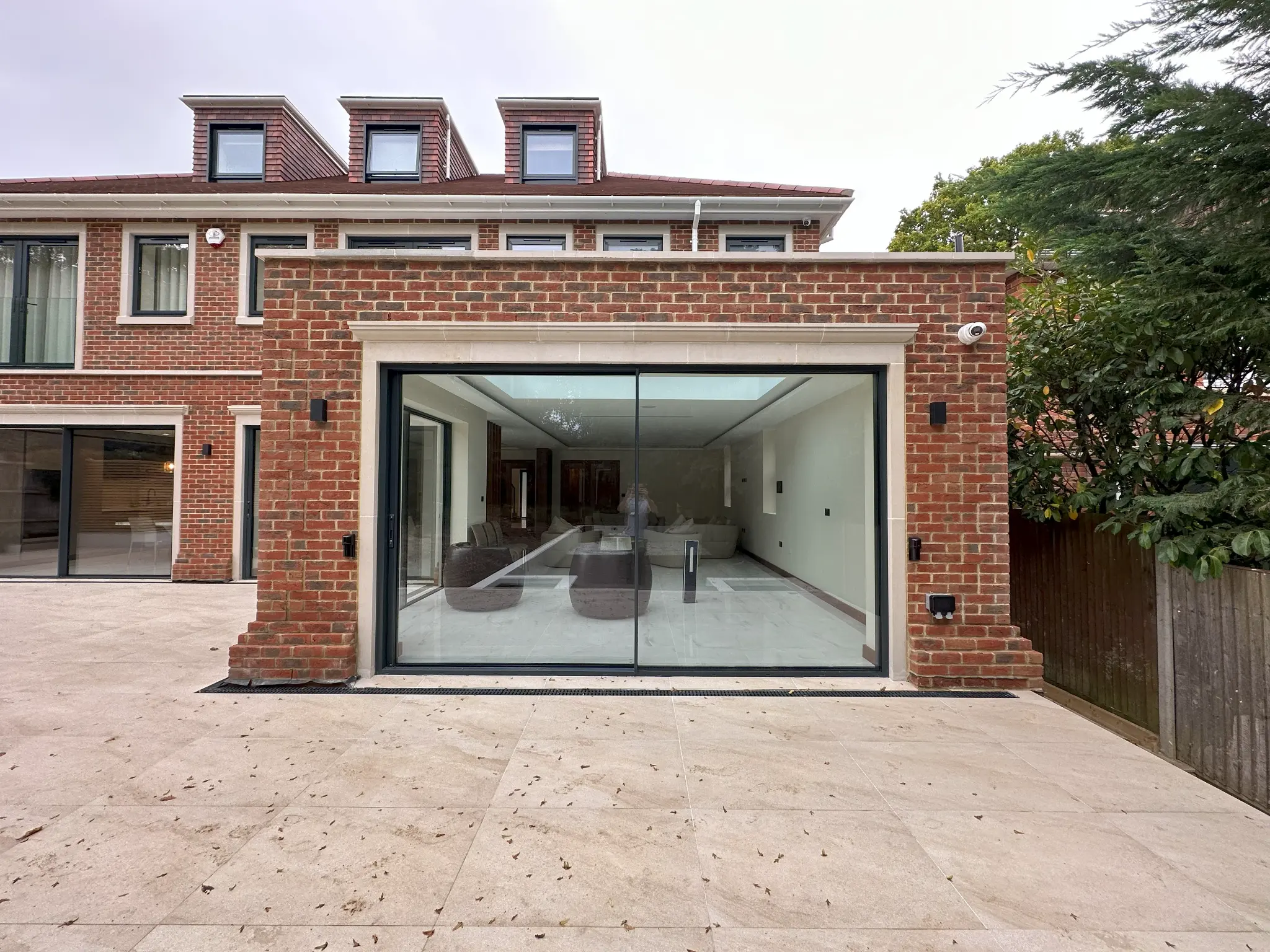
Homeowners often worry that minimal sightlines compromise security. Modern minimal systems, however, incorporate sophisticated security features that meet UK standards.
PAS 24 and Secured by Design
The primary security standard for doors and windows in the UK is PAS 24: 2016. Systems that achieve this certification have been rigorously tested against opportunistic break-in attempts. Many high-end minimal frame systems also achieve the 'Secured by Design' accreditation, a police preferred specification.
- Multi-Point Locking: Locking mechanisms are concealed within the slim interlocks and frames, engaging at multiple points along the vertical edge.
- Anti-Lift Mechanisms: Panels are designed so they cannot be lifted off the track when closed and locked.
- Laminated Glass: Using laminated glass significantly increases resistance to impact and penetration, offering superior security compared to standard toughened glass.
Accessibility (Part M)
Part M of the Building Regulations concerns accessibility and use of buildings. Recessed tracks, which eliminate the step-over threshold, are highly desirable as they facilitate wheelchair access and improve general safety, helping projects comply with requirements for accessible dwellings.
Comparison of Glazing Options
Understanding the trade-offs between different glazing types is essential for balancing aesthetics, cost, and performance.
| Feature | Minimal Frame Sliding Door | Standard Aluminium Bi-Fold Door | Timber Sliding Door |
|---|---|---|---|
| Sightlines (Interlock) | 15mm – 25mm (Ultra Slim) | 50mm – 120mm (Standard) | 80mm – 150mm (Thickest) |
| Typical U-Value (W/m²K) | 1.0 – 1.4 (Requires high spec glass) | 1.3 – 1.6 | 1.2 – 1.6 (Varies by timber type) |
| Max Panel Size | Very Large (Up to 15m² per panel) | Medium (Limited by folding mechanism) | Medium |
| Threshold | Fully Recessed (Seamless) | Low or Standard Step | Standard Step |
| Cost | High (Premium) | Medium | Medium to High |
Maintenance and Longevity
While minimal frame systems are highly durable, their sophisticated engineering requires specific maintenance considerations to ensure longevity and smooth operation.
- Track Cleaning: Because the tracks are recessed, they are susceptible to collecting dirt, grit, and debris. Regular cleaning and vacuuming of the tracks are crucial to prevent damage to the rollers and ensure effortless gliding.
- Roller Mechanism: High-quality systems use heavy-duty stainless steel rollers designed for the immense weight. These should be periodically checked and cleaned according to the manufacturer's instructions.
- Seals and Weathering: Inspecting the perimeter seals and the interlock seals annually helps ensure continued weather performance, especially after harsh UK winters.
Uninterrupted Views
The primary benefit is the dramatic reduction in visible framing, allowing for panoramic, floor-to-ceiling views that connect the interior with the landscape.
Maximum Natural Light
By replacing opaque frame material with glass, these systems significantly increase daylight penetration, reducing the need for artificial lighting.
Seamless Thresholds
Recessed tracks create a flush transition between inside and outside, enhancing accessibility (Part M) and aesthetic flow.
High Thermal Efficiency
Despite the slim profile, advanced thermal break technology and high-specification glazing ensure compliance with stringent Part L U-value requirements.
Choosing the Right Supplier and Installer
Due to the complexity and precision required for minimal frame systems, the choice of supplier and installer is paramount. This is not a standard glazing installation.
It is highly advisable to select a specialist company that can demonstrate a proven track record of successful installations of similar scale and complexity. They should be able to provide detailed CAD drawings, structural calculations, and specific U-value certifications for the exact system proposed.
Always ensure that the installer is familiar with the necessary structural preparation, including managing drainage and integrating the concealed outer frame correctly into the wall insulation and vapour barrier layers. Proper installation is essential not only for performance but also for maintaining the system's warranty.
If you are planning a significant renovation or new build project requiring high-performance architectural glazing, seeking expert advice early in the design process is crucial to ensure both aesthetic goals and regulatory compliance are met.
***
About Shard AG: Shard Architectural Glazing specialises in the design, supply, and installation of premium, high-performance minimal frame sliding doors and bespoke glazing solutions for discerning UK homeowners and developers. We focus on delivering systems that meet the highest standards of thermal efficiency, security, and architectural aesthetics, ensuring full compliance with current UK Building Regulations Part L (2022).