

.jpg)
Modern Architectural Glazing Trends for UK Homes
Explore the latest architectural glazing trends transforming UK homes, focusing on large format glass, minimalist frames, thermal performance (Part L 2022), and design integration.

Shard Architectural Glazing
15 January 2026
Explore the latest architectural glazing trends transforming UK homes, focusing on large format glass, minimalist frames, thermal performance (Part L 2022), and design integration.
📋In This Article
Modern Architectural Glazing Trends for UK Homes
The architectural landscape of UK homes is undergoing a significant transformation, driven by a desire for more natural light, better connection to the outdoors, and superior energy efficiency. Modern glazing technology is central to these changes, allowing homeowners and designers to push boundaries previously limited by thermal performance and structural constraints. This guide explores the key architectural glazing trends defining contemporary British home design, offering practical insights and technical guidance.
Minimalist Framing and Large Format Glass
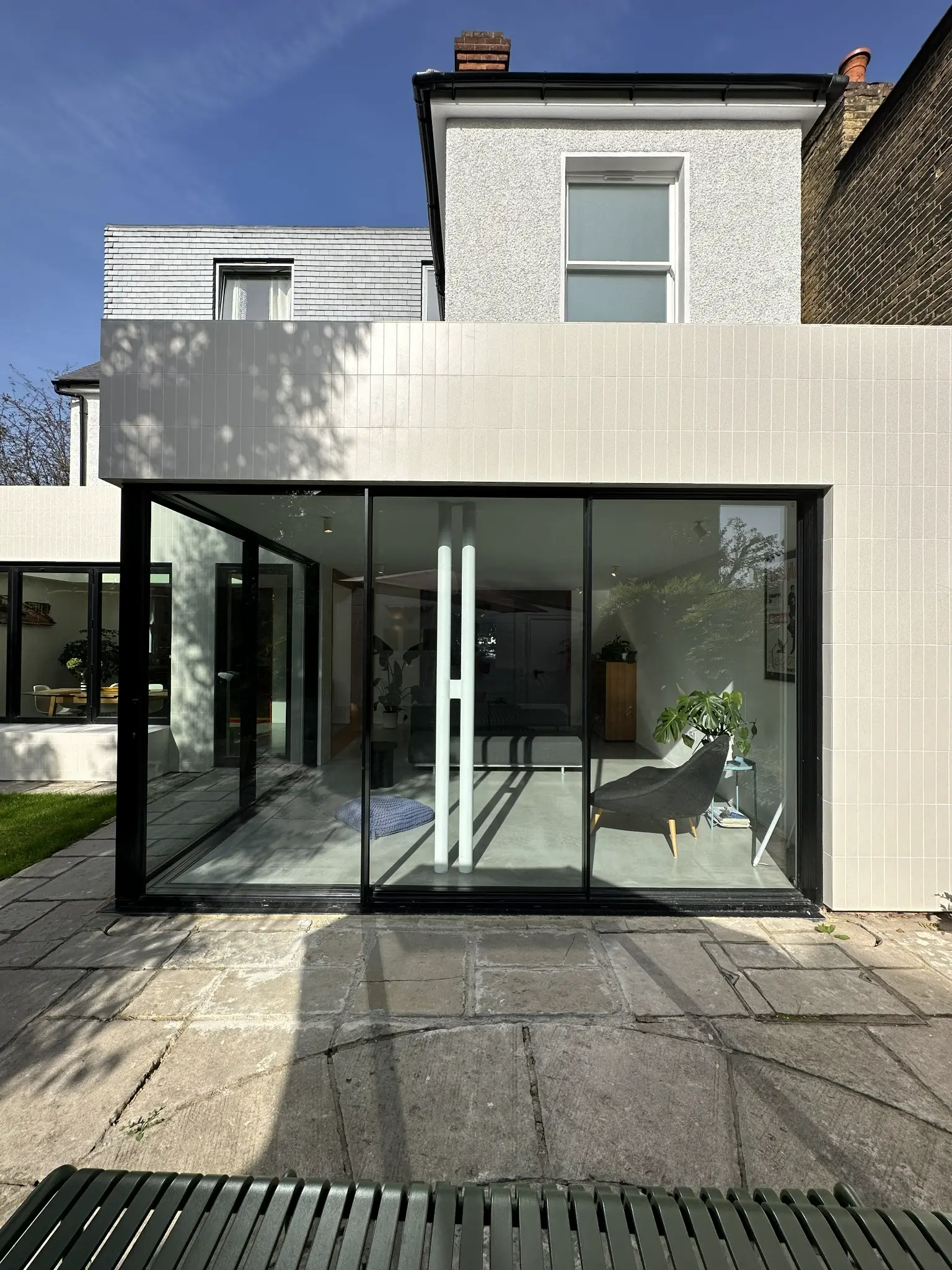
Perhaps the most defining trend in modern architecture is the move towards maximising glass area while minimising visible framing. This pursuit of the 'glass box' aesthetic creates seamless transitions between interior and exterior spaces, flooding homes with natural light.
The Rise of Slimline Systems
Traditional window and door systems often relied on bulky frames to provide structural integrity and insulation. Modern aluminium and composite systems, however, utilise advanced engineering to achieve incredibly narrow sightlines—often as little as 20mm to 30mm for sliding doors, and sometimes entirely concealed within the building structure (frameless systems).
- Aesthetics: Slimline systems offer a sleek, sophisticated look that aligns perfectly with minimalist design principles.
- Natural Light: Reduced frame bulk increases the daylight factor (DF), improving occupant well-being and reducing the reliance on artificial lighting during the day.
- Integration: These systems are frequently specified for corner configurations (postless corners) and pocket sliding doors, where the entire door disappears into a wall cavity when open.
Structural Glazing Considerations
When specifying very large panes of glass (often exceeding 3m in height or width), the glass itself takes on a structural role. This requires careful consideration of glass thickness, tempering, lamination, and fixing methods. For large residential projects, structural engineers must calculate wind loads and deflection to ensure safety and compliance.
Pro Tip
When selecting slimline sliding doors, pay close attention to the track mechanism. High-quality systems use stainless steel rollers and robust gearing to ensure smooth, effortless operation, essential for doors weighing several hundred kilograms. Ensure the track design includes effective drainage to prevent water ingress, particularly in exposed locations.

Thermal Performance and UK Building Regulations
The shift towards larger glazed areas necessitates stringent adherence to thermal performance standards. The UK Building Regulations Part L (Conservation of Fuel and Power) sets mandatory minimum standards for energy efficiency, which were significantly updated in 2022 (Applicable in England).
Meeting Part L 2022 Standards
For new extensions or replacement glazing in existing dwellings, the thermal performance of windows and doors is critical. The U-value (a measure of heat loss) must be low enough to comply. The lower the U-value, the better the insulation.
Current (2022) standards require:
- New Dwellings: Maximum U-value of 1.2 W/m²K for windows and doors.
- Replacement Glazing: Maximum U-value of 1.4 W/m²K for windows and doors.
Achieving these low U-values with large panes and slim frames typically requires high-specification glazing units:
- Double Glazing: Often requires a low-emissivity (low-e) coating and argon gas filling to meet the 1.4 W/m²K requirement.
- Triple Glazing: Essential for achieving the best performance (often below 1.0 W/m²K), particularly in new builds or systems with extensive framing. Triple glazing uses two layers of low-e coating and two gas-filled cavities.
- Thermal Breaks: Modern aluminium frames must incorporate robust polyamide thermal breaks to separate the inner and outer frame sections, preventing thermal bridging and condensation.
Integrated Shading and Solar Control
While maximising natural light is desirable, large expanses of south or west-facing glass can lead to significant solar gain, causing overheating in summer months—a phenomenon known as the 'greenhouse effect'. Modern architectural trends address this through integrated solar control solutions.
Managing Solar Gain
Solar control is managed through two primary methods: passive and active.
Passive Solar Control
This involves specifying glass with a low Solar Factor (G-value). The G-value measures the percentage of solar energy transmitted through the glass. A lower G-value means less heat enters the building. However, reducing the G-value too much can sometimes dull the light quality, requiring a careful balance.
| Glazing Type | Typical U-Value (W/m²K) | Typical G-Value (Solar Factor) | Best Application |
|---|---|---|---|
| Standard Double Glazing (Low-E, Argon) | 1.2 - 1.4 | 0.55 - 0.65 | North/East Facing Glazing |
| High-Performance Double Glazing (Solar Control) | 1.0 - 1.2 | 0.30 - 0.40 | South/West Facing Glazing (High Sun Exposure) |
| Standard Triple Glazing | 0.7 - 0.9 | 0.50 - 0.60 | New Build Walls, High Insulation Areas |
Active Shading Systems
Active systems provide dynamic control over sunlight and privacy. Integrated solutions are highly popular as they maintain the clean lines of modern architecture.
- Integrated Blinds: Blinds sealed within the double or triple glazed unit offer maintenance-free solar control and privacy, operated magnetically or electrically.
- External Brise Soleil: Fixed or adjustable external louvres (often aluminium or timber) that deflect high summer sun while allowing lower winter sun to penetrate.
- Recessed Roller Blinds: Motorised blinds that are concealed within the ceiling cavity when retracted, ensuring they do not interrupt the minimalist aesthetic.
Flush Thresholds and Seamless Integration
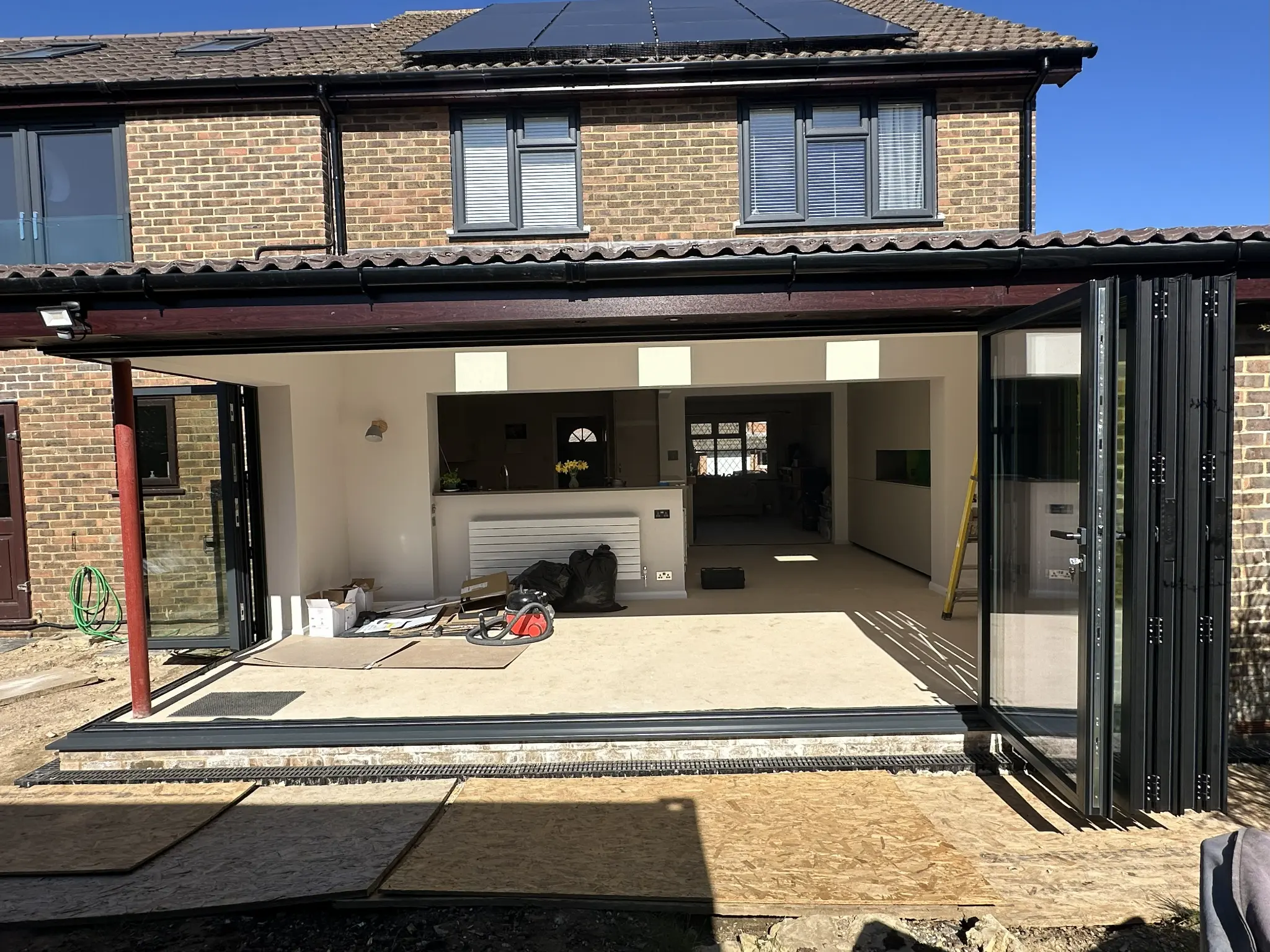
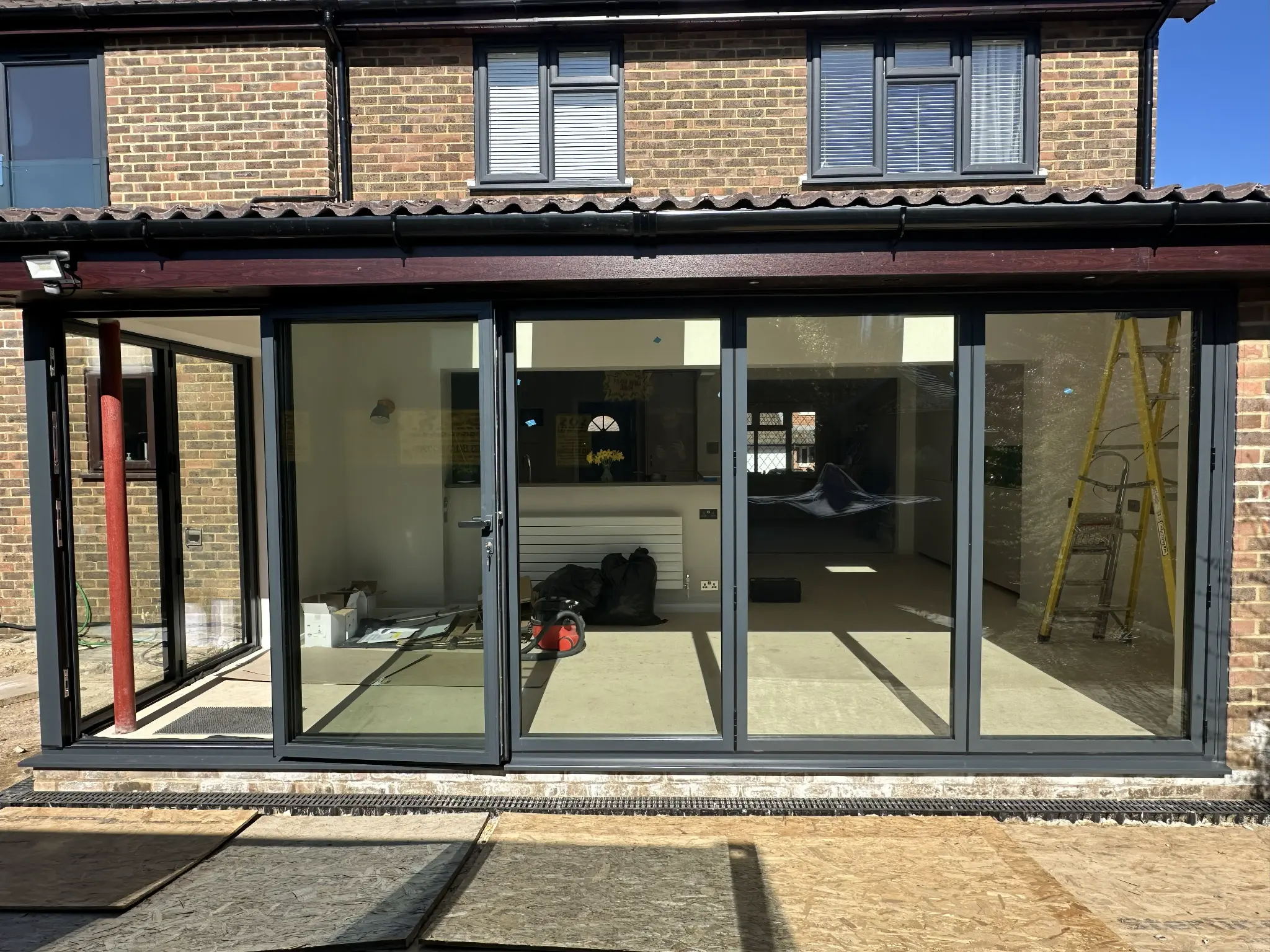
The desire for seamless indoor-outdoor living has driven the demand for flush thresholds, particularly with large sliding and bifold doors. A flush threshold means the internal floor level is continuous with the external patio or decking, eliminating trip hazards and creating a visually unbroken space.
Achieving Accessibility and Weatherproofing
While aesthetically pleasing, flush thresholds present a technical challenge regarding weatherproofing and drainage. UK Building Regulations (specifically Approved Document M for accessibility) encourage level access, but this must be balanced with Part L (thermal performance) and the need to prevent water ingress.
Professional installation is vital here. Solutions typically involve:
- Linear Drainage Channels: Installing a high-capacity linear drainage channel immediately outside the door track to capture surface water before it reaches the seals.
- Hidden Drainage: Designing the external landscaping (e.g., decking or paving) to slope slightly away from the house, often achieved using pedestal systems for paving slabs.
- High-Performance Seals: Utilising sophisticated multi-point locking systems and compression seals within the door profile to ensure airtightness and watertightness even with a minimal upstand.
Architectural Benefits of Modern Glazing
Embracing these modern glazing trends offers homeowners substantial practical and aesthetic benefits that enhance the value and liveability of a property.
Enhanced Energy Efficiency
High-performance glazing, especially triple glazing and thermally broken frames, significantly reduces heat loss, lowering energy bills and carbon footprint, ensuring compliance with stringent UK standards.
Improved Natural Light & Mood
Maximising daylight exposure (Daylight Factor) is proven to boost mood, productivity, and overall well-being, creating brighter, more inviting living spaces throughout the year.
Increased Property Value
Modern, high-specification glazing is a key selling point in the contemporary housing market, signifying quality construction, excellent thermal performance, and desirable aesthetic appeal.
Seamless Indoor-Outdoor Flow
Flush thresholds and large sliding panels dissolve the boundary between the home and garden, enhancing usable space and making spaces feel significantly larger and more integrated.
Material Choices: Aluminium vs. Timber Composite
While traditional materials like timber remain popular for certain aesthetics, modern architectural trends heavily favour aluminium and timber-aluminium composite systems due to their inherent strength and stability.
Aluminium Systems
Aluminium is the material of choice for slimline and large-format glazing. Its high strength-to-weight ratio allows for minimal frame profiles while supporting heavy, multi-layered glass units. Modern powder coatings offer exceptional durability and a wide range of colours (often specified using RAL codes).
Timber Composite Systems
For homeowners who prefer the warmth and natural aesthetic of wood internally but require the durability and low maintenance of aluminium externally, timber-aluminium composite systems are an excellent compromise. The internal timber frame provides superior natural insulation, while the external aluminium cladding protects against the harsh UK climate.
A Note on Maintenance: While aluminium is low maintenance, regular cleaning of the tracks and drainage channels is essential, particularly for flush thresholds, to ensure continued smooth operation and effective water runoff.
Expert Glazing Solutions: Navigating the complexities of modern architectural glazing, from achieving specific U-values to integrating flush thresholds, requires specialist knowledge. Shard AG provides bespoke, high-performance glazing solutions tailored to the exacting standards of contemporary UK architecture, ensuring both aesthetic vision and regulatory compliance are met.
Explore Our Products
Discover how Shard Architectural Glazing can transform your home with our premium glazing solutions:
Ready to Transform Your Home?
Get in touch with our expert team for a free consultation and personalised quote. We'll help you choose the perfect glazing solution for your property.