UK Homeowner's Guide to Rooflights and Skylights
Considering adding natural light overhead? This comprehensive guide covers everything UK homeowners need to know about rooflights, skylights, U-values, Part L compliance, and installation tips.

Shard Architectural Glazing
25 January 2026
Considering adding natural light overhead? This comprehensive guide covers everything UK homeowners need to know about rooflights, skylights, U-values, Part L compliance, and installation tips.
📋In This Article
The UK Homeowner's Guide to Rooflights and Skylights
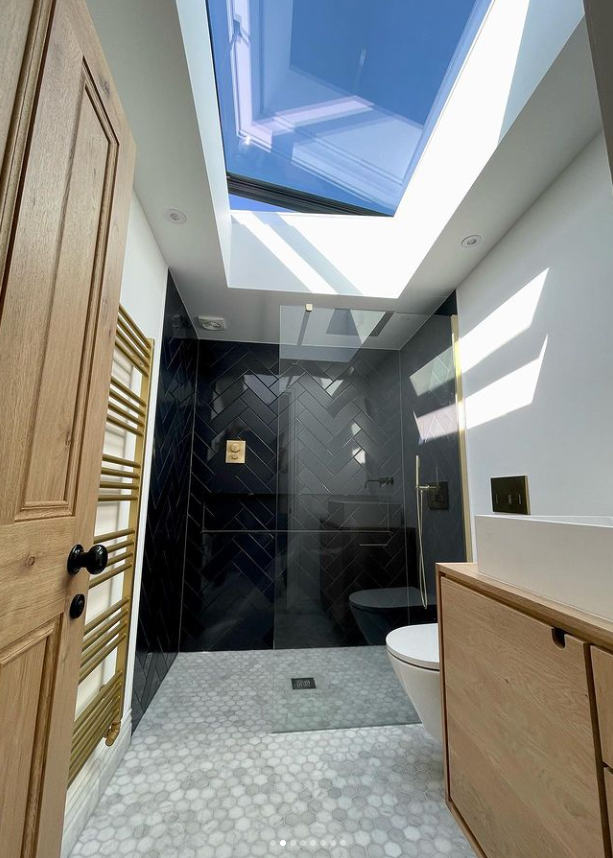
Adding natural light from above can fundamentally transform a living space, making it feel larger, brighter, and more inviting. For UK homeowners undertaking extensions, loft conversions, or renovations, rooflights and skylights are essential considerations. While often used interchangeably, understanding the technical differences, regulatory requirements, and practical implications is crucial for a successful project.
Defining Rooflights, Skylights, and Roof Lanterns
In common parlance, 'rooflight' and 'skylight' are synonyms. However, in technical and regulatory contexts, the distinction often relates to the angle of installation and how they integrate into the roof structure.
Key Terminology Explained
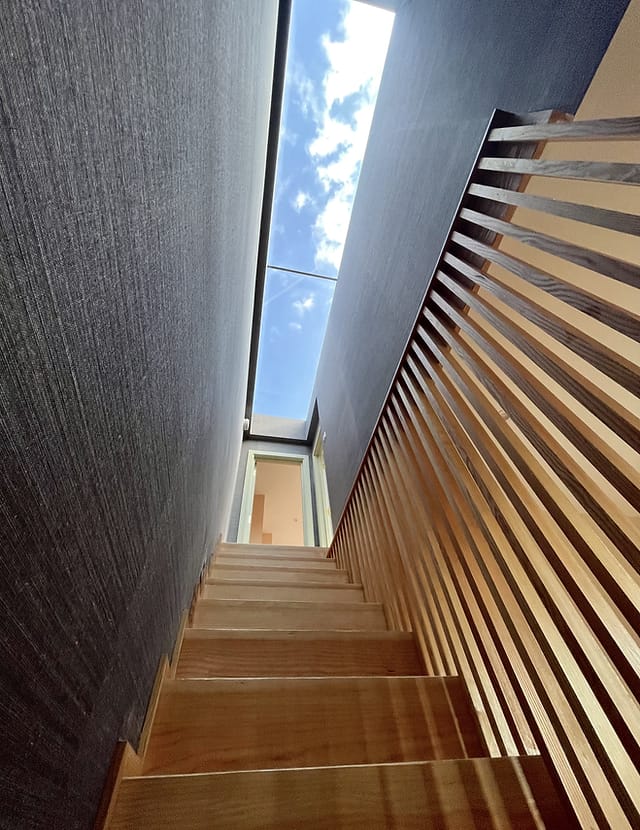
- Skylight (or Pitched Roof Window): Typically installed on pitched roofs, running parallel to the roofline. These are often proprietary systems designed to open and close, such as those used in loft conversions.
- Rooflight (or Flat Rooflight): Generally refers to glazing installed on flat roofs or low-pitch roofs (up to 15 degrees). These are often fixed, frameless, or designed as domes, pyramids, or flat panels.
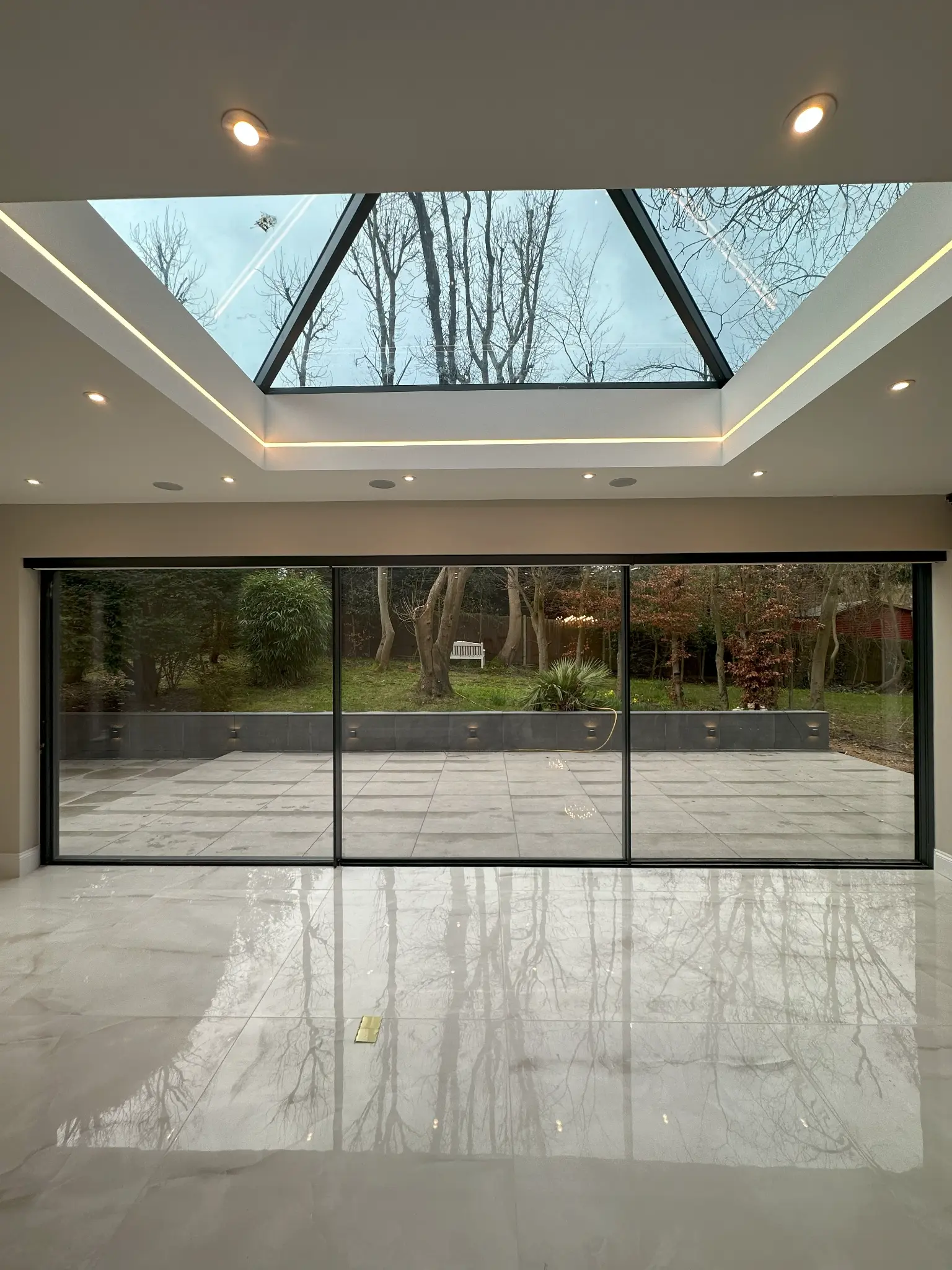
- Roof Lantern: A structural, three-dimensional glazed element that sits proud of the roof surface, often featuring multiple panes and a central ridge. These provide a dramatic architectural feature and are popular over kitchens or orangeries.
Building Regulations and Thermal Performance (Part L)
Any alteration or addition to the thermal envelope of a dwelling in England and Wales must comply with the current Building Regulations, specifically Approved Document L (Conservation of Fuel and Power).
Understanding U-Values
The U-value measures how effectively a component (like a window or rooflight) prevents heat from escaping. The lower the U-value, the better the insulation properties. Compliance is mandatory to ensure energy efficiency.
Pro Tip
When comparing rooflights, always ask for the whole product U-value (Uw), which includes the frame and glass, rather than just the centre-pane U-value (Ug). This gives a true picture of thermal performance.
Compliance Requirements (England, 2022 Standards)
For new extensions or replacement installations, the rooflight must meet stringent thermal standards. The maximum allowable U-value for windows and rooflights depends on the context:
- New Dwellings/Extensions: The limiting U-value for rooflights is typically 1.2 W/m²K.
- Replacement Rooflights: The limiting U-value for replacement rooflights in existing thermal elements is typically 1.4 W/m²K.
It is vital that the rooflight specification meets these requirements. Failure to do so could affect Building Control sign-off and future property valuations. Modern double-glazed units often achieve U-values around 1.4 W/m²K, but triple glazing or highly insulated frames may be necessary to meet the 1.2 W/m²K target required for new extensions.
Design and Installation Considerations
Sizing and Placement
The size and placement of a rooflight significantly impact the internal light quality. As a general rule, light from above penetrates much deeper into a room than light from a vertical window.
- Light Distribution: Multiple smaller rooflights often provide more even light distribution than one large one.
- Orientation: North-facing rooflights provide consistent, soft light, ideal for studios or offices. South-facing rooflights offer intense light but require careful shading (solar control glass or blinds) to prevent excessive solar gain and overheating in summer.
- Structural Support: Installing a rooflight requires trimming rafters or joists. This must be done by a competent professional, often requiring the input of a structural engineer, especially for large openings, to ensure the structural integrity of the roof is maintained.
Glazing Specification
The glass itself is a major factor in performance, safety, and comfort:
- Safety Glazing: UK Building Regulations require that any glazing installed overhead must be safety glass (laminated or toughened) to prevent injury in case of breakage. Laminated glass is generally preferred as it holds together if shattered.
- Solar Control: Coatings can be applied to the glass to reflect solar radiation, reducing heat build-up without significantly compromising visible light transmission.
- Acoustic Performance: If the property is near a busy road or flight path, thicker laminated glass or specialised acoustic interlayers can significantly reduce noise ingress.
Flat Roof vs. Pitched Roof Systems
The type of roof dictates the suitable system, each presenting unique challenges regarding waterproofing and drainage.
Flat Rooflights
Flat roofs require careful consideration of drainage. Even 'flat' roofs must have a slight pitch (typically 1:80 or 1:60) to shed water. Flat rooflights must sit on a raised upstand (kerb) to lift the frame above the roof surface, ensuring the waterproofing membrane (felt, EPDM, or liquid) can be dressed up and over the upstand effectively.
Common Flat Rooflight Types:
| Type | Description | Key Advantage | Drainage Consideration |
|---|---|---|---|
| Fixed Flush Glazing | Minimalist, frameless appearance internally and externally. | Maximum light, sleek aesthetics. | Must be installed with a minimum 5° pitch to shed water effectively. |
| Domed/Pyramid | Acrylic or polycarbonate domes, often used for utility or industrial applications. | Cost-effective, good weather resistance. | Excellent self-cleaning due to shape. |
| Walk-on Rooflights | Heavy-duty laminated glass designed for terraces or accessible roof areas. | Allows light into the room below while maintaining usable outdoor space. | Requires specialist structural support and non-slip surface treatment. |
Pitched Roof Windows (Skylights)
These systems are designed to integrate seamlessly with standard roofing materials (tiles or slate). The critical element is the flashing kit, which ensures a watertight seal between the window frame and the surrounding roof covering. Always use the manufacturer's recommended flashing kit appropriate for the specific roofing material being used.
Ventilation and Maintenance
Controlling Heat and Condensation
While fixed rooflights maximise thermal performance, opening (vented) rooflights are crucial for managing internal climate, especially in kitchens or bathrooms where moisture is high, or in south-facing rooms prone to overheating.
- Manual vs. Electric Operation: Manual openers are suitable for accessible locations. Electric (or solar-powered) openers are essential for high-level installations, often integrating with rain sensors to close automatically.
- Trickle Vents: Some rooflights include integrated trickle ventilation, allowing a small amount of airflow even when closed, helping to mitigate condensation risks.
- Condensation: Condensation on the internal pane is a sign of high internal humidity meeting a cold surface. While high-performance glazing minimises this, proper ventilation of the room remains the primary solution.
Maintenance and Cleaning
Modern rooflights require relatively low maintenance. The primary concern is keeping the glass clean and ensuring the drainage channels (especially around flat roof upstands) remain free of debris (leaves, moss). Access for cleaning must be considered during the design phase, particularly for large or high-level installations.
Superior Daylight
Rooflights deliver up to three times more natural light than vertical windows of the same size, dramatically reducing the need for artificial lighting during the day.
Enhanced Aesthetics
They create a sense of spaciousness and architectural interest, highlighting interior features and providing views of the sky.
Improved Ventilation
Opening rooflights allow heat to escape effectively (stack effect), providing passive cooling and improving air quality, crucial for UK summer comfort.
Part L Compliance
High-specification systems, particularly triple-glazed options, contribute positively to the overall thermal performance of the building envelope, aiding Building Regulations compliance.
Choosing the Right Supplier and Installer
Selecting the correct rooflight is only half the battle; professional installation is paramount to ensure longevity and watertightness. A poorly installed rooflight is a significant risk for water ingress and thermal bridging.
Key Checks Before Purchase
- Accreditation: Ensure the product carries relevant accreditations (e.g., CE marking, BSI Kitemark) and can provide certified U-value documentation.
- Warranty: Check the warranty period for both the glass unit and the frame/seals.
- Installation Expertise: Verify that the installer is experienced specifically with the type of rooflight chosen (e.g., flat roof membrane integration requires specialist skills).
When planning your project, always consult with your architect, structural engineer, and local Building Control body early in the process. They can confirm the specific requirements for your location and project type, ensuring your beautiful new source of light also meets the necessary UK standards for safety and energy efficiency.
***
About Shard AG
Shard AG specialises in high-performance architectural glazing solutions for the UK residential market. We focus on delivering bespoke, thermally efficient rooflights, skylights, and roof lanterns designed to meet the stringent requirements of UK Building Regulations Part L (2022). Our commitment is to precision engineering and providing expert technical guidance to ensure your project achieves optimal light, performance, and compliance.
Explore Our Products
Discover how Shard Architectural Glazing can transform your home with our premium glazing solutions:
Ready to Transform Your Home?
Get in touch with our expert team for a free consultation and personalised quote. We'll help you choose the perfect glazing solution for your property.