Ultimate Guide to Glazing Security Features for UK Homes
Explore the essential security features in modern windows and doors, covering everything from laminated glass and multi-point locks to PAS 24 standards and Building Regulations.

Shard Architectural Glazing
28 January 2026
Explore the essential security features in modern windows and doors, covering everything from laminated glass and multi-point locks to PAS 24 standards and Building Regulations.
📋In This Article
Ultimate Guide to Glazing Security Features for UK Homes
When investing in new windows, doors, or architectural glazing for your home, homeowners often focus primarily on aesthetics and thermal performance. While crucial, the security aspect of modern glazing is equally vital. Burglars typically target weak points, and older, poorly maintained windows and doors are often the easiest entry points. Modern glazing technology offers significant advancements in physical security, providing peace of mind and robust protection.
This comprehensive guide explores the key components, standards, and technical specifications that define secure glazing systems in the UK today, ensuring your home improvement project prioritises safety.
Understanding Glazing Security Standards: PAS 24
In the UK, the primary benchmark for assessing the security performance of doors and windows is PAS 24: Enhanced Security Performance Requirements for Doors and Windows. This standard specifies the tests that a complete window or door assembly must pass to demonstrate that it can withstand common methods of forced entry, such as manipulation, cutting, and physical attack.
The Importance of PAS 24 Certification
- System Testing: PAS 24 tests the entire system—the frame, the locking mechanism, the hinges, and the glazing—as a single unit. A window with excellent locks but a weak frame will fail.
- Simulated Attacks: Tests include manual attack methods using tools like screwdrivers, crowbars, and chisels, simulating how an intruder might attempt to gain access.
- Requirement for Secured by Design: Achieving PAS 24 certification is a prerequisite for products seeking the 'Secured by Design' (SBD) accreditation, which is the official police security initiative for the UK.
Pro Tip
Always request proof of PAS 24 certification from your installer, especially for ground-floor windows and external doors. Certification should apply to the specific product line and configuration you are purchasing, not just the manufacturer generally.
Advanced Glazing Options for Impact Resistance
While the frame and hardware provide structural integrity, the glass itself is the largest surface area and must resist impact and penetration. Standard float glass, even in double-glazed units, offers minimal resistance to determined attack.
Laminated Glass
Laminated glass is perhaps the most effective solution for security glazing in residential settings. It consists of two or more panes of glass bonded together by one or more layers of polyvinyl butyral (PVB) interlayer.
- How it Works: If the glass is struck or broken, the PVB interlayer holds the shards together, preventing the creation of a large hole and maintaining the integrity of the barrier.
- Security Rating: Laminated glass is rated according to BS EN 356, which classifies resistance to manual attack. P1A to P5A are typically used for residential security, with P6B and above reserved for high-security applications (like jewellery stores). P4A is a common specification for enhanced residential security.
Toughened (Tempered) Glass
Toughened glass (or tempered glass) is heated and rapidly cooled during manufacturing, making it significantly stronger than standard glass. While it is excellent for safety (it breaks into small, blunt fragments), it is not inherently a security product.
- Security Limitation: Once the initial impact threshold is exceeded, toughened glass shatters completely, creating an immediate, albeit noisy, access point. It is primarily used in areas where accidental impact is likely (e.g., near doors or low-level glazing) to prevent injury, not to prevent forced entry.
Hardware and Locking Mechanisms: The Critical Components
The security of a window or door is often defined by its weakest point, which is frequently the locking mechanism or the hinges.
Multi-Point Locking Systems
Modern external doors and high-security windows should feature multi-point locking systems. These systems engage several locking points simultaneously when the key is turned or the handle is lifted, distributing the load across the entire frame.
- Common Configuration: Typically includes a central deadbolt, two hooks, and two roller cams or compression bolts, engaging at five points along the frame edge.
- Cylinder Security: For doors, the cylinder (where the key is inserted) is a common target for 'lock snapping' (a method where the cylinder is forcibly broken). Look for cylinders certified to TS007 3-star rating or Sold Secure Diamond Standard (SS312), which are designed to resist snapping, drilling, and picking.
Hinge Security
For outward-opening windows (casements), the hinges must be secured against manipulation from the outside. Look for:
- Hinge Bolts/Dog Bolts: These are fixed security pins that remain engaged between the frame and the sash even if the hinge pins are removed or the hinges are damaged.
- Restrictor Hinges: While primarily for safety (to prevent falls), restrictor hinges can also limit how far a window can be forced open, adding a layer of resistance.
Frame Materials and Structural Integrity
The frame material plays a significant role in the overall rigidity and resistance to forced entry. Regardless of the material, the frame must be reinforced adequately.
| Frame Material | Security Considerations | Reinforcement Details |
|---|---|---|
| uPVC | Excellent thermal performance; requires internal steel reinforcement to achieve high security standards (PAS 24). | Galvanised steel or aluminium inserts in the main chambers. Welded corners are crucial for strength. |
| Aluminium | Inherently strong and rigid; slim sightlines can still accommodate robust locking mechanisms. | Multi-chamber profiles and robust corner cleats. Often the material of choice for large, secure sliding doors. |
| Timber | Aesthetically traditional; requires robust joinery and deep mortise locks. | Hardwood construction (e.g., oak or meranti) with laminated sections to prevent warping and steel reinforcing plates around the lock keep. |
Beading and Glazing Security
The method used to hold the glass unit within the frame is called beading. For security, internal beading is highly recommended. If the beads are on the inside, an intruder cannot easily remove them from the exterior to pop the glass unit out. While modern external beading systems are designed to be extremely difficult to remove without specialist tools, internal beading remains the gold standard for security.
Building Regulations and Security Compliance
In England and Wales, the security of replacement windows and doors is covered under Part Q (Security) of the Building Regulations. While Part L focuses on thermal efficiency, Part Q ensures minimum standards for security are met, particularly in new dwellings and where new openings are created.
Part Q Requirements
Part Q stipulates that easily accessible doors and windows (those within 2m of the ground or accessible from a flat roof/balcony) must be robust and fitted with appropriate hardware. Compliance is typically demonstrated by ensuring the products meet the PAS 24 standard.
- Thermal Compliance (Part L 2022): While security is paramount, you must also meet thermal standards. Replacement windows must achieve a U-value of 1.4 W/m²K or better. Secure glazing systems (like triple-laminated units) must be specified carefully to ensure the unit still meets these thermal requirements.
- Ventilation (Part F): Remember that secure windows must still comply with ventilation requirements. Trickle vents, designed to allow airflow even when the window is locked, must be integrated securely into the frame structure without compromising rigidity.
Deterrence
Visible security features, such as multi-point locks and strong frames, often deter opportunistic intruders who prefer easier targets.
Insurance Savings
Many UK insurance providers offer reduced premiums if certified PAS 24 or Secured by Design products are installed throughout the property.
Enhanced Safety
Laminated glass not only resists intrusion but also holds together if accidentally broken, significantly reducing the risk of injury from large glass shards.
Peace of Mind
Knowing your glazing system has been rigorously tested against forced entry provides essential comfort, especially when leaving the property vacant.
Specifying Secure Glazing for Large Openings
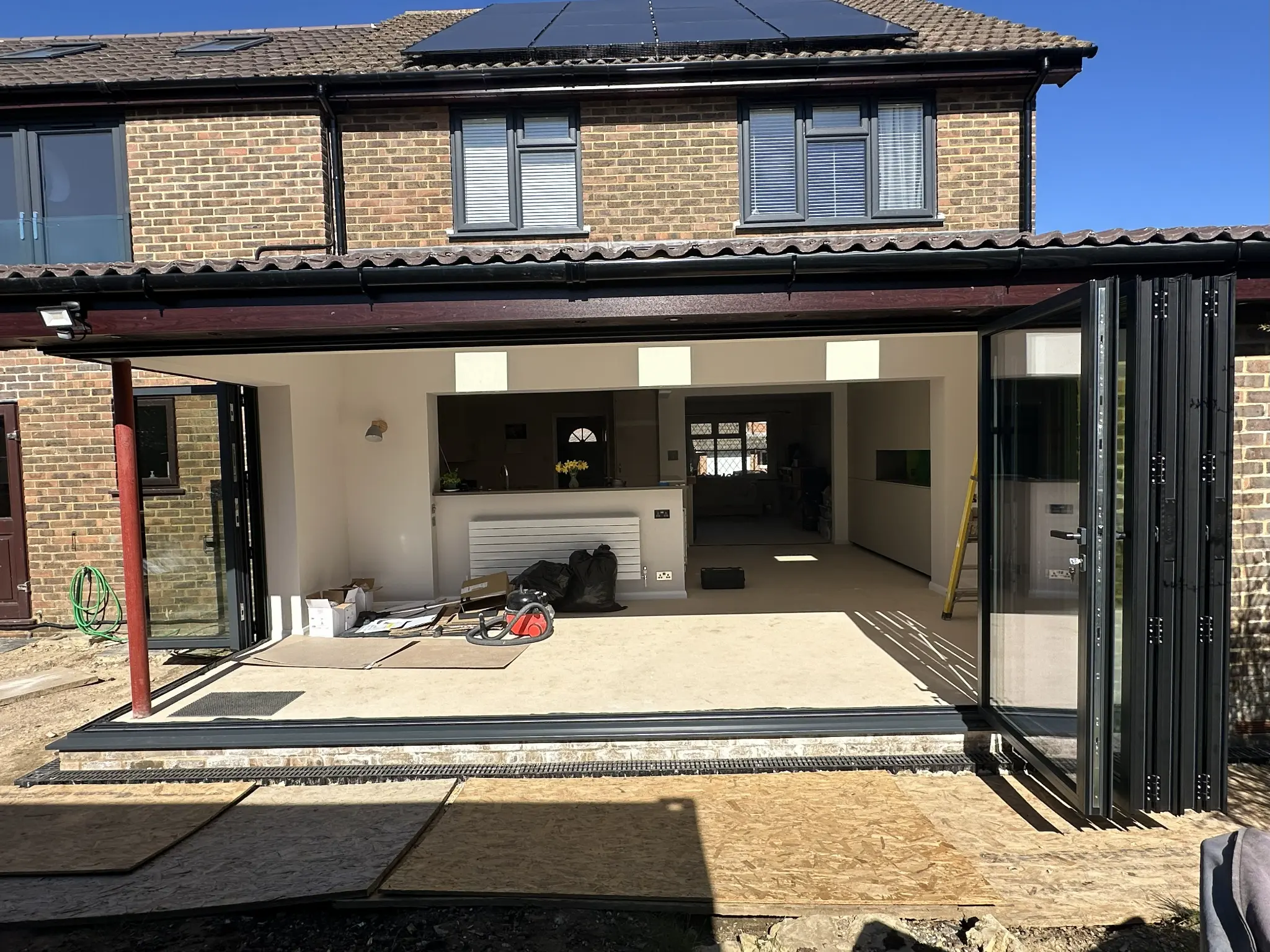
Large architectural glazing elements, such as bi-folding doors and sliding patio doors, present unique security challenges due to their size and complexity.
Bi-Folding and Sliding Doors
These systems must resist 'lifting' or 'jemmying' (using a lever to force the door out of its track or frame). Key security features include:
- Anti-Lift Mechanisms: Integrated design features that prevent the door panels from being lifted off their tracks when closed and locked.
- Interlocking Profiles: Where panels meet, robust interlocking profiles prevent separation and provide additional rigidity against lateral force.
- Shootbolts: For bi-folds, shootbolts that engage into the top and bottom tracks of the master and slave panels are essential for securing the entire expanse.
The Role of Installation
Even the most secure window or door system can be compromised by poor installation. If the frame is not correctly aligned, secured to the structure, or if the gaps are not properly fixed, the integrity of the locking points may be compromised. Always ensure your installer is competent, certified, and adheres strictly to the manufacturer’s installation guidelines to maintain the PAS 24 rating.
A Note on Shard AG: Investing in high-security glazing requires careful consideration of technical specifications, material choices, and regulatory compliance. Shard AG specialises in supplying and installing advanced architectural glazing systems across the UK, focusing on products that meet or exceed PAS 24 and Part Q requirements. We offer expert consultation to help homeowners balance aesthetic vision with uncompromising security and thermal performance, ensuring every installation is robust, compliant, and tailored to the unique demands of your property.
Explore Our Products
Discover how Shard Architectural Glazing can transform your home with our premium glazing solutions:
Ready to Transform Your Home?
Get in touch with our expert team for a free consultation and personalised quote. We'll help you choose the perfect glazing solution for your property.