


For UK homeowners undertaking renovation, extension, or new build projects, understanding the thermal performance of windows is crucial. It is not just about reducing energy bills; it is about ensuring comfort, minimising condensation, and, most importantly, complying with stringent UK Building Regulations.
Modern architectural glazing has evolved significantly. Gone are the days when a window was merely a hole in the wall covered by a single pane of glass. Today's windows are highly engineered components designed to manage heat transfer, acoustic insulation, and solar gain effectively.
What is a U-Value and Why Does it Matter?
The primary metric used to measure the thermal performance of any building element—including windows, doors, walls, and roofs—is the U-value. The U-value (measured in Watts per square metre per Kelvin, or W/m²K) quantifies the rate at which heat is lost through a material.
- Lower U-value = Better insulation = Less heat loss.
- Higher U-value = Worse insulation = More heat loss.
When selecting windows, you will encounter two main types of U-values:
- Ug (Glazing U-value): Measures the performance of the glass unit itself (the double or triple pane).
- Uw (Window U-value): Measures the performance of the entire window assembly, including the glass, the frame material, and the spacer bars. This is the value required for Building Regulations compliance.
It is vital to insist on the overall Uw value when comparing products, as a high-performing glass unit can be undermined by a poorly insulating frame.
Impact of Frame Materials
The material used for the window frame plays a significant role in the overall U-value:
- uPVC: Highly popular due to its cost-effectiveness and good thermal properties, often incorporating multiple internal chambers to trap air.
- Timber: Naturally insulating, especially engineered timber products. Requires more maintenance than uPVC or aluminium.
- Aluminium: Historically poor insulators, modern aluminium frames use sophisticated thermal breaks (usually polyamide strips) to separate the inner and outer sections of the frame, dramatically improving performance. This is essential for achieving compliant U-values.
- Composite (Alu-Clad): Combines the durability and low maintenance of external aluminium with the excellent insulation and aesthetic warmth of internal timber.
The Role of Advanced Glazing Technology
Achieving low U-values in modern windows relies heavily on advanced glazing techniques, moving far beyond standard air-filled double glazing.
Low-Emissivity (Low-E) Coatings
Low-E coatings are microscopically thin, virtually invisible layers of metallic oxide applied to one of the internal glass surfaces (typically surface 3 in a double-glazed unit). These coatings reflect heat energy (long-wave infrared radiation) back into the room while allowing visible light to pass through.
This technology is fundamental to achieving current thermal performance standards and is standard practice in all quality double and triple glazing sold in the UK today.
Inert Gas Filling
Instead of filling the gap between the glass panes with standard air, high-performance units are typically filled with an inert gas, most commonly Argon. Argon is denser and less conductive than air, which significantly slows down the transfer of heat across the cavity. For extremely low U-values, gases like Krypton or Xenon may be used, though these are more expensive.
Warm Edge Spacer Bars
The perimeter of the glass unit is sealed by a spacer bar. Traditional aluminium spacer bars are highly conductive, creating a 'thermal bridge' around the edge of the glass, which can lead to localised heat loss and condensation (the 'edge effect').
Warm edge spacer bars are made from low-conductivity materials (like composite plastic or foam). By reducing heat transfer at the edges, they improve the overall Uw value and reduce the risk of condensation forming around the perimeter of the glass.
Pro Tip
When reviewing window specifications, always look for the 'Psi (ψ) value' associated with the spacer bar. This measures the linear thermal transmittance at the edge. A lower Psi value indicates a better warm edge performance and a better overall Uw value for the installed window.
UK Building Regulations Part L (2022) Compliance
In England, the thermal performance requirements for new and replacement windows are governed by Part L (Conservation of Fuel and Power) of the Building Regulations. The 2022 updates introduced significantly stricter standards to push the industry towards lower-carbon homes.
Compliance is mandatory for almost all installations, whether in extensions, new builds, or replacing existing windows in heated parts of the dwelling.
| Project Type | Element | Maximum Target U-Value (W/m²K) | Notes |
|---|---|---|---|
| New Build & Extensions | Walls | 0.18 | Highly insulated structure required. |
| New Build & Extensions | Roofs | 0.15 | |
| New Build | Windows, Rooflights, Doors | 1.2 | Very high performance required. |
| Replacement Windows & Doors | Windows & Doors | 1.4 | The minimum standard for replacement installations. |
| Conservatories (Exempt) | Windows & Doors | N/A | If thermally separated from the dwelling and unheated. |
Meeting the 1.4 W/m²K standard for replacement windows typically requires high-quality double glazing with Low-E coatings, Argon gas filling, and warm edge spacer bars. Achieving the 1.2 W/m²K standard for new builds often necessitates the use of high-performance frames and, increasingly, triple glazing, especially for large expanses of glass.
Is Triple Glazing Necessary?
Triple glazing incorporates three panes of glass and two gas-filled cavities, significantly reducing heat loss compared to double glazing.
- Advantages: Can easily achieve U-values of 0.8 W/m²K or lower, offering superior thermal and acoustic insulation. Essential for meeting Passivhaus standards or achieving the lowest possible energy consumption in new builds.
- Considerations: Triple glazing is heavier, requiring more robust frames and hinges. It is also more expensive and may slightly reduce the amount of natural light transmitted compared to high-quality double glazing.
For most standard replacement projects in the UK, high-performance double glazing (1.4 W/m²K) is sufficient for compliance. However, if energy efficiency is the absolute priority, triple glazing offers undeniable benefits.

Managing Solar Heat Gain
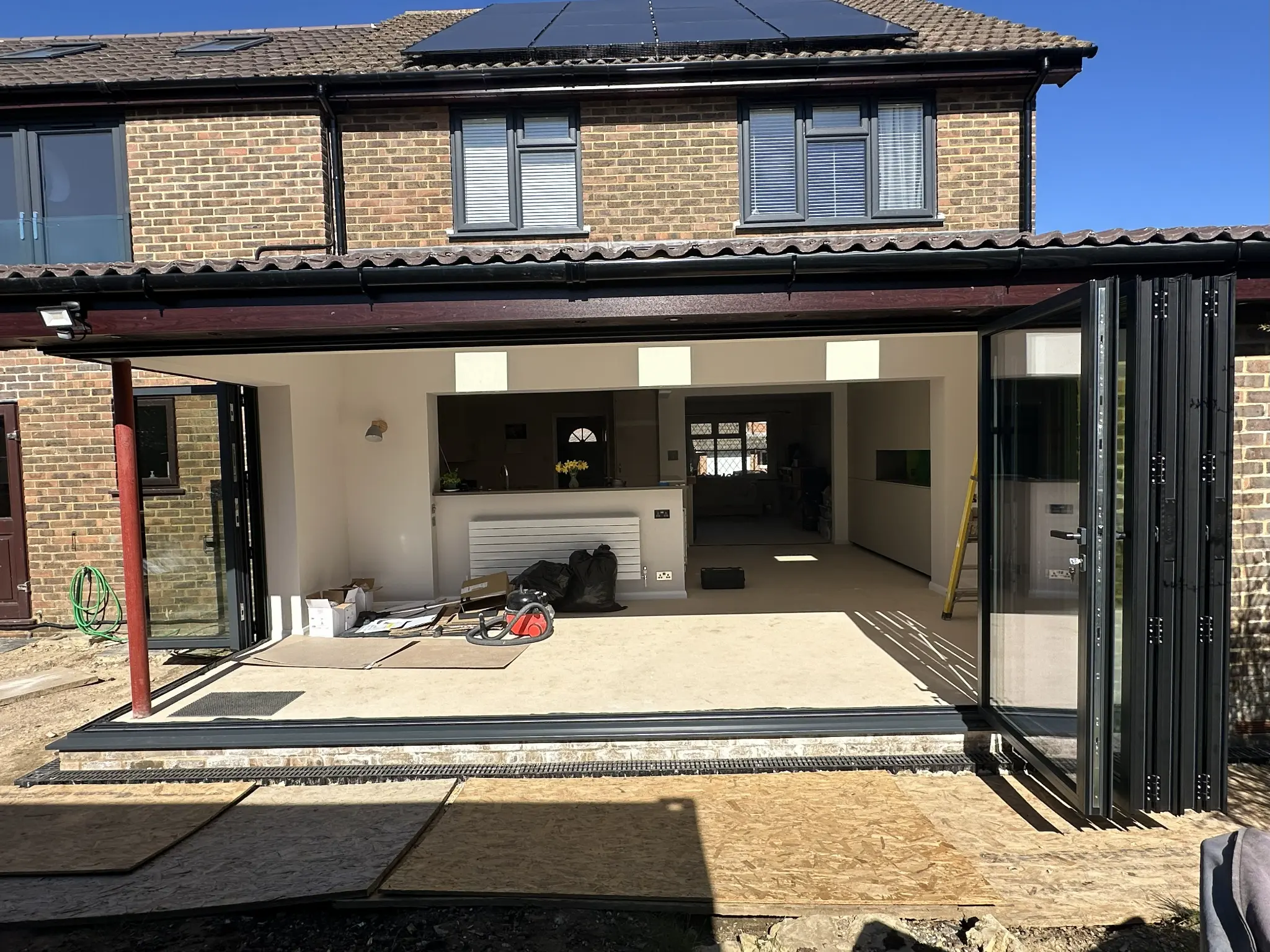
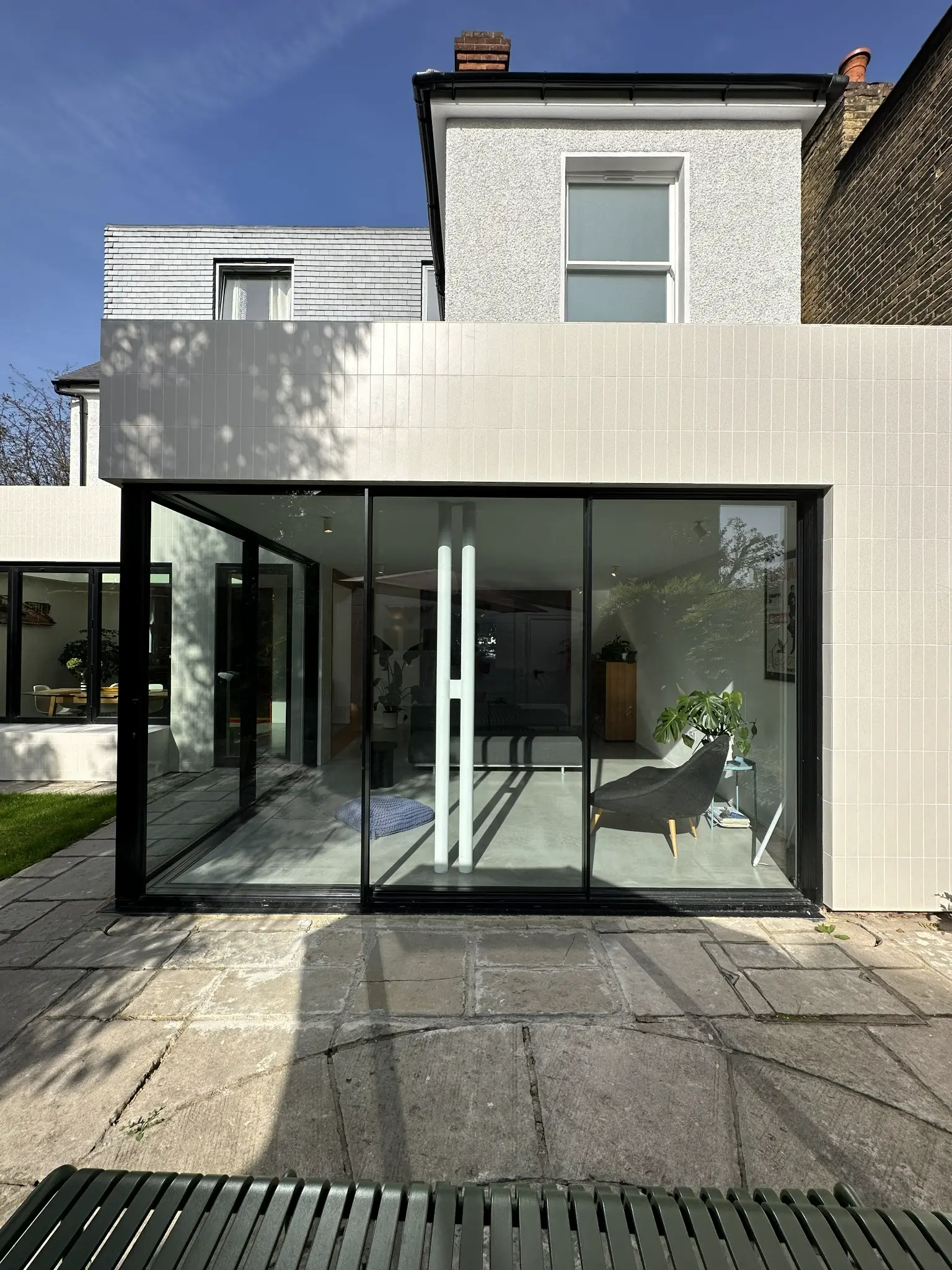
While minimising heat loss (low U-value) is critical in the UK climate, managing heat gain from the sun is equally important, particularly in large glazed areas like bi-fold doors or large picture windows facing south or west.
This is measured by the G-value (Solar Heat Gain Coefficient). The G-value is a number between 0 and 1.0, representing the fraction of solar energy transmitted through the glass.
- High G-value (e.g., 0.6): Allows a lot of solar heat in (useful in winter).
- Low G-value (e.g., 0.2): Blocks most solar heat (essential for preventing overheating in summer).
In large glazed extensions, a high G-value can lead to excessive overheating during the summer months, requiring costly air conditioning or making the space uncomfortable. Conversely, in a standard window, a moderate G-value can provide 'free' passive solar heating in the winter.
Specialised solar control glass uses coatings designed to reflect specific wavelengths of solar radiation, allowing good visible light transmission while reducing the G-value. Balancing the U-value and the G-value is key to creating a comfortable, thermally balanced home.
Practical Installation and Maintenance
Even the best window product will perform poorly if installed incorrectly. Heat loss often occurs not through the glass or frame, but through gaps between the window frame and the surrounding wall structure.
Air Tightness and Thermal Bridging
Air tightness is a crucial factor. Air leakage (draughts) can account for a significant percentage of heat loss. High-quality windows feature multiple seals and gaskets to prevent air infiltration.
The installation process must ensure a continuous seal between the window frame and the wall structure, often achieved using expanding foam, tapes, and proprietary sealing systems. Failure to seal this junction correctly creates a 'thermal bridge'—a path of least resistance for heat to escape.
Minimising Condensation
Condensation occurs when warm, moist air meets a cold surface. While modern windows do not cause condensation, they often reveal existing humidity problems because the highly insulating glass and frame keep the internal surface temperature warmer than old single glazing. This pushes the condensation point to the coldest part of the room—often the wall or ceiling.
If condensation forms only on the *outside* of the window, this is actually a sign of excellent thermal performance. It means the glass is so effective at insulating that the inner heat is not warming the outer pane, allowing dew to form.
Reduced Energy Bills
By significantly lowering the U-value, high-performance windows drastically cut the amount of heat escaping, leading directly to lower heating requirements and reduced utility costs.
Enhanced Comfort
Insulated windows eliminate cold spots and draughts near the glass, ensuring a more consistent and comfortable temperature throughout the room, especially during winter.
Noise Reduction
The multiple layers of glass and gas cavities in modern units provide excellent acoustic insulation, reducing external noise pollution from traffic or neighbours.
Building Regulation Compliance
Installing windows that meet or exceed the 1.4 W/m²K (or 1.2 W/m²K for new builds) standard ensures your project is legally compliant with UK Part L requirements.
Choosing the Right Supplier
Selecting a supplier who understands the nuances of thermal performance and UK regulatory compliance is essential. They should provide clear Uw values for their products, confirm the use of Low-E glass and warm edge spacers, and offer guarantees on the integrity of the sealed units.
For homeowners in the UK seeking expert advice on architectural glazing, including high-performance double and triple glazing systems, Shard AG specialises in bespoke solutions designed to maximise thermal efficiency and aesthetic appeal while ensuring full compliance with the latest 2022 Building Regulations. Our team provides comprehensive technical specifications, ensuring you receive the optimal balance of performance and design for your project.